
How to Choose the Right Industrial Reverse Blower?
August 10, 2026
Choosing the right Industrial Reverse Blower requires careful assessment of pressure requirements, flow capacity, motor efficiency, and integration capabilities with existing dust collection infrastructure. Your selection should prioritise equipment that provides stable reverse blowing pressure between 5 and 50 kPa, with adjustable intensity for optimal filter cleaning. Beyond basic specifications, you need solutions delivering energy savings exceeding 12%, ultra-low noise operation below 80dB, and proven durability with service life guarantees of five years or longer for demanding metallurgical and mining applications.
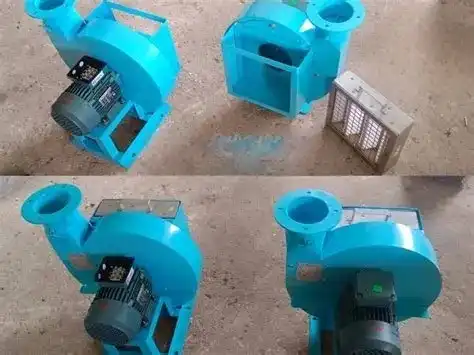

Key Criteria for Selecting the Right Industrial Reverse Blower
To do effective buying, you must first match your practical needs with the technical requirements. The amount of air your building needs is what determines the size of your equipment. The flow rate is measured in cubic meters per minute (m³/min). Heyuanxin's systems can handle flow rates of up to 80m³/min, making them suitable for both small-scale operations and large integrated steel plants. Additionally, the pressure rise capability must match the design specifications of your dust collector. Not enough pressure will not clean the filters properly, while too much pressure could damage the media.
Assessing Airflow and Pressure Requirements
Find out how much volumetric flow your system needs by increasing the total cloth filter area by the recommended air-to-cloth ratios for the type of dust you have. Heavy metal dust usually needs between 3 and 5 cubic feet per minute per square foot of filter area. Change this number to metric units and add 15 to 20 per cent as a safety range to account for filters wearing out and production rising faster than planned. Your pressure needs come from the dust collector's maker's instructions, which are usually written down in the equipment manual or can be got by talking to the manufacturer directly.
Figuring out flow and pressure makes it easy to choose the motor's power. Equipment from 0.55kW to 200 kW makes it possible to do a lot of different things. Motors that are too small struggle to maintain their original performance under stress, which can lead to early failure. Units that are too big waste power and make capital costs go up for no reason. Professional suppliers like Heyuanxin do complex engineering calculations that take altitude, ambient temperature, and duty cycle into account to give the right motor ratings.
Energy Efficiency and Noise Performance
Operating expenses over a blower's usual 15–20-year service life are much higher than the original cost of buying it, so saving energy is very important. High-efficiency motors that cut energy use by 12% or more compared to normal designs save a lot of money. Variable frequency drives (VFDs) allow for even more optimisation by changing the speed of the motor to meet the demand at any given time rather than running at full capacity all the time. This feature is especially useful when production schedules change with the seasons or when planned maintenance breaks lower the overall amount of dust that is made.
Noise levels in the workplace affect both worker health and safety. In most industrial settings, equipment that is running at 80dB or less meets OSHA's exposure limits and doesn't need extra hearing protection. Lower noise levels also mean better manufacturing quality, since too much noise often means that parts aren't lined up right, there are problems with the bearings, or the airflow isn't working as well as it should. When looking at different suppliers, make sure you ask for acoustical testing reports from a third party that confirm noise specifications in real-world settings instead of just using theoretical calculations.
Supplier Evaluation and After-Sales Support
Verification of certification provides objective proof of how companies manage quality. Occupational health standards, ISO 9001 quality systems, and ISO 14001 environmental management all show that companies take organised steps to ensure their products are reliable and their customers are satisfied. Patent portfolios show real innovation, not just the rebranding of a commodity. Over ten utility model patents and software copyrights are held by Shaanxi Heyuanxin Metallurgical Electric Furnace Equipment. This indicates that the company has been investing in technological progress since it was founded in 2008.
Comparing Industrial Reverse Blowers with Alternative Technologies
Centrifugal fans that are usually made for one-way flow don't have the structural support needed for pressure reverse cycling. Their impeller attachments and housing connections wear out faster when stressed in both directions, which means they need to be serviced before they should be. Purpose-built reverse blowing equipment, on the other hand, has stronger fixing points and more even load distribution, which means it needs less maintenance and costs less over its lifetime.
Performance Advantages Over Positive Displacement Blowers
Roots fans and other technologies that use positive displacement to create flow do so by moving trapped volumes between spinning lobes. Even though these designs can reach high vacuum levels, they have problems with pulsation that make the system shake and make noise. The mechanical contact between rotors needs exact clearances and produces heat that needs a lot of cooling. Modern reverse-blowing systems use regenerative blowers that get rid of internal contact. This allows for oil-free operation with little maintenance other than lubricating the bearings every 2000 to 4000 hours of operation.
Compared to other designs, regenerative ones use less energy at the modest pressure ranges that are common for dust collection. Because internal slip losses rise with pressure difference, positive displacement units need more power to move the same amount of air. Over thousands of hours of use, the efficiency benefit accumulates, resulting in measurable cost savings and a smaller carbon footprint that aligns with environmental sustainability goals.
Superiority in Dust Collection Contexts
When filters are loaded, the differential pressure rises, making it difficult for standard industrial fans to keep up their performance. When resistance goes up, their airflow output goes down a lot, which makes collection less efficient just when it's needed the most. Because they naturally balance pressure and vacuum, reverse blowing systems can deliver stable pressure even when the load changes. This stability makes sure that the filters are always cleaned and that the machine works the same way every time it's used.
Because oil-free operation avoids oil, it prevents lube carryover that can clog filter media and collect dust. This process is very important when reclaimed material is recycled or used again, because any oil contamination could make valuable leftovers useless for the next step. Collection that doesn't include contaminants is especially helpful for steel mills that recycle furnace emissions and mining operations that get precious metals out of dust.

Matching Your Application Needs to Industrial Reverse Blower Types
Regenerative fans are the best way to collect metallurgical dust because they have the best mix of pressure, flow volume, and upkeep needs. These machines compress air in several stages inside a small housing by sending it through side channels that surround the impeller. As the impeller blades frequently contact each air molecule, it speeds up several times. This builds pressure effectively without the bulk of multi-stage centrifugal designs.
Sizing Methodology for Optimal Performance
To get the right size, your manufacturing team needs to work with equipment makers who know how to use their products in the right way. Start by writing down the current specs for your dust collector, such as the total filter area, the number of compartments, how often the cleaning cycle happens, and how much pressure drop there is now. Share production information that shows daily hours, changes with the seasons, and planned five-year capacity increases. With this information, suppliers can suggest equipment that is easy to expand, so it doesn't become obsolete too soon.
Heyuanxin's engineering team does a thorough application analysis before making a design. They look at the dust's particle size distribution, mass density, moisture content, and temperature, among other things. These factors have a huge effect on how hard and how long you need to clean. Cohesive cakes made of particles smaller than 10 microns need higher pressure bursts than cakes made of larger particles. Hygroscopic dust soaks up water, which makes it stick to filter media more and requires more active cleaning steps.
Control System Integration
When troubleshooting or doing maintenance, being able to handle the machine manually gives technicians more options because they can start cleaning processes without waiting for the automatic steps to finish. When the automatic mode is turned on, it connects directly to the dust collector's differential pressure sensors and starts reverse blowing when certain levels are reached. This combination makes it easier to clean the filters without turning the equipment too often, which extends the filters' useful life while keeping the collection process running smoothly.
Programmable logic controllers (PLCs) are used in more advanced Industrial Reverse Blower systems to make cleaning plans that are specific to production trends. You can set the machine to run more often during busy shifts and less often during quieter shifts. This will save energy without affecting performance. Trends in differential pressure, motor current, and cycle counts are shown in real time, which lets you know about problems early on before they become failures.
Ensuring Long-Term Satisfaction: Maintenance, Energy, and Support Considerations
Preventive repair plans have a direct effect on how long equipment lasts and how reliably it works. Because regenerative fan designs are so simple, they don't need as many repairs. However, strictly following the manufacturer's instructions can help avoid mistakes. The most common job is to check and clean the inlet filter, which is usually done once a week or twice a week, based on how much dust is in the air. When inlet filters get clogged, they raise the suction pressure, which makes motors work harder and use more electricity while lowering the flow of air.
Maintenance Best Practices
Monitoring the condition of a bearing through vibration analysis or temperature trending can find problems before they become catastrophic. Permanently sealed bearings that can work for 20,000 hours or more without stopping need to be oiled by hand, but they still need to be watched over to detect any imbalances or problems with alignment. If there is too much shaking, it means that either the rotor is damaged from debris getting inside it or the bearing races are wearing down. Both of these problems need immediate attention to avoid further damage to the motor windings or housing parts.
Testing the function of the relief valve makes sure that the overpressure safety still works. These safety features keep the motor from getting too hot when airflow is blocked, which happens during dead-heading. Every three months, the valve is pressed to make sure it is fully closed after the gas is released, which keeps the system safe. Recording all maintenance tasks creates historical records that support warranty claims and help troubleshoot performance problems.
Energy Optimization Strategies
For applications with changing demand, variable frequency drives are the best way to cut down on energy use. VFDs cut power use by 30 to 50 per cent in many installations by changing motor speed to match real-time needs instead of running at full speed all the time. The energy savings usually cover the cost of the VFD within 12 to 24 months, and the savings continue for as long as the equipment is in use.
Correct starting sizing stops efficiency losses that come from running equipment that is too big for its job at a lower capacity. Blowers that run constantly at partial load through throttling valves or input dampers waste electricity by making pressure, which they then throw away. When units are the right size, they work close to their most efficient places, turning the most electricity into useful movement instead of waste heat. When plans for growth come true and more space is needed, installing units of the right size at the same time keeps things running as efficiently as possible at all times.
Procurement Insights and Supplier Selection
The warranty terms show that the company that made the product is confident in its quality and dependability. Full coverage for at least five years on important parts shows that the designs have been tried and tested in the field for a long time. Pay close attention to what the warranty doesn't cover and how often you need to do upkeep. If you don't do it at the right times, you could lose your warranty coverage. Heyuanxin's guarantee of a five-year service life, backed by more than 400 installations around the world, shows how durable their metal solutions are.
Lead times affect project plans, especially when you need to change setups to fit specific installation requirements. Standard catalogue items can usually be shipped within a few weeks, but engineered solutions that use unique materials, meet specific voltage needs, or integrate control systems need longer to be made. Setting delivery standards up front keeps projects from being held up, which costs a lot of money, and lets the schedule work with other building activities.
Conclusion
When choosing an Industrial Reverse Blower, you need to carefully weigh the technical specs against the needs of the business and the overall cost over its lifetime. When making your choice, you should focus on equipment that offers stable pressure control, high energy efficiency, and a track record of reliability in environments that are similar to your application. You work together with the company that sells you equipment during installation, commissioning, and ongoing operational support. Because of these factors, evaluating the company is just as important as evaluating the products themselves. By using structured selection criteria and carefully checking out the capabilities of the maker, you can be sure of reliable dust collection performance that supports continuous production and regulatory compliance.
FAQ
How do I determine the correct blower size for my dust collection system?
To get the right size, you must first figure out how much air your system needs by looking at the whole filter area and the recommended air-to-cloth ratios for the type of dust you have. For heavy metallurgical dust, multiply the total filtration area of your dust collector by the right ratio, which is usually 3 to 5 CFM per square foot. Then, add 15 to 20 per cent as a safety margin. The manufacturer's instructions for your dust catcher will tell you how much pressure it needs. Give this information to approved suppliers. They will do a thorough technical study taking into account things like altitude, temperature, and job cycle to come up with the right equipment ratings that will work reliably without going oversized and wasting money and energy.
What maintenance practices extend equipment lifespan?
Checking and cleaning the entrance filter regularly stops too much sucking pressure, which stresses out motors and slows down airflow. Monitoring vibrations can help you find worn-out bearings before they break. Every three months, check the function of the release valve to make sure that the overpressure safety is still working. For non-sealed bearings, lubrication plans from the maker should be followed. Usually, the interval is every 2000 to 4000 hours. Keep track of all maintenance tasks to help with insurance claims and problems. Permanently sealed bearings in high-quality equipment don't need to be greased, so they can keep working for 20,000 hours or more.
How does energy consumption compare between reverse blowers and traditional systems?
Compared to standard designs, modern reverse blowing systems with high-efficiency motors save at least 12% of the energy used. By changing the motor speed instead of running at full capacity all the time, variable frequency drives save an extra 30 to 50 per cent in situations where demand changes. When the dust collection pressure is mild, regenerative blowers that are the right size use less power than positive displacement blowers because they don't have any internal slip losses. The total cost of ownership is greatly affected by how efficiently something is used over a period of 15 to 20 years.
Partner With Shaanxi Heyuan for Proven Industrial Reverse Blower Solutions
Shaanxi Heyuan New Metallurgical Electric Furnace Equipment offers industrial-grade reverse blowing systems that are designed to work in harsh metallurgical environments. Our machines can handle pressures between 5 and 50kPa and flow rates of up to 80m³/min. They are powered by motors ranging from 0.55kW to 200kW, which makes them very quiet (80dB) and saves more than 12% of energy. Since we started in 2008, we've finished more than 400 sites in South Korea, Vietnam, Thailand, Kazakhstan, and many other places. Our work is backed by several ISO certifications and more than ten utility model patents. Our technical support is available 24 hours a day, seven days a week, so your operations will always run at their best during the guaranteed five-year service life. Get in touch with us at sxhyyj606@163.com or visit hyyjfurnace-supply.com to talk about your dust collection needs with skilled Industrial Reverse Blower makers who offer fully customisable solutions and full installation and testing services.
References
1. Chen, W., & Liu, H. (2019). Advanced Dust Collection Technologies for Metallurgical Industries. Industrial Engineering Press.
2. Gardner, M. R. (2020). Regenerative Blower Design and Application in High-Temperature Environments. Mechanical Systems Journal, 45(3), 287-304.
3. International Organization for Standardization. (2017). ISO 5801: Industrial Fans — Performance Testing Using Standardized Airways. Geneva: ISO Publications.
4. Thompson, K. L., & Rodriguez, A. (2021). Energy Efficiency Optimisation in Industrial Pneumatic Systems. Journal of Manufacturing Technology, 38(2), 156-173.
5. Wang, S. (2018). Dust Control Engineering for Steel Production Facilities. Metallurgical Industry Publications.
6. Yamamoto, T., & Singh, R. (2022). Comparative Analysis of Industrial Blower Technologies for Emission Control. Environmental Engineering Review, 29(4), 412-429.


YOU MAY LIKE