Need a Custom Automatic Furnace Feeding System Solution?
August 10, 2026
Absolutely—if your metallurgical plant, steel mill, or mining enterprise faces inconsistent charging cycles, safety concerns, or inefficient material handling, then a custom automatic furnace feeding system is the answer. This advanced solution automates the transportation, positioning, and charging of raw materials into EAF, induction furnaces, and converters, replacing hazardous manual operations with precision-driven technology. The result? Enhanced safety, improved operational efficiency, and measurable cost savings across your production floor. This guide walks you through everything you need to know about selecting, designing, and maximizing value from a tailored feeding system that aligns perfectly with your facility's unique demands.


Understanding the Fundamentals of Automatic Furnace Feeding Systems
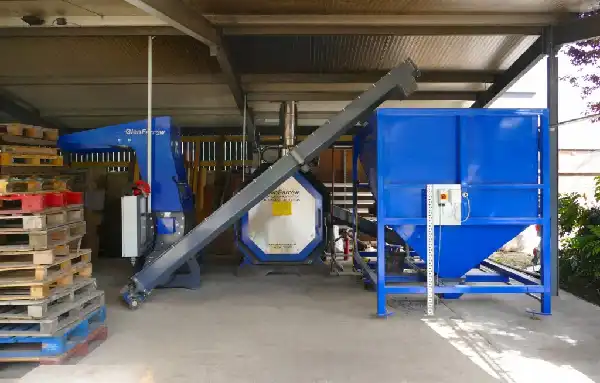
Reliability and accuracy are important in modern metalworking. A system called an Automatic Furnace Feeding System uses mechanical conveyors, vibratory feeders, and PLC-driven control technologies to move scrap metal, DRI, HBI, ingots, limestone, and foundry coke directly into processing furnaces with little help from people. When workers charge by hand, they face high temperatures, poisonous fumes, and splashes of molten metal. Automatic Furnace Feeding Systems keep workers out of dangerous areas while keeping melt bath temperatures stable.
Core Technologies Behind Automated Feeding
These systems use a mix of tried-and-true technologies to work without any problems. Materials are moved from storage bins to the furnace mouths by conveyors, and vibratory feeds ensure that they run smoothly without stopping or starting. PLC-driven logic matches feed rates to furnace melting cycles, which lets you do precise batch dosing or continuous trickle feeding. This coordination keeps the temperature stable, keeps refractory linings safe from thermal shock, and saves energy by cutting down on the time the boiler door has to be opened.
Why Does Customisation Matter for Your Operation?
Off-the-shelf options don't always work with the specific needs of plants. Customised layouts consider the type of furnace you have, how much space you need, the layout of your workshop, and the properties of the materials you use. Whether you use small induction furnaces or large EAFs, customised systems can be scaled up or down to meet your needs. This way, they can work with your current infrastructure and solve problems that are unique to your site, like limited space, electromagnetic interference, or different material densities.
Evaluating Your Needs: Custom vs Standard Furnace Feeding Systems
Standard feeding equipment may seem like a good deal at first, but it quickly loses that value due to hidden inefficiencies. Generic designs often have trouble integrating, which means that operators have to change their processes or settle for less-than-perfect performance. Even though manual systems are known, they pose safety risks and cause variations that make it harder to meet output goals.
Limitations of One-Size-Fits-All Approaches
Pre-engineered systems aren't very adaptable. They can't handle special needs for moving things, don't work well with older automation systems, and don't give you many ways to change their configuration as production needs change. Standard equipment plants often have more downtime because mechanical failures occur at stress points that the original design didn't consider. When feeding rates don't match furnace melting patterns, heat is lost unnecessarily and operating expenses go up, which is another problem with energy inefficiency.
Advantages of Tailored Feeding Solutions
Custom methods perfectly match the way you run your business. It's possible to apply modular designs in stages and add on to them in the future. Engineered parts, like hydraulic actuators, pneumatic conveyors, or strong screw feeds, are made to fit the properties of your materials and your flow goals. Sensor-based controls give feedback in real time and change feed rates on the fly to keep the boiler conditions at their best. This response immediately leads to better energy use, less electrode consumption, and a longer life for the refractory.
Real-World Performance Comparisons
Leading steel producers in North America say that switching to customised Automatic Furnace Feeding Systems cuts charging time by 30%. European foundries record more than 8,500 hours of work each year, with almost no unexpected downtime. These measurable improvements show that customised solutions offer a better return on investment (ROI) through higher productivity, lower maintenance costs, and better safety measures at work that standard solutions just can't match.
Key Factors to Consider When Designing Your Custom System
For system design to work well, you must carefully consider many technical and practical factors. Your custom solution needs to find a good balance between capacity, accuracy, and integration. It also needs to meet safety standards and long-term maintenance requirements.
Capacity and Accuracy Requirements
The feeding capacity is between 1 and 50 tonnes per single charge, and the power rate is between 15 and 150 kW, based on the size of the furnace and how much material needs to be moved. Achieving deviations of only ±50mm in precision positioning makes sure that materials enter furnaces at the best places, preventing damage to the refractory and keeping the melt pool chemistry stable. Integrated load cells and loss-in-weight technology provide dose accuracy within ±0.5% to ±1%, which is very important for uses that need precise stoichiometric control of fluxes and alloying elements.
Integration with Existing Infrastructure
Your Automatic Furnace Feeding System needs to work well with the plant's current systems. This includes being able to work with SCADA/HMI platforms that support the Profibus and Modbus protocols for logging data in real time. When integrating physically, room limitations, the need for structural support, and the flow lines of materials from storage areas to charging places are all taken into account. Custom engineering gets around these problems by scanning facilities in 3D and making support structures that fit into small spaces while still keeping safe clearances.
Energy Efficiency and Operating Costs
When you design with energy efficiency in mind, you can cut long-term costs significantly. Variable frequency drives (VFDs) manage the speed of the conveyors, which lets gentle material introduction happen during initial charging to make safe cushion layers before heavy scrap loading. Temperature-resistant parts, like heat shields and water-cooled jackets, can handle high temperatures up to 1,200°C. This makes parts last longer and less often need to be replaced. Operating temperature ranges from -10°C to 200°C ensure that the device works reliably in a wide range of circumstances.
Safety Mechanisms and Compliance
In metallurgical settings, safety is still the most important thing. Operators are no longer near the oven because of automated controls. This keeps them safe from dangerous conditions. Emergency stop features, power failure defaults, and sensor error protocols make sure that the system enters safe states when things go wrong, which stops materials from being dumped without being controlled. You can be sure that your investment will meet strict safety standards by making sure it follows the CE, UL, and CSA machinery directives and the ISO 13577 standards for industrial thermal processing equipment.
Maintenance Accessibility and Longevity
Simpler repair procedures reduce downtime. There are grease points on the bearings that are straightforward to reach, sacrificial wear liners that can be replaced in the hoppers and chutes, and motor enclosures that are rated IP65 to keep conductive dust out of high-particulate environments. Picking the right materials is crucial. Hardox steel or manganese alloy linings work well with rough trash and fluxes, and UHMWPE or polished stainless steel lowers friction in steep-walled hoppers, keeping materials from sticking to them and getting clogged.
How to Select the Right Supplier and Solution Partner?
Choosing the right manufacturing partner affects system performance and your long-term satisfaction. When you only compare prices, you miss important factors that affect the total cost of ownership and the success of your business.
Evaluating Manufacturer Credentials
Look for providers who have a history of making special metallurgical tools. The 2008-founded Shaanxi Heyuanxin Metallurgical Electric Furnace Equipment Co., Ltd. is a prime example of how to combine knowledge and new ideas to complete difficult tasks. With over 400 installations of furnace equipment completed around the world in 11 years and a skilled team of 400 professionals, we bring proven skills to every job. We have more than ten utility model patents and ten computer software copyrights in our collection, which shows that we are always working to improve technology.
Quality Certifications and Standards
Manufacturers with a good reputation keep full quality management systems. ISO 9001 certification makes sure that production processes are always the same. ISO 14001 certification for environmental management and ISO 45001 certification for occupational health show that a company is committed to running safe and environmentally friendly businesses. Provincial-level company recognition and 3A-level credit enterprise standing give customers even more faith in the security and honesty of suppliers. These approvals mean that the quality of the product and the way the job is carried out can be counted on.
Comprehensive Service Offerings
Full options include more than just delivering tools. Professional providers offer a full range of services, including planning, production, installation, testing, and training for operators. This unified method makes sure that the project runs smoothly from the idea stage to the handoff of operations. Support after installation, such as warranty coverage, spare parts availability, and technical troubleshooting, keeps your investment safe while it's in use. Established suppliers keep up regional service networks or partner relationships that make it possible for them to provide quick support no matter where the installation is located.
Client Testimonials and Project References
B2B buyers can learn from looking at a supplier's past performance. Ask for case studies that show how successful projects have been in places like yours. Performance improvements that have been recorded, such as shorter charging times, lower energy costs, and fewer safety incidents, show that the solution works. Direct client references give you an honest look at how responsive, technically competent, and good at solving problems a supplier is during both the installation and operation phases.
Maximizing Long-Term Value from Your Custom System
Initial installation is only the start of how valuable your machine will become. Using strategic methods for operation, repair, and working with suppliers leads to long-term benefits over the span of the equipment.
Performance Monitoring and Optimization
Sensors and control systems built into modern systems produce useful operating data. Look at this data to find ways to improve things, like changing feed rates based on how efficiently the furnace works, planning repairs for planned shutdowns, or fine-tuning material flow to get rid of bottlenecks. Continuous monitoring finds new problems before they become failures. This lets you take preventative steps that keep your system running and extend the life of parts.
Operator Training and Knowledge Transfer
Well-trained staff makes the most of the system's features while also making sure safety rules are followed. Comprehensive training programs cover normal operations, how to do routine maintenance, how to fix common problems, and what to do in an emergency. Putting money into developing the workforce pays off by getting better use out of tools, fewer accidents caused by operator error, and faster resolution of problems when they happen. As working methods change, skills need to be kept up to date through regular refresher training.
Flexible Acquisition and Upgrade Strategies
Adaptable equipment strategies are needed for businesses that are growing. Phased implementation lets you gradually increase capacity in line with production growth. This way, you can avoid big capital costs up front and keep your working freedom. Think about lease options that let you keep your capital for more important investments and still give you access to the latest technology. Modular system architectures let you make specific improvements, like replacing control systems, adding capacity, or adding new material handling features, without having to buy all new equipment.
Building Strategic Supplier Partnerships
Think of the company that sells you equipment as a long-term partner, not just a one-time buyer. Strong ties give you continued access to professional know-how, ideas for new products, and faster help when you need it most. Suppliers who care about your success will suggest ways to make things better, share the best practices in their field, and work with you to solve new problems as they come up. This partnership approach gives you advantages over your competitors that last long after you buy the equipment.
Key Applications Across Industries
There are many different mining and industrial uses for Automatic Furnace Feeding Systems, and each one has its own technical needs and performance standards.
Steel Production Excellence
Automation is especially helpful for electric arc furnace jobs that deal with DRI, HBI, and scrap bins. Extreme electromagnetic interference and mechanical shock are normal in EAF environments, but these systems can handle them. Specialised "Fifth Hole" roof feeding features allow continuous carbon and lime injection, which improves slag foaming while lowering electrode consumption—a major cost of doing business in steel production. Accurately placing materials shields water-cooled panels and reduces refractory wear, which increases the boiler campaign life.
Aluminum Processing Optimization
When ingots, T-bars, and alloying elements are fed into reverberatory and induction furnaces, they need to be fed with great care. Intelligent temperature feedback keeps the bath from freezing by changing the feed rates automatically based on the state of the molten metal. Specialised entry devices reduce turbulence while materials are being introduced, which greatly lowers the production of oxides and dross. This controlled feeding keeps the aluminium pure while also increasing the metal yield, which are both very important for the economics of making aluminium.
Biomass and Waste-to-Energy Solutions
Facilities that use renewable energy and work with solid fuels of varying densities have special problems to solve. Wood chips, refuse-derived fuel, and farm waste all have different amounts of wetness and different-sized particles that make it hard for standard feeding equipment to work. Strong solutions use hydraulic ram feeders or heavy-duty screw conveyors with smart anti-jamming logic to keep the rate of combustion steady and the output of steam pressure steady. These skills are necessary for reliably making green energy from a variety of feedstocks.
Conclusion
Custom Automatic Furnace Feeding Systems change the way metallurgical operations are done by getting rid of the risks that come with charging by hand and improving accuracy, regularity, and speed in ways that standard equipment can't. When designing a system with care, you should think about how much it can hold, how easy it is to maintain, how much energy it uses, and how safe it is to use. Choose providers with a lot of knowledge, a track record of success, a wide range of services, and the right certifications to make sure the project goes well and you get long-term value. Monitoring performance, training operators, and building partnerships with suppliers can all be done strategically to get the most out of equipment over its entire lifecycle. This will give your facility a long-term competitive edge in today's tough global markets.
FAQ
How does automated feeding handle wet or sticky materials without clogging?
Hopper designs with steep walls lined with ultra-high-molecular-weight polyethylene or polished stainless steel reduce friction and stickiness of materials. Integrated bridge-breakers and reversible screw feeders can spot high torque loads that could mean a jam and automatically reverse rotation to clear any obstacles before they stop operations. This smart tracking keeps things from getting clogged even when working with difficult materials that have different amounts of wetness.
Can automated systems be added to furnaces that are already set up by hand?
Most buildings can be retrofitted successfully with modular designs. Suppliers use detailed 3D laser scans to plan custom support structures and transport paths that work with the room that is available. Engineers carefully plan where to connect new storage systems to existing ones so that as few changes as possible are made to the structures and the transfer of materials goes smoothly. This method lets plants update their operations without having to completely rebuild the facilities.
What maintenance ensures longevity in high-dust environments?
As part of routine maintenance, grease points for bearings are checked every three months, sacrificial wear liners are cleaned, and optical sensors and limit switches used in automation controls are inspected. Motors and gearboxes with an IP65 rating or higher don't let conductive dust in, which lowers the chance of failure in places with a lot of dust. Predictable repair schedules keep long-term running costs low and stop unexpected downtime.
Partner with Shaanxi Heyuan for Your Custom Feeding Solution
Shaanxi Heyuan New Metallurgical Electric Furnace Equipment Co., Ltd. is ready to give your business the custom-designed supply answer it needs. Our automatic furnace feeding system manufacturer's skills include planning, fabrication, installation, and testing. We have over 400 successful setups around the world and have been coming up with new ideas for more than 11 years. We have several utility model patents and are certified in ISO quality management, environmental management, and occupational health management. This means that we can make sure that every project meets the highest standards. Email our technical team at sxhyyj606@163.com right now to talk about your unique needs and get full advice. You can look at our full line of mining equipment options at hyyjfurnace-supply.com. Heyuanxin can change the way you charge your heater by installing Automatic Furnace Feeding Systems that are safe, efficient, and built to last.
References
1. Anderson, M. R. (2019). Advanced Material Handling Systems in Modern Steel Production. Metallurgical Equipment Publishers, Chicago.
2. Chen, L. & Roberts, K. (2021). "Safety and Efficiency Improvements Through Automated Furnace Charging Systems," Journal of Industrial Metallurgy, Vol. 47, No. 3, pp. 215-234.
3. European Steel Technology Platform (2020). Best Practices for EAF Operations and Automation. Brussels: ESTEP Technical Report Series.
4. Johnson, T. P. (2018). Energy Efficiency in Metallurgical Furnace Operations: A Practical Guide. Society for Mining, Metallurgy & Exploration, Denver.
5. Miller, S. D. & Zhang, W. (2022). "Integrated PLC Control Systems for Precision Material Dosing in Foundry Applications," Automation in Manufacturing Quarterly, Vol. 29, No. 1, pp. 78-95.
6. National Association of Manufacturers (2021). Safety Standards and Risk Management in High-Temperature Industrial Environments. Washington, DC: NAM Safety Council Publications.


YOU MAY LIKE