
How to Choose the Right Industrial Hydraulic Station?
October 15, 2026
Choosing the right industrial hydraulic station starts with understanding your actual production demands. A hydraulic power unit converts electrical energy into fluid pressure to drive lifting, clamping, and tilting actions across heavy equipment — from arc furnaces to metallurgical cranes. The correct selection depends on working pressure range, motor power, flow rate, operating temperature, and system configuration. Getting these parameters right from the start prevents costly downtime and equipment mismatch. This guide walks through each decision point so procurement managers and engineers can make a confident, well-informed choice.
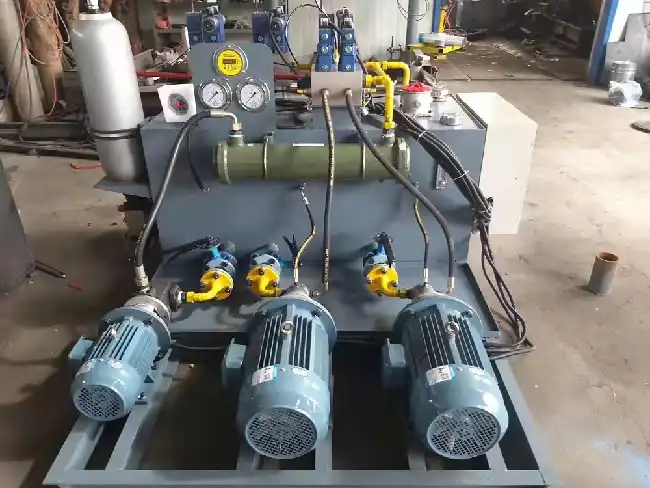
Understanding Industrial Hydraulic Stations: Basics and Components
It's helpful to know what a hydraulic power unit does and how its parts work together before considering your choices.
What Is a Hydraulic Power Unit?
An industrial hydraulic station is a combination of electrical and mechanical parts that creates and sends fluid pressure to heavy machinery's actuators, such as cylinders and hydraulic motors. It has a cooling circuit, oil reservoir, valve manifold, filtration system, and motor-pump group. These parts work together to keep the pressure and flow under control so that the connected equipment keeps running smoothly.
Fixed vs. Mobile Configurations
Fixed hydraulic stations are put in place next to production equipment like electric arc furnaces or ladle furnaces and are made to run continuously at high duty cycles. Mobile hydraulic power units are useful for when you need to work in the field or with less work to do. Fixed setups with motor power range from 5.5 to 200 kW are the norm in steel and metallurgical plants.
Electric vs. Diesel Power Sources
Electric-driven hydraulic stations are most common in industrial plants because they are easier to handle, make less noise (under 75 dB in well-designed systems), and use less energy over time. Diesel choices are useful for uses that are far away or outside, where grid power isn't available. Electric systems are better for indoor mining plants because they have stable output and require less upkeep.
Core Criteria to Consider When Choosing an Industrial Hydraulic Station
You can't just guess when it comes to choosing a hydraulic station for your business; you have to compare specific technical factors to the needs of your tools.
Pressure and Flow Requirements
One of the first numbers to check is the working pressure. Industrial hydraulic stations for metallurgical equipment typically operate between 10 and 31.5 MPa. Flow rate needs, which can be anywhere from 10 to 500 L/min, decide the size of the pump and the size of the tank. For proper heat transfer and air separation, the industry standard is for the reservoir to hold 3 to 5 times the pump's per-minute flow rate.
Operating Temperature and Environmental Factors
A hydraulic station must work reliably in all of your building's temperatures. Temperatures ranging from -10°C to 80°C should not affect units made for industrial settings. Integrated oil coolers, which can be either air-blast or water-cooled, help keep the viscosity of the fluid between 15 and 100 cSt. This keeps seals and other internal parts from wearing out too quickly.
Energy Efficiency and Duty Cycle
Installing Variable Speed Drives (VSD/VFD) can lower the amount of energy a motor needs by 40 to 50 percent when it's not working or when it's not being used. For places that work 24 hours a day, seven days a week, like steel mills, this means big savings every year. By matching the motor power and pump displacement to the duty cycle, you can avoid both oversizing, which wastes energy, and undersizing, which leads to overheating and unstable pressure.
Comparing Industrial Hydraulic Stations: Market Options and Brand Insights
The global market includes manufacturers such as Bosch Rexroth, Parker Hannifin, and various specialized metallurgical equipment suppliers. Each segment serves different priorities.
What Major International Brands Offer
Bosch Rexroth and Parker Hannifin are known for strong component-level engineering and wide global parts availability. Their standard catalog systems work well for general industrial applications. However, for metallurgical-specific requirements — such as arc furnace electrode regulation or ladle tilting mechanisms — off-the-shelf catalog units may require significant custom engineering additions, which increases project lead time and cost.
When Custom Solutions Make More Sense
Custom-configured hydraulic power systems become the practical choice when your equipment has non-standard pressure profiles, space constraints, or process-specific safety requirements. Shaanxi Heyuan's industrial hydraulic stations are purpose-built for metallurgical applications, with configurable pressure, flow, and system layout to match each customer's exact equipment interface. With over 400 furnace projects completed globally, the engineering team understands process-specific demands that catalog products cannot fully address.
Evaluating Total Cost of Ownership
Purchase price is only one part of the equation. Consider parts availability, local service response time, fluid and filter replacement costs, and energy consumption over a 10-year operating horizon. A system with a higher upfront cost but lower failure rate and faster service response will almost always deliver better value in continuous production environments.

Procurement and Buying Guide: From Inquiry to Installation
Once you are sure of your technical needs, you need to carefully manage the procurement process to avoid delays and gaps in compliance.
Choosing Between Manufacturers and Distributors
When you buy from the manufacturer, you get better warranty terms, engineering support, and records of tests done in the factory. When fast shipping and local stock are important, distributors add value. When it comes to complicated metallurgical hydraulic systems, it's best to work directly with the maker, preferably one that can build, integrate, install, and commission the system all in one go. This cuts down on communication mistakes and accountability gaps.
Installation, Commissioning, and Safety Compliance
Commissioning professionals are important. No matter how well it was built, a hydraulic station that isn't properly set up—with the wrong pressure relief settings, not enough flushing, or the wrong filter installed—will fail soon. Look for providers that test the hydrostatic pressure at 1.5 times the maximum working pressure and check the ISO 4406 cleanliness codes before sending the goods. It is normal for U.S. industry procurement to follow ISO 4413, which is the General Rules for Hydraulic Fluid Power.
After-Sales Service Terms to Confirm
Before signing, make sure you understand how long the warranty lasts for your industrial hydraulic station, how long it takes to get parts like filters, seals, and hydraulic oil, and how quickly technical support will respond. If your supplier offers 24-hour after-sales service and quick delivery of spare parts, you won't have to worry about long production stops when problems arise out of the blue.
Ensuring Long-Term Performance: Maintenance Tips and Troubleshooting Guidance
It's not enough to just buy the right unit. Regular maintenance will protect your investment for as long as the equipment is in use.
Daily and Weekly Inspection Routines
The fluid level, system temperature, and any visible leaks should be checked every day. Check the filter differential pressure signs once a week, and change the filter elements before the bypass valve opens, which lets oil that hasn't been filtered flow through. The main reason why parts break down in industrial hydraulic systems is hydraulic fluid that is contaminated.
Common Issues and How to Address Them
Cavitation, which is usually caused by suction lines that are too short or inlet strainers that get clogged, makes noise and speeds up pump wear. When over-pressure alarms go off, they usually mean that the relief valve has moved or there are restrictions further downstream. If something is overheating, it's probably because the cooling circuit is too small or the fluid doesn't have the right viscosity grade for the temperature it's working at. If you deal with these problems as soon as you notice them, they won't get worse and cause big problems.
Using IoT Monitoring for Proactive Servicing
Setting up temperature, pressure, and contamination sensors that are linked to a monitoring system lets maintenance teams know about problems early on, before they affect production. Real-time data logging also helps with planning scheduled maintenance, switching from calendar-based intervals to condition-based ones, which works better for metallurgical equipment that is used a lot.
Conclusion
To choose the right hydraulic power unit, you need to make sure that the technical specs match the way you make things. These specs include the pressure range, flow rate, motor power, temperature tolerance, and safety needs. For heavy industrial and metallurgical uses, an industrial hydraulic station custom-built from a manufacturer with direct engineering support and quality records that can be tracked will always work better than generic catalog options. Along with the original purchase price, you should think about the total cost of ownership, service response time, and commissioning quality to make a choice that will last for years of continuous production.
FAQ
How do I size the reservoir for my hydraulic station?
A standard in the industry says that the tank should hold 3 to 5 times the pump's per-minute flow rate. This gives air time to escape, time for contaminants to settle, and time for heat to leave before the fluid goes back into the pump's suction line.
How often should I change the hydraulic fluid?
Instead of using a set date, analyze the oil every three to six months. When rust levels rise, chemicals run out, or water content goes over safe limits, the fluid needs to be changed. This method saves more money and keeps you from having to make early changes or use old fluid.
What causes excessive noise in a hydraulic power unit?
The most common reasons are cavitation from suction lines that are too tight, air getting in through open input fittings, or worn pump internals. Make sure the pressure at the pump's suction head is within the manufacturer's guidelines, and check all the connections on the intake side.
Can I reduce energy costs on my existing hydraulic station?
Yes. Adding a Variable Frequency Drive (VFD) to the pump motor can cut energy use by 40 to 50 percent when demand is low. Also, less heat is generated, which means the cooling system doesn't have to work as hard.
What certifications should a supplier hold?
If you want to make sure that hydraulic fluid power is safe, look for ISO 9001 quality management, ISO 14001 environmental management, and ISO 4413 compliance. Long-term business relationships are more likely to succeed with suppliers who have utility model patents and occupational health certifications.
Get Your Hydraulic Power Unit Quote from Shaanxi Heyuan Today
Shaanxi Heyuan has been selling industrial hydraulic stations to steel mills, mining plants, and EPC companies since 2008. They have finished over 400 projects around the world. You can set the pressure (10–31.5 MPa) and the motor power (5.5–200 kW), and get full one-stop commissioning help along with 24-hour after-sales support from a direct industrial hydraulic station manufacturer. To get a technical consultation and quote for your project, email our engineering team at sxhyyj606@163.com.
References
1. Hydraulics & Pneumatics Magazine. (2023). Hydraulic Power Unit Design and Selection Guide.
2. International Organization for Standardization. (2021). ISO 4413: Hydraulic Fluid Power — General Rules and Safety Requirements for Systems and Their Components.
3. Parker Hannifin Corporation. (2022). Industrial Hydraulic Systems Engineering Handbook.
4. Bosch Rexroth AG. (2023). Energy Efficiency in Hydraulic Drive Systems: Technical Application Guide.
5. Fluid Power Society. (2020). Fundamentals of Fluid Power: Industrial Systems and Applications.
6. Plant Engineering. (2022). Hydraulic System Maintenance Best Practices for Heavy Industry.


YOU MAY LIKE