
Why Choose a Negative Pressure Dust Collector for Your Facility?
October 16, 2026
If you manage a metallurgical plant, steel mill, or heavy industrial facility, dust control is not optional — it directly affects worker safety, regulatory standing, and equipment lifespan. A negative pressure dust collector addresses these concerns by creating a vacuum inside the collection housing, pulling contaminated air inward rather than pushing it outward. This design physically prevents dust from escaping if a seal wears out or a housing panel develops a gap. For facilities handling toxic fumes, combustible particulates, or high-temperature emissions, this containment logic offers a measurable safety advantage over conventional systems.
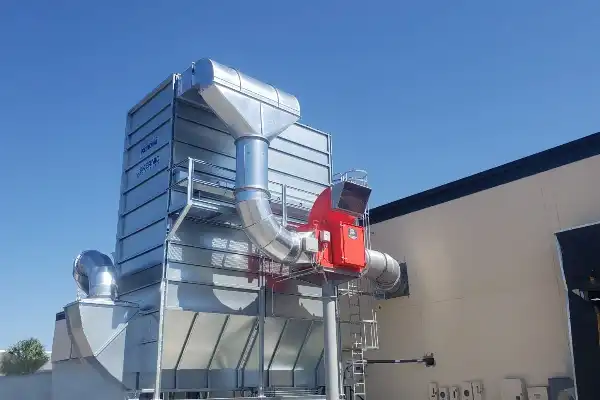
Understanding Negative Pressure Dust Collectors
Before choosing an industrial air filtration system, it's helpful to know how vacuum-based dust collection works and why where the fans are placed is important.
How the Vacuum Principle Works
If you have a negative pressure dust collector, the centrifugal fan is after the filter media, on the side with clean air. The air is pulled through the filters instead of being pushed in. Any hole in the structure pulls outside air inside because the inside of the housing stays under vacuum. Air that is dirty never gets into your desk.
Key Components and Their Roles
The system is made up of three parts that work together: the housing, the filter media, and the fan-motor assembly. The housing has to be able to handle long-term pressure, which is usually between -5 kPa and -20 kPa. Particulates are caught by filter bags or cartridges, and a reverse pulse-jet cleaning system moves dust cakes around without stopping work.
Common System Types
There are different types of negative pressure dust collector vacuum collectors, such as baghouse collectors for heavy industrial dust, cartridge collectors for fine particles, and cyclone pre-separators for heavy-load situations. Each type can handle different airflow needs, from 500 m³/h to 120,000 m³/h, based on the size of your factory's production.
Advantages of Negative Pressure Dust Collectors for Industrial Facilities
When facilities move from open-hood or positive pressure systems, they always report better safety, maintenance, and running costs. Here are the main benefits that you should look at more closely.
- Absolute containment at the source: Because the housing operates under vacuum, any gap or aging seal pulls clean air in rather than releasing dust outward. This fail-safe behavior is critical for facilities handling hexavalent chromium, pharmaceutical APIs, or combustible sawdust — materials where even trace fugitive emissions carry serious health or fire risks.
- Extended fan and impeller life: The fan blade only contacts filtered air. In positive pressure systems, abrasive particles continuously strike the impeller, accelerating wear and requiring frequent replacement. Placing the fan on the clean side dramatically reduces this mechanical stress.
- Modular filter design for scalable production: A modular filtration layout lets you add filter sections as output grows without rebuilding the entire system. This adaptability directly reduces capital expenditure during capacity expansions.
- Low operating noise and vibration: Well-engineered vacuum dust collectors keep noise below 75 dB and maintain operating resistance fluctuations below 500 Pa, contributing to a more productive work environment.
Full control at the source: Since the housing works under vacuum, any cracks or worn-out seals let clean air in instead of dust out. This fail-safe behavior is very important for places that work with hexavalent chromium, medicinal APIs, or flammable sawdust, because even small amounts of fugitive fumes can be very dangerous to people's health or cause fires.
Comparing Negative Pressure Dust Collectors with Other Systems
Knowing when vacuum-based collection works better than other options helps procurement teams make decisions with confidence.
Vacuum Systems vs. Positive Pressure Collectors
Positive pressure units force air that is full of dust into the building. If a seal fails, polluted air is pushed out and right into the plant. This risk is completely eliminated by the negative pressure dust collector vacuum systems. The suction-based design is the best way to go for materials that are controlled by OSHA and combustible dust settings that are regulated by NFPA 652/654.
Vacuum Systems vs. Wet Scrubbers
Wet scrubbers are good at getting rid of gas-phase pollutants, but they make it harder to handle water, get rid of sludge, and prevent corrosion. A vacuum dust collection made of materials that can withstand high temperatures can remove dry particles from -30°C to 300°C without creating liquid waste streams. This dry collection method makes compliance easier for metallurgical and metal fabrication operations.
Vacuum Systems vs. Standalone Cyclone Collectors
Cyclones are good at separating heavy particles but not so good at sub-micron fines. When you pair a cyclone pre-separator with a vacuum collector downstream, you get high-volume coarse separation and fine filtration in one combined system. This gives you 99.8% filtration efficiency across the whole range of particle sizes.
Selecting and Procuring the Right Negative Pressure Dust Collector
Not just looking at stock numbers isn't enough to choose the right system; you also need to match the technical specs to how your building actually works.
Evaluate Airflow Volume and Pressure Requirements
First, do a correct calculation of the airflow. Your dust collector needs to be able to handle high production air volumes without causing the pressure to drop. Heyuanxin systems can process between 500 m³/h and 120,000 m³/h and can work in negative pressures from -5 kPa to -20 kPa. This means they can be used in both small workshops and big manufacturing plants.
Match Filter Media to Your Dust Type
The choice of filter has a direct effect on how long it lasts and how well it works. Under normal loads, cellulose-blend screens last between one and two years. In rough or damp places, spunbond polyester or PTFE membrane filters can last up to three to five years longer. Filtration grades of 15/16 MERV allow recirculation when local air quality rules allow it.
Assess Supplier Capabilities and After-Sales Support
A negative pressure dust collector is an investment that will last for a long time. Check with suppliers about how long it takes to deliver (standard models are in stock, and custom configurations are delivered within 20 to 45 days), the warranty terms, the availability of spare parts, and the support for setting up the equipment on-site. Heyuanxin offers free technical advice, training for operators, and prompt maintenance after the sale. They are certified by the ISO quality management system and have more than ten utility model patents to back this up.
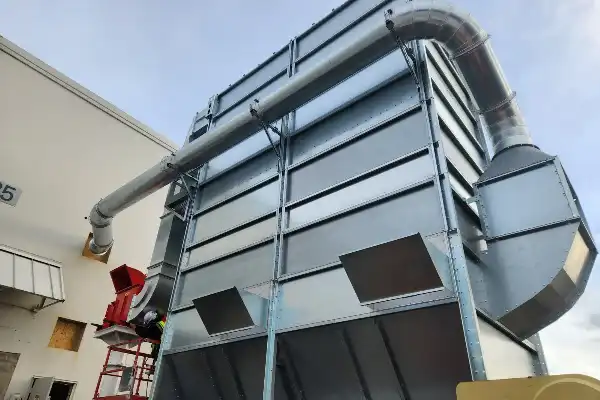
Maximizing Efficiency and Longevity of Your Negative Pressure Dust Collector
Whether your equipment works at its best for five years or fifteen depends on how well you handle it.
Establish a Routine Inspection Schedule
Check the readings for differential pressure (dP) once a week. When dP goes above 5 to 6 inches w.g. (about 1,250 to 1,500 Pa), filters usually need to be replaced. If you act quickly, you can stop filter blinding before it happens. This makes the fan work harder, which uses more energy.
Optimize Pulse-Jet Cleaning Intervals
The reverse pulse-jet method uses 90 to 100 PSI of compressed air to lift dust cakes off of filter surfaces while the machine is still running. Instead of using set timers, adjust how often you clean based on how much dust is actually there. Too much cleaning speeds up filter wear, while too little cleaning lets resistance build up.
Maintain Structural Integrity Under Vacuum
Test the case for vacuum decay once a year. The structure must be able to hold the design vacuum without microcracks forming, especially where seams are welded. Before being shipped, each Heyuanxin unit goes through dye penetrant weld testing and vacuum decay verification. This sets a solid standard for ongoing structural tracking.
Conclusion
Facilities that deal with dangerous, flammable, or high-temperature particles can use a vacuum-based dust collection system, which is safe for the environment and meets all the rules. Putting the fan on the side with clean air protects workers, cuts down on equipment wear, and makes it easier to follow NFPA and OSHA rules. Shaanxi Heyuan's negative pressure dust collector systems are a technically sound choice for procurement professionals. They come with 11 years of experience in the metallurgy field, more than 400 setups around the world, and full after-sales support. Finding the right system for your building's airflow, temperature, and dust levels is the easiest way to make sure it works well in the long run.
FAQ
What industries benefit most from negative pressure dust collectors?
The most noticeable benefits are seen in steel mills, metal production shops, pharmaceutical factories, woodworking shops, and chemical processing plants. Vacuum-based collection is the best way to keep dangerous fumes, flammable dust, or sub-micron particles contained during any process.
How often should a negative pressure dust collector be maintained?
Check the differential pressure once a week and look at the housing seals and inlet baffles once a month. Pulse-jet cleaning systems should be checked every three months based on how much dust is actually in the air. Depending on the grade of media, filter media should be changed every one to five years, but this depends on the type of dust and the airflow.
Can a negative pressure dust collector be customized for unique facility needs?
Yes, Shaanxi Heyuan makes custom dust collection systems for different temperature ranges (-30°C to 300°C), airflow rates (500 m³/h to 120,000 m³/h), and types of materials. Standard models are ready to ship right away, while custom-engineered versions take 20 to 45 days to arrive. Before you buy, you can get free expert advice.
Request a Quote from Shaanxi Heyuan — Trusted Negative Pressure Dust Collector Manufacturer
Shaanxi Heyuan has sent tried-and-true dust collection systems to more than 400 metallurgical and industrial sites around the world. Our negative pressure dust collector systems meet NFPA 652/654 standards, are ISO certified, and have more than ten utility model patents to back them up. They also achieve 99.8% filtration efficiency. To get specifications and a project quote right away, email our engineering team at sxhyyj606@163.com.
References
1. National Fire Protection Association. NFPA 652: Standard on the Fundamentals of Combustible Dust. NFPA, 2019.
2. American Society of Heating, Refrigerating and Air-Conditioning Engineers. ASHRAE Standard 52.2: Method of Testing General Ventilation Air-Cleaning Devices. ASHRAE, 2017.
3. Occupational Safety and Health Administration. OSHA Technical Manual: Industrial Hygiene — Dust Control Methods. U.S. Department of Labor, 2016.
4. Air Movement and Control Association International. AMCA Standard 210: Laboratory Methods of Testing Fans for Certified Aerodynamic Performance Rating. AMCA, 2016.
5. International Organization for Standardization. ISO 10816-1: Mechanical Vibration — Evaluation of Machine Vibration by Measurements on Non-Rotating Parts. ISO, 1995.
6. Cooper, C. David, and F. C. Alley. Air Pollution Control: A Design Approach. 4th ed., Waveland Press, 2011.


YOU MAY LIKE