
How Can a Negative Pressure Dust Collector Improve Air Quality?
October 10, 2026
A negative pressure dust collector improves air quality by creating a vacuum inside the collection housing that actively pulls contaminated air through filter media before releasing clean air back into the facility. Unlike positive pressure systems that push air outward, this design ensures any housing breach draws ambient air inward, preventing toxic dust from escaping into the workspace. With filtration efficiency reaching 99.8% and operating capacity from 500m³/h to 120,000m³/h, a negative pressure dust collector delivers measurable, reliable protection for workers and regulatory compliance.
Understanding the Working Principle of Negative Pressure Dust Collectors
How the Vacuum Effect Works
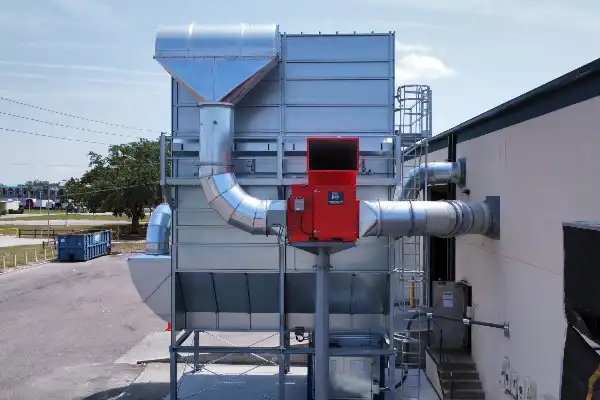
In a negative pressure dust collector, the centrifugal fan is placed after the filter media. This placement creates a vacuum that stays inside the gathering box. Air that is full of dust comes in through the intake and goes over the filter surface. Only clean air then gets to the fan blades. This physical sequence is what makes the system reliable at keeping things inside.
Negative Pressure vs. Positive Pressure Systems
Positive pressure devices force air through the filter. If the seal breaks, dust can escape into the building. This happens backward with a negative pressure dust collection. Any hole or crack in the housing lets clean air in instead of letting dirty air out. Because of this fail-safe behavior, OSHA-regulated buildings and drug plants prefer vacuum-based collection systems for dealing with dangerous particles.
Key Components and Their Roles
The intake baffles, the filter media (cartridge or bag), the pulse-jet cleaning unit, and the downstream rotating fan make up the four main parts. Inlet baffles drop big particles before they get to the filters, which keeps them from wearing down. The 90–100 PSI compressed air from the pulse-jet device is fired at filter surfaces to remove dust cakes without stopping work. Since the fan only touches filtered air, there is a lot less wear on the blade. This makes the service life longer and the frequency of upkeep lower.
Key Benefits of Using Negative Pressure Dust Collectors to Improve Air Quality
Superior Particle Capture and Worker Safety
Facilities that use a high-performance negative pressure dust collector get MERV 15/16 ratings for filtration, which means they can catch particles as small as submicrons. This keeps workers safe from harmful metal oxides, hexavalent chromium from plasma cutting, and fine pharmaceutical dusts that are higher than what OSHA allows. The American Conference of Governmental Industrial Hygienists (ACGIH) says that the best way to control airborne particulate risks in engineering is to make sure that there is good local exhaust airflow.
Regulatory Compliance and Environmental Standards
Industrial operations have to follow the rules set by the EPA and OSHA for air quality. A properly designed negative pressure dust collector helps businesses meet the NFPA 652/654 requirements for managing combustible dust. These rules are directly relevant to places where people work with wood, metal, and food. Systems with MERV 15/16 filtration grades can also recirculate air in occupied areas, which lowers the amount of energy used by HVAC systems during high temperatures.
Energy Efficiency and Long-Term Cost Reduction
When you connect the dust collection to a Variable Frequency Drive (VFD), the system can keep the airflow speed steady even as the filter resistance rises over time. This keeps the fan from going at full speed when it's not needed, which wastes energy. The Heyuanxin system works consistently without raising utility bills or creating a noise compliance problem because it keeps noise levels below 75dB and operating resistance changes below 500Pa.
Here is a list of the operational benefits that these design choices bring:
- Fail-safe containment: Any housing breach pulls clean air inward, protecting workers from toxic dust exposure at all times.
- Extended fan life: Fan blades contact only filtered air, eliminating abrasive particle damage and reducing replacement frequency.
- Low operating resistance: Stable differential pressure below 500Pa keeps energy consumption predictable across production shifts.
- Noise control: Operating noise stays below 75dB, supporting occupational health compliance in enclosed facilities.
These operational features directly address the daily stresses that metallurgical plants, steel mills, and EPC companies are under to keep production going and follow the rules.
Common Challenges and How to Optimize Performance of Negative Pressure Dust Collectors
Filter Clogging and Pressure Drop Management
Most of the time, less efficient collection is caused by filter blinding. When there is too much dust cake for the pulse-jet cleaning cycle to handle, the differential pressure goes up, and the airflow goes down. The answer is to keep an eye on the dP numbers all the time. When dP goes above 5–6 inches w.g., replace the cellulose or blended filters. Under normal conditions, spunbond polyester or PTFE membrane filters usually make service intervals last up to three to five years.
Airflow Inconsistency and System Sizing Errors
Systems that are too small don't create enough capture velocity at the source, so fumes can escape before they reach the inlet. Systems that are too big lose energy and cause too much vacuum, which puts stress on the joints in the pipes. If the air-to-cloth ratio is set correctly, which is usually between 1:1 and 3:1 depending on the bulk density of the dust, the negative pressure dust collector will always work at its best, even if the amount of dust being collected changes.
Maintenance Best Practices for Sustained Performance
Vibration analysis should be part of regular inspections in line with ISO 10816 standards so that fan imbalance is caught early. To make sure the housing is airtight, dye penetrant tests should be used to check the weld strength. Heyuanxin systems have remote monitoring features that let facility engineers keep an eye on dP readings, fan speed, and the frequency of cleaning cycles without having to physically inspect the systems. This cuts down on work hours and helps find problems before they cause downtime.

How to Choose the Right Negative Pressure Dust Collector for Your Industry
Matching System Capacity to Production Demands
The Shaanxi Heyuan negative pressure dust collection can handle air volumes ranging from 500m³/h to 120,000m³/h, which means it can be used for everything from small CNC processes to large-scale electric arc furnace (EAF) dust removal. The procurement team should figure out how much airflow is needed by looking at the required hood capture velocity and the duct transport velocity. They should then choose a unit that has 10–15% more headroom than the calculated demand to allow for production growth.
Comparing Collection Technologies for Your Application
Baghouse collectors work well for tasks that produce a lot of coarse dust, like grinding grain or gravel. Cyclone dividers can handle pre-separation of heavy particles, but they can't catch particles smaller than a micron. A cartridge-based negative-pressure dust collection system is the best way to filter out metal fumes, chemical dusts, and flammable particles. A two-stage system with cyclone pre-separation and downstream cartridge filtration works best for mixed applications that are common in metallurgical plants. This system has the best balance of filter life and capture efficiency.
Evaluating Suppliers: Certifications, Customization, and Support
The ISO quality management system, the environmental management system, and the occupational health management system should all be certified by a good negative pressure dust collector supplier. Shaanxi Heyuan has all three and more than ten patents for utility models. Standard models are ready to ship right away, while special versions take 20–45 days to arrive. There is free technical support and training for operators, as well as long-term maintenance support for installations in more than 400 sites around the world.
Procurement and Support: Where and How to Buy Negative Pressure Dust Collectors
Global Sourcing and Logistics Considerations
Getting a negative pressure dust collector from a certified manufacturer with proven experience delivering products around the world greatly lowers the risk of the project. Shaanxi Heyuan is a Chinese company based in Xianyang that ships to industrial projects all over the world. Standardized packing and clear ordering paperwork are helpful for large orders. On-site installation and commissioning services are available to make sure the system works as planned from the start.
After-Sales Support and Long-Term Service
The supplier's ability to provide spare filter media, replacement fan assemblies, and technical support after installation will determine how reliable the system is in the long term. Heyuanxin provides ongoing maintenance contracts, remote diagnostic support, and operator training programs after the sale. The engineering team has more than 11 years of experience with industrial equipment, so they know the practical pressures that steel mills and mining companies are under and know how to help them.
Turnkey Solutions for EPC and Large Industrial Projects
EPC builders who are building new metallurgical plants or improving old ones need a provider that can provide dust control as a full set of equipment. Heyuanxin offers complete design-to-commissioning services for exhaust air fan dust removal, ladle furnace fume control, and mining furnace dust removal systems. This full-service capability makes buying things easier, lowers the cost of coordination, and keeps project schedules on track.
Conclusion
A well-designed negative pressure dust collector gets rid of harmful particles where they start, protects worker health, and keeps buildings within the limits required by environmental law. The vacuum-based design gets rid of fugitive emissions, makes fans last longer, and lets them work with advanced monitoring systems. For metallurgical plants, steel mills, mining companies, and EPC contractors, the best way to improve air quality and keep operations running smoothly is to choose a qualified seller with experience deploying products around the world and offering full after-sales support.
FAQ
Why is a negative pressure dust collector safer than a positive pressure system?
There is negative pressure around the fan, which is on the side with clean air. Any leak in the housing brings in air from the outside instead of pushing dust outside. This physical behavior keeps dirty air from leaving the building and entering, making it the standard for combustible dust environments that are regulated by OSHA.
What is the typical filter replacement interval?
Most cellulose or blended filters are good for one to two years. Filters made of spunbond polyester or PTFE material can last for 3 to 5 years. Readings of the differential pressure tell you when to replace it. Instead of replacing it on a set calendar plan, change it when the dP consistently exceeds 5–6 inches w.g.
Can I recirculate filtered air back into the facility?
Yes, as long as the system meets MERV 15/16 standards for filtration and has extra sensors for monitoring particles. Recirculating air in the HVAC system lowers costs a lot in the summer and winter, but it has to follow local air quality rules and OSHA exposure limits.
Is this system compliant with NFPA combustible dust standards?
Yes. The negative pressure dust collection meets the standards of NFPA 652/654 when it has explosion vents, chemical separation valves, or flameless venting devices added, depending on the type of dust.
Get a Custom Negative Pressure Dust Collector Quote from Shaanxi Heyuan
Shaanxi Heyuan has sold approved negative pressure dust collectors to more than 400 industry sites in the mining, chemical processing, and metallurgy industries. We are a reliable manufacturer and supplier of negative pressure dust collectors, and we can deliver both standard stock units and custom configurations within 20 to 45 days. You can email our engineering team at sxhyyj606@163.com or visit hyyjfurnace-supply.com to get a free technical consultation and a recommendation on the right size for your project.
References
1. American Conference of Governmental Industrial Hygienists (ACGIH). Industrial Ventilation: A Manual of Recommended Practice for Design. 30th ed., 2019.
2. National Fire Protection Association. NFPA 652: Standard on the Fundamentals of Combustible Dust. 2019 edition.
3. National Fire Protection Association. NFPA 654: Standard for the Prevention of Fire and Dust Explosions from the Manufacturing, Processing, and Handling of Combustible Particulate Solids. 2020 edition.
4. ASHRAE. ASHRAE Standard 52.2: Method of Testing General Ventilation Air-Cleaning Devices for Removal Efficiency by Particle Size. 2017 edition.
5. Occupational Safety and Health Administration (OSHA). OSHA Technical Manual, Section III: Chapter 3 — Ventilation Investigation. U.S. Department of Labor, 2020.
6. Air Movement and Control Association International (AMCA). AMCA Publication 201: Fans and Systems. 2002, reaffirmed 2016.


YOU MAY LIKE