
Why is a Tilting-ladle-type automatic pouring machine Important in Foundries?
July 13, 2026
Because it turns handling molten metal from an unpredictable human process into an exact, repeatable automated process, a Tilting-ladle-type automatic pouring machine has become crucial in modern foundries. This equipment solves the most important problems foundries have, like uneven casting quality because people are different, safety risks at work from being around molten metal, and production inefficiencies that slow down output. These machines use servo-driven tilting mechanisms and smart control systems to make sure that the pouring rates are consistent. This cuts down on defects like cold shuts, porosity, and slag inclusions that cost foundries a lot of money in scrap and rework while protecting workers from extreme heat and toxic emissions.
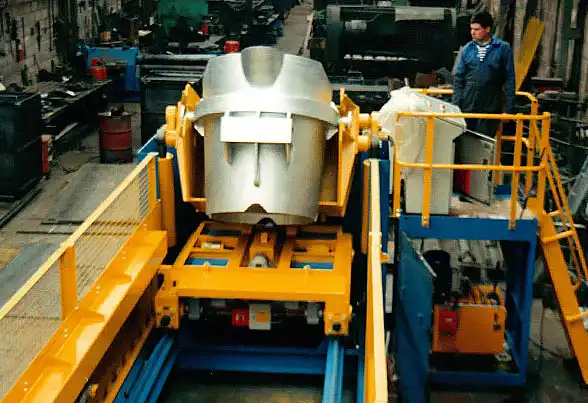
Understanding the Tilting-Ladle-Type Automatic Pouring Machine
Modern foundries need tools that are a good mix of precision engineering and dependability in the field. The Tilting-ladle-type automatic pouring machine is a big step forward in technology compared to the old ways of doing things.
Core Components and Operating Principles
The turning mechanism is the key to this system. High-precision servo motors keep the angle within 0.1 degrees. This accuracy keeps the pouring spout in the ideal position relative to the mould sprue throughout the pouring cycle. Load cells measure liquid metal weight, calculate flow rates, and change tilt speed to maintain filling patterns.
The control design uses touchscreen HMIs and programmable logic controllers. This allows workers to save multiple pouring recipes for different casting shapes. Sensors identify the pattern of a mould on the production line and load the relevant parameters, such as tilt angle progression, goal weight, and pouring duration. This eliminates human adjustments and their errors.
Engineers employ a "virtual pivot" in advanced models. Metal drips from the spoon, altering the centre of gravity. Traditional fixed-pivot systems don't respond well to flow rate changes. Virtual pivot systems constantly find the ideal spin point to maintain steady stream qualities from the first drop to the final ounce. Since microporosity from uneven filling can cause catastrophic field failures, this new method helps foundries create safety-critical automotive parts.
Technical Specifications That Drive Performance
Shaanxi Heyuanxin Metallurgical Electric Furnace Equipment Co., Ltd. makes Tilting-ladle-type automatic pouring machines with ladle sizes between 100 and 1,000 kilograms. These systems support both small-batch, precise casting and high-volume production. The tilt speed can be changed from 0.1 to 5 degrees per second, which lets you fine-tune the machine for metals with different viscosities. For example, slower speeds are needed for high-temperature steel to keep the mould from wearing away, while faster rates are needed for aluminium alloys that need to fill cavities quickly before they solidify too soon.
Pouring accuracy keeps an error range of ±1%, which directly leads to higher yields. When you pour 500 kg into a mould that needs 490 kg, that 10 kg difference is metal that was either lost because it was too much or not enough to fill the complex parts properly. Over thousands of pours a year, precise control saves a lot of money on raw materials and lessens the damage that remelting returned scrap does to the environment.
The machinery is used for a wide range of metalworking tasks, including using grey iron for city infrastructure, ductile iron for hydraulic parts, steel for heavy machinery, and aluminium for aircraft parts. The system handles oxidation control and thermal management for each metal in its own way by monitoring temperatures in a way that can be programmed to tell workers when metal temperatures fall outside acceptable ranges before pouring starts.
Why Do Foundries Rely on Tilting-Ladle-Type Automatic Pouring Machines?
Real practical problems that human methods can't fix led to the choice to automate pouring operations.
Eliminating Human Variability in Critical Operations
Operators of manual ladles have to stand near furnaces that emit strong heat and wear heavy safety gear that makes it hard to move and see while trying to do smooth, controlled pours. In these conditions, fatigue builds up quickly, and even expert workers show pour-to-pour inconsistencies. One study of hand pouring operations found that the flow rate could change by more than 20% during the same shift and by the same operator. This was directly linked to higher rejection rates during X-ray checking.
Automated methods get rid of all of this variation. The machine always follows the same set of steps for each pour, keeping the preset link between tilt angle and metal weight in a way that humans could never do. Foundries that use automatic pouring report a 30–50% drop in defects in their first year of operation. This is mirrored by a drop in non-destructive testing failures and customer warranty claims.
Enhancing Workplace Safety Through Isolation
There are inherent risks in the foundry setting that have led to major accidents in the past. Spills of molten metal can cause serious burns, and direct heat exposure for a long time can lead to long-term health problems. Breathing in fumes containing metal particles can be harmful, and moving heavy ladles can hurt your muscles and bones.
Tilting-ladle-type automatic pouring machines keep workers physically separated from dangers. Operators interact with the system using control screens that are not at the pouring station. Instead of having a clear line of sight to the process, cameras and sensors are used to watch it. Emergency stop circuits built into the system react to problems in milliseconds, putting the ladle back in its upright position automatically if the power goes out or if safety interlocks identify people in restricted areas.
This change is especially important because foundries are having a harder time finding people who are ready to do risky manual work. As a result of automation, jobs in foundries are shifting toward operating equipment and improving processes, which require technical skills rather than being able to work in dangerous conditions for long periods of time. This change makes it easier to keep employees and lets people who couldn't do standard metal work before because of their physical demands join the workforce.
Achieving Environmental Compliance and Energy Efficiency
Global markets are under increasing regulatory pressure to reduce manufacturing emissions. Hand-pouring metal causes fumes because individuals are continually opening ladle lids to verify the metal level and temperature. Each exposure releases gases and particles that dust collection systems struggle to remove.
Automated devices reduce air contact. Temperature sensors in sealed ladles monitor metal status without opening the covers. The exact pouring reduces waste that would oxidise and release smells. Foundries report 15–25% emission reductions with tilting-ladle automatic pouring machines. This lets them fulfil tighter air quality regulations without costly environmental control system upgrades.
Energy utilisation decreases when metal is worked efficiently. To avoid hardening during protracted pouring operations, hand-worked metal is generally held at greater temperatures than necessary. Automated systems speed up and improve pouring, saving foundries superheat and fuel costs. These savings reduce running expenses across a facility's annual output capacity.
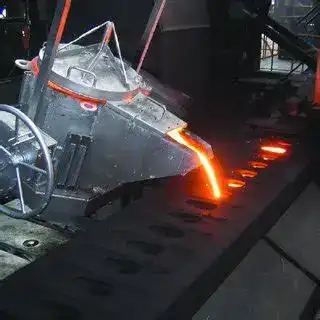
Comparing Tilting-Ladle-Type Pouring Machines with Other Systems
When procurement teams look at automated pouring options, they come across a number of different technological methods, each with its pros and cons.
Tilting Versus Fixed Ladle Systems
Fixed ladle methods keep the crucible still by using stopper rods or slide gates to manage the flow of metal. Even though these designs are easier technically, they are very difficult to operate. Stopper rods that are submerged in liquid metal are damaged by heat shock and wear, so they need to be replaced often. Refractory wear makes casts dirty and changes the flow features without warning when the orifice sizes change.
These problems don't happen at all with tilting ladles because they control flow through angle instead of mechanical blockage. Even refractory wear happens on the inside of the ladle, and workers can look at the state of the lining between pours. Heyuanxin customers usually get 200–300 pouring cycles between major refractory fixes on tilting systems, compared to 50–100 cycles for stopper rod mechanisms. This means that maintenance gaps are much longer.
Integration Advantages Over Robotic Pouring
The most advanced automation is six-axis robotic arms with ladle-handling tools. These systems can handle complex mould shapes and multi-point pours into metal-moving gating systems, making them the most flexible option. Robotic installations operate best in low-volume, high-mix manufacturing when frequent modifications justify the big capital investment.
Between two extremes, tilting-ladle automatic pouring devices are good. They automate procedures for 40–60% of robotic setup costs and function seamlessly with moulding lines. With continuous or tracked moulding lines, where moulds arrive at defined times and places, turning systems fit the production schedule. Installation requires minimum architectural alterations, and personnel who know how to handle basic industrial controls can learn to program complex robots in a few days instead of weeks.
Cost-effectiveness is especially evident for growing foundries. You can automate your highest-volume product lines immediately with a Tilting-ladle automatic pouring machine. Lowering scrap and improving output will yield a quick return on investment. Speciality products can be handcrafted until volume warrants automation.
Manufacturer Selection Criteria
Besides comparing types of technology, the success of procurement rests a lot on what the seller can do. Shaanxi Heyuanxin Metallurgical Electric Furnace Equipment Co., Ltd. is a prime example of the qualities that picky buyers should look for. Our business has more than twenty intellectual property rights, such as utility model patents that protect new mechanical ideas and software copyrights that protect control methods. This indicates that we are constantly investing in new technology instead of just putting together generic parts.
Quality management licenses, such as ISO 9001, ISO 14001 for environmental management, and ISO 45001 for health and safety at work, make sure that the ways things are made meet international standards. These approvals are especially important for foundries that work with regulated industries like aircraft and the automobile. In these fields, qualifying equipment needs to be backed up by proof of quality and traceability.
Heyuanxin has a 3A credit rating and is recognised as a provincial business. This provides procurement teams with trust in the company's financial security and ability to perform on contracts. Buying equipment requires a lot of money, and the length of the seller's warranty affects how easily extra parts, expert support, and guarantee fulfilment can be accessed over the machine's working life.
Procurement Guide for Tilting-Ladle-Type Automatic Pouring Machines
To buy strategic tools, you need to carefully consider both your business needs and the suppliers' ability to meet them.
Assessing Your Foundry's Specific Requirements
Start by documenting your current pouring activities. Which metals do you work with most? What casting weights can your moulds handle? Does your moulding line strive to produce quickly? These factors determine ladle capacity and tilt speed. The tools needed to create 500-kilogram ductile iron valve bodies and 50-kilogram aluminium automobile parts are different.
Think carefully about your building's constraints. Check the space around your serving stations for ladle-lifting equipment and desk-to-desk movement. Automated systems need boundaries for safety. Early detection of these restrictions prevents customers from receiving unsuitable tools.
Assess your electrical system's capacity. Most tilting systems use 380V three-phase power; however, Heyuanxin can customise power supplies. Your building's electrical panels must be able to manage the extra load, and expert electricians should be involved in installation planning to make sure everything works and detect any adjustments before the equipment arrives.
Customization and Integration Considerations
Many scenarios work well with typical equipment configurations, but foundries with specialised needs benefit from makers that allow adjustments. Heyuanxin's technical team works with customers to modify ladles to fit different metals, adjust the control system to match varied mould line routines and add inoculation feeds for ductile iron.
Keeping pouring recipes handy is useful in high-mix production. If your production plan switches casting families daily or hourly, ensure the control system can handle it. Advanced pattern recognition sensors set the correct parameters immediately when a new mould type arrives. This reduces both manual labour and errors.
Communication mechanisms are crucial to merging. Modern moulding lines use PROFIBUS, EtherNet/IP, or DISA and Sinto protocols. Your Tilting-ladle-type automatic pouring machine must easily share data with upstream and downstream equipment to maintain output. Request transmission standards and successful integration case studies from similar sites.
Evaluating Total Cost of Ownership
Car ownership carries long-term expenses beyond the purchase price. Request specific quotations for equipment, shipping, supplies, installation, operator training, startup assistance, and the first sets of extra parts. Turnkey solutions, where one source handles everything for a successful launch, frequently outperform fragmented buying, where you interact with many providers.
Seller warranties vary greatly. For security, standard 12-month warranties cover components and labour, but you should read the fine print to discover what conditions will void coverage. Do warranty restrictions require you to use manufacturer-approved new parts? When will technology help answer questions? How does it manage warranty service for non-US customers? Have regional service centres or use online diagnostics?
Maintenance assistance affects how long your equipment is up and functioning. After the sale, Heyuanxin provides preventative maintenance plans, solution guides, and application experts who understand foundry metalworking. This knowledge helps locate the ideal pouring conditions for new metals or detect modest performance dips before they become casting faults.
Maintenance Best Practices to Maximise Machine Performance
Systematic repair plans protect your investment in automation and make sure that the quality of the castings stays the same over the life of the equipment.
Routine Inspection Protocols
Daily visual checks will help you spot any damage or wear to critical elements. Check the turning mechanism for strange pivot bearing wear patterns and smooth movement. Heat, wear, and leakage can damage hydraulic or gas lines. The foundry's severe temperature can heat electronic parts if the control box cooling fans don't work.
The manufacturer recommends oiling all moving parts weekly during repairs. Different areas require different greases. Parts near the ladle need high-temperature formulations, while room-temperature parts need industrial grades. Following the prescribed amounts of oil is important since both too much and too little attract dirt and debris that speed up wear.
The equipment is calibrated monthly to maintain pouring precision. Due to temperature and mechanical stress, load cells slow down. Use certified test weights to calibrate the machine from empty ladle to 25%, 50%, 75%, and full capacity. Record the testing results to identify patterns that may indicate that the sensor needs to be changed before the accuracy drops too low.
Addressing Common Issues Proactively
Control system alerts should not be ignored as annoying noises; they need to be dealt with right away. Underfilling or cold shut defects are stopped by temperature monitors that show metal below the accepted pouring ranges. If weight tracking systems notice an unusual loss of mass during filling, it could mean that the ladle has failed refractorily, which means that molten metal has broken through the covering and could cause a catastrophic breakthrough. Quickly responding to these signs keeps equipment from getting damaged and keeps dangerous situations from happening.
The highest ongoing cost for ladle systems is the upkeep for the refractory. Build relationships with skilled refractory workers who know what a foundry ladle needs. Different kinds of metal harm refractories in different ways. For example, steel mostly damages them through heat stress, while carbon and silicon in cast iron cause chemical erosion. For the best service life, match the inner materials to the nature of the metal.
Every month, safety interlocks should be tested to make sure they work. To make sure the system works right, manually activate the emergency stop circuits. This will return the ladle to its safe upright position and turn off the power to the drive motors. Test the sensors that identify people by going into restricted areas on purpose when production isn't going on to make sure that the alarms go off and the dumping cycles stop as planned. These safety systems keep workers safe, and making sure they work shows that you care about keeping the workplace safe.
Documentation and Continuous Improvement
Keep thorough repair logs that record all service actions, replacements of parts, and observations of performance. This record of the past is very helpful for figuring out why problems keep happening or for supporting calls for money to buy new tools. Digital maintenance management systems can keep track of the lifecycles of individual parts, organising preventative maintenance tasks automatically and sending you alerts when it's time to replace replaceable parts.
Look at data on casting defects along with records of equipment repair to find links between the state of the machine and the quality of the product. If the rate of rejects goes up after long production runs without calibration checks, you have a data-driven reason to change how often you do maintenance. This method, which is based on proof, strikes the best balance between quality assurance and upkeep costs. It stops both too many service activities and not enough attention, which lets quality slip.
Conclusion
Tilting-ladle-type automatic pouring machines are a smart investment that helps foundries with their biggest problems: consistent quality, keeping workers safe, and staying competitive. The technology has grown past the early stages of adoption and is now used in proven, reliable systems that give measured returns through less waste, higher output, and better compliance with regulations. Shaanxi Heyuanxin Metallurgical Electric Furnace Equipment Co., Ltd. has been installing metallurgical equipment for more than fifteen years and has a lot of quality approvals and intellectual property to protect our technical advances. Foundries are under more and more pressure to update their processes while keeping costs low. Automated pouring systems are a clear way to do this. They turn handling molten metal from a dangerous and unpredictable manual task into a precise, repeatable automated process that puts your facility in a position to stay competitive in global markets that are very demanding.
FAQ
What makes tilting ladle systems superior to stopper rod designs?
Tilting mechanisms control the flow of metal by precisely placing angles instead of mechanical blocking. This gets rid of the problems with stopper rod systems that cause fast wear and contamination. With this design, repair intervals are much longer—usually 200 to 300 pours pass between big services, compared to 50 to 100 pours for stopper systems. Additionally, the tilting method is better at keeping the slag because the pouring spout stays low, letting the lighter slag rise on top of the metal, protecting your casts from contamination.
Can the system accommodate different mould types on the same production line?
These days, Tilting-ladle-type automatic pouring machines have recipe management systems that keep separate pouring profiles for various casting shapes. When pattern recognition sensors notice a change in the type of mould, the controller sets the right types of moulds, such as the goal weight, the tilt speed progression, and the pouring length. This feature lets you make a lot of different products at once without having to make any changes by hand between changes. This keeps the quality consistent across all of your product lines while cutting down on setup time.
How does automated pouring improve safety compared to manual operations?
Automation keeps workers physically away from dangers in molten metal. Workers interact with the system through control screens that are placed away from areas with high temperatures. Instead of being directly exposed to the system, workers watch how it works through sensors and cams. When something goes wrong, the emergency stop circuits react right away, and the ladles return to their safe positions immediately when the power goes out or when safety interlocks sense people in restricted areas. This change gets rid of the burns, heat stress, and muscle problems that used to happen when ladles were moved by hand.
Partner with Heyuanxin for Advanced Pouring Solutions
The Tilting-ladle-type automatic pouring machine technology from Shaanxi Heyuan New Metallurgical Electric Furnace Equipment Co., Ltd. can completely change how your foundry works. Our engineering team works closely with you to understand your exact casting needs, suggest the best combinations, and offer full turnkey solutions from the planning stage to the final finishing. We have been making equipment for a long time and have over twenty patents and full ISO certifications. The equipment we sell meets the top international quality standards and is a great deal. Our automatic filling systems work well with current production lines, cut down on scrap a lot, and make workplaces safer for workers in tough foundries. You can email us at sxhyyj606@163.com to talk about how our Tilting-ladle-type automatic pouring machine seller skills can help you with your unique metalworking problems and set up your facility for long-term growth.
References
1. Anderson, M. R. (2019). Automation in Modern Foundries: Technology Implementation and ROI Analysis. Industrial Casting Association Press.
2. Chen, L. & Roberts, D. (2021). "Precision Pouring Systems: Comparative Analysis of Tilting, Fixed, and Robotic Technologies." International Journal of Metalcasting, 15(3), 892-910.
3. European Foundry Association. (2020). Best Practices for Automated Metal Pouring Systems. Brussels: EFA Technical Publications.
4. Nakamura, T. (2018). Safety Engineering in Foundry Operations: Risk Mitigation Through Automation. Tokyo: Manufacturing Safety Institute.
5. Peterson, K. & Williams, J. (2022). "Reducing Casting Defects Through Process Control: A Statistical Study of Automated Pouring Systems." Foundry Trade Journal, 196(4), 45-58.
6. United States Foundry Society. (2023). Equipment Procurement Guidelines for Casting Facilities. Cleveland: Technical Documentation Series.


YOU MAY LIKE