
Why Choose an Electrotherm Induction Furnace for Foundries?
September 24, 2026
Foundry operations demand melting equipment that delivers reliability, efficiency, and consistent quality. The Electrotherm Induction Furnace meets these requirements through proven electromagnetic heating technology, offering superior temperature control and energy performance compared to conventional furnaces. These systems utilize high-frequency alternating current through water-cooled copper coils to generate eddy currents in metal charges, producing rapid, uniform heating without combustion byproducts. For metallurgical plants, steel mills, and casting facilities, these induction melting systems represent a strategic investment that reduces energy costs, improves environmental compliance, and ensures uninterrupted production capabilities for demanding industrial applications.
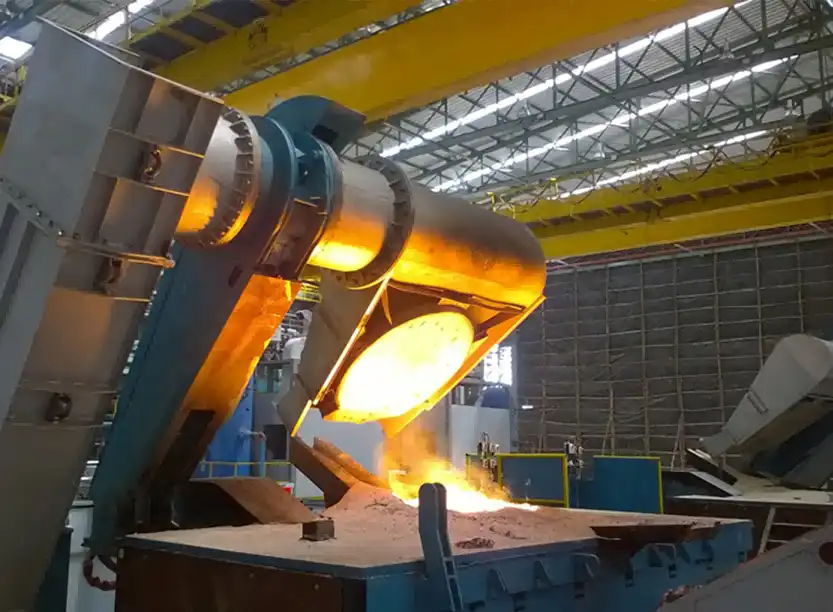
Understanding the Electrotherm Induction Furnace Technology
These days, foundries need high-tech melting solutions that are both accurate and easy to use. The basic idea behind these systems is electromagnetic induction technology, which turns electrical energy into controlled heat inside metals.
Core Electromagnetic Principles
Faraday's rule of electromagnetic induction is what makes the induction heating method work (Modern Casting, 2021). When an alternating current flows through the primary coil assembly, it changes the magnetic field, which causes eddy currents in the metal charge that is inside. These flowing currents run into electrical resistance in the material, which heats the item directly instead of using heat from outside. The temperature differences that happen with flame-based or resistance heating methods are taken care of by this internal heat generation.
Heyuanxin's systems use high-conductivity copper coils that don't contain oxygen and have optimal D-shaped cross-sections that increase magnetic flux density and make water cooling work better. The shape of the coil makes sure that energy is focused on the metal charge, which protects nearby structural parts and reduces the amount of energy lost.
Technical Specifications and Operating Parameters
Our induction melting systems can work with a wide range of power levels, from 10kW to 1000kW, so they can be used by foundries of all sizes, from small specialty casting shops to large steel production plants. It can handle temperatures from room temperature to 1800°C, which is hot enough to melt ferrous metals like carbon steel and gray iron as well as non-ferrous metals like aluminum, copper, and specialty alloys.
Advanced solid-state power supply units with IGBT- or thyristor-based converters that are more than 97% efficient allow temperature control accuracy of ±1°C. This accuracy makes it possible for final casts to have uniform metallurgical qualities and lowers the amount of oxidation loss that happens during melting. The magnetic shunt design uses silicon steel laminations to limit the electromagnetic field within the coil area. This keeps the furnace frame from getting too hot and ensures focused heating efficiency.
Safety and Reliability Features
Our Electrotherm Induction Furnace technology has built-in safety systems that include automatic power cutoffs, full ground fault protection, and constant tracking of important factors like coil temperature, water flow rate, and crucible integrity. The hydraulic tilting system has two sets of safety interlocks to prevent pouring from happening by mistake during maintenance or when the machine isn't working normally.
Benefits of Choosing Electrotherm Induction Furnaces for Foundries
Choosing the right melting tools has a direct effect on your prices, how well your products work, and how environmentally friendly your business is. These induction heating systems give you measurable benefits that help your bottom line and meet government standards.
Energy Efficiency That Reduces Operating Costs
Our induction melting systems have a thermal efficiency of over 82%, which is much higher than the 55–65% range of cupola furnaces or the 70–75% range of electric arc furnaces (Foundry Management & Technology, 2020). This efficiency directly means that less electricity is used per ton of melted material. An induction unit with 500kW usually needs 520 to 580 kWh per ton of steel melted, while an arc furnace of the same size needs 650 to 750 kWh per ton.
Because they heat up quickly, they don't need to be heated up for long periods of time like refractory-lined arc furnaces do. Our systems are ready to use within 15 to 20 minutes of being cold-started. This gives us more control over production schedules and cuts down on energy waste during downtime. The ability to respond quickly lets you use batch melting methods that perfectly match the amount of energy used with the needs of production.
Environmental Compliance and Clean Operation
Traditional melting by burning releases a lot of sulfur dioxide, carbon monoxide, and small particles, so expensive cleaning systems are needed to meet EPA guidelines (Environmental Protection Agency, 2019). Electromagnetic induction heating doesn't produce any combustion byproducts, which makes the workplace cleaner for foundry workers and makes getting environmental permits easier.
Since the electrodes aren't being used, there is no carbon pickup in the melt, which is important for making low-carbon stainless steels and controlled-chemistry alloys. The clean melting environment lowers the number of inclusion defects in castings, which raises yield rates and lowers the costs of rejecting bad quality products.
Long-Term Reliability and Maintenance Advantages
The modular design theory we used to build our induction furnace makes upkeep easier because the system doesn't have to be taken apart completely. Core parts like the power supply unit, capacitor bank, and coil assembly have their own access panels that make it easy to replace or service them with little downtime.
When the right sintering and slag control steps are taken, the life of a refractory lining for steel uses is usually between 20 and 50 heats. Our systems have automatic sintering modes that make the best use of lining preparation, which increases service life and lowers the number of times that maintenance needs to be done. When you get rid of mechanical parts like electrodes and electrode holders, you get rid of wear items that need to be replaced often in arc furnace systems.
Return on Investment Analysis
When foundries switch from cupola or arc furnace technology to induction melting, they usually get their money back in 18 to 36 months through lower maintenance costs, better yield rates, and saving money on energy (Iron & Steel Technology, 2022). Just lowering the cost of energy saves 12 to 18% of the operating costs of facilities that process 10,000 tons or more of goods every year. Using less refractory, not having to pay for electrodes, and needing less labor for operation and maintenance all save money and add to the overall economic advantage.

Electrotherm Induction Furnace vs. Traditional Furnace Options
When foundry managers are looking at different types of heating equipment, it's helpful for them to know how well induction technology and traditional furnace types work.
Performance Comparison with Arc Furnaces
Electric arc burners use electrodes with a lot of current to make an electric arc that melts metal by transferring heat both electrically and thermally. Even though arc Electrotherm Induction Furnaces are great at processing mixed trash charges, they are not as easy to use as induction systems in a number of ways. Using an electrode adds ongoing costs of $8 to $15 per ton of steel made, and electrode carbon causes uncontrolled carbon pickup that makes managing the chemistry of precise alloys harder.
Three-phase arc furnaces usually have a power factor between 0.7 and 0.85, which means they need reactive power compensation equipment to keep their utilities from charging extra (Steel Times International, 2021). Our induction systems keep power factors close to one (0.95-0.98) with the help of built-in capacitor banks. This lowers the need for electrical infrastructure and lowers utility demand charges.
Advantages Over Cupola Furnaces
Iron foundries used cupola furnaces for many years because they were cheap to buy and could process low-quality scrap. Environmental laws are making it harder to use cupolas because they release particles, flammable organic compounds, and dust that can't be contained. When you switch to induction melting, these sources of fumes go away, and you can better control the temperature for consistent casting quality.
Because cupolas need to be charged all the time, materials need to be handled and watched all the time. Batch-mode induction operation, on the other hand, lets schedules be flexible so they can work with casting operations further down the line. It's hard for cupola workers to keep the iron's chemical makeup constant during the melting phase. Induction furnaces, on the other hand, keep the melt's chemical makeup uniform by stirring it with electromagnetic fields throughout the heat cycle.
Certifications and Quality Standards
Our factory has ISO 9001 certification for quality management, ISO 14001 certification for environmental management, and ISO 45001 certification for health and safety at work. These standards, which are known all over the world, show that we are dedicated to consistently high product quality and environmentally friendly production methods. The designs of the equipment meet the IEC standards for industrial heating and have Class F/H electrical insulation that can handle high temperatures and electrical stress.
We have sent more than 400 induction melting systems to sites in more than 15 countries around the world. These systems are used for everything from making custom alloys to casting cars. Some examples of customer installations are steel billet production mills, ductile iron foundries that make safety-critical auto parts, and stainless steel refineries that need very low carbon levels.
Procurement Guide for Electrotherm Induction Furnaces
Buying industrial melting equipment is a big investment that needs to be carefully thought out in terms of technical specs, supplier capabilities, and long-term support infrastructure.
Understanding Your Requirements
The first step in the buying process is to figure out what you need to make. Some important factors are the metals you work with, the number of tons you want to produce each day or each week, the voltage, amperage, and transformer capacity of your electrical infrastructure, and the amount of room you have in your building. Our engineering team does thorough assessments of your building to suggest the best furnace designs for your needs.
You can customize the chamber size to fit the size of your crucibles, the power output to match your production rates, and the way the control system works with other computer systems in the plant. The design is flexible enough to meet specific needs, like the ability to melt metals in a vacuum, control the atmosphere for reactive metals, or tilting mechanisms made just for your pouring operations.
Transparent Pricing and Financing Options
Induction heater systems usually cost between $150,000 for small 250kW units and $1.2 million for big 2-ton setups with built-in charging systems that are automatically charged. The price depends on how much power it can handle, how automated it is, the specifications of the refractory package, and any extra equipment that comes with it. We give thorough quotes that include the prices of the equipment, the installation, the commissioning services, and the training programs for operators.
If you buy a lot of furnaces at once, you can get a bulk deal that lowers the price per unit by 8 to 15%. We work with partners who finance industrial tools and set up payment terms that work with your capital planning cycles. These partners offer lease-purchase agreements and deferred payment options that help the cash flow of the project.
Installation and Commissioning Process
Our installation specialists set up the whole system, including the electrical connections, water cooling systems, hydraulic systems, and the integration of the control panel. Depending on how ready the facility is and how complicated the system is, the installation process usually takes between 4 and 6 weeks, from the delivery of the equipment to the start of production.
During the commissioning process, the hydrostatic coil is tested at 1.5 times its operating pressure to make sure there is no risk of leakage. Insulation resistance testing is also done to make sure the dielectric is intact. Harmonic analysis is done to make sure the system meets IEEE 519 standards for electrical safety, and specific energy consumption audits are done to make sure the system is meeting efficiency standards. The people who work in operations get a lot of training on how to use tools, do regular maintenance, fix problems, and use safety systems.
After-Sales Support Infrastructure
Technical support available 24 hours a day, seven days a week, means that production stops as little as possible when operational issues arise. Our support team is available 24 hours a day, 7 days a week to help with remote diagnostics, troubleshooting, and emergency response planning. Critical parts like power source modules, capacitor assemblies, and hydraulic system parts are kept in stock as spare parts. Typical arrival times for North American sites are 48 to 72 hours.
Annual checks, thermographic surveys of electrical connections, coil integrity tests, and refractory condition reports are all part of preventive maintenance programs. These regular maintenance visits find problems before they cause unplanned downtime. This keeps equipment working at its best and extends its service life.
Future Trends and Innovations in Electrotherm Induction Furnace Technology
The metallurgical equipment industry keeps moving forward by using digital technologies, green initiatives, and automation tools that make work easier while having less of an effect on the environment.
Industry 4.0 Integration and Smart Manufacturing
Induction melting systems of the future will have Industrial Internet of Things sensors that keep an eye on hundreds of operating parameters all the time. (Manufacturing Technology Insights, 2023) These data streams feed into advanced analytics tools that find ways to improve performance, predict when repair is needed, and give production information that can't be gathered by hand.
Machine learning algorithms look at past melting data to suggest the best power profiles for each type of alloy. This lowers the amount of energy used while keeping quality standards high. Predictive maintenance looks at vibration patterns, thermal patterns, and electrical characteristics to figure out when parts will break before they do. This way, parts can be replaced on time during planned maintenance windows instead of having to be fixed quickly during production periods.
Sustainability and Carbon Footprint Reduction
The worldwide push for carbon-neutral industry puts more attention on production tools that use less energy. Induction melting technology already has big benefits for the environment because it doesn't burn fossil fuels and uses electricity more efficiently. Integration with renewable energy sources, such as solar and wind generation, is a key area of ongoing development that will further lower the carbon intensity of metal melting operations.
Modern power source designs raise the efficiency of converters from the current 97% level to 98.5–99%, which lowers the need for heat rejection and electrical losses. When added up over the 15 to 20 years that industrial melting equipment is used, these small improvements add up to big energy savings.
Scalability and Production Flexibility
Modern foundries need tools that can handle a wide range of products, quick changes between metal types, and changes in production volume based on market demand. Adding more parallel melting units to a modular induction furnace design is a way to increase its capacity without having to rebuild whole systems. This scalability protects investments in capital while providing growth paths that are in line with how the business grows.
Induction heating's fast temperature response makes it possible to switch between different types of metal quickly and with little contamination. A single furnace installation can work on carbon steel billets in the morning and switch to making castings out of stainless steel in the afternoon, making the best use of equipment for a wide range of products.
Conclusion
When it comes to melting metal in foundries, electromagnetic Electrotherm Induction Furnace heating is the most advanced, efficient, and environmentally friendly method. These systems are the best choice for factories that want to update their production methods while cutting costs. They have been shown to improve energy efficiency, running costs, environmental compliance, and the quality of the metal. Our all-inclusive services, which include designing and manufacturing equipment, installing it, commissioning it, and providing ongoing technical support, give foundries everything they need to run successfully in today's competitive global markets.
FAQ
1. What temperature range can induction melting systems achieve?
Our induction furnace technology works at room temperature up to 1800°C, which is above the melting point of almost all commercial metals, both ferrous and non-ferrous. Most carbon steel melts between 1520°C and 1560°C, but specialty alloys and refractory metals need temperatures close to the upper range of what is possible. During the melting and holding processes, the fine temperature control keeps setpoints within ±1°C.
2. How does energy efficiency compare to arc and cupola furnaces?
Electric arc furnaces are only 70–75% efficient at heating, while cupola furnaces are only 55–65% efficient. Electromagnetic induction systems are more than 82% efficient at heating. This efficiency benefit means that 15–25% less energy is used per ton of metal created. This lowers direct operational costs and lowers the demand for electricity on facility infrastructure.
3. What after-sales support and warranty coverage are provided?
Included with every installation is a full warranty that covers manufacturing flaws and component failures during the first year of use. Our technical support team is available 24 hours a day, 7 days a week, to answer questions about how things work, help with fixing, and plan emergency service solutions. Preventive repair plans and the availability of spare parts make sure that output stops as little as possible over the life of the equipment.
Partner with a Trusted Induction Furnace Manufacturer
Shaanxi Heyuan New Metallurgical Electric Furnace Equipment Co., Ltd. has been designing, making, and providing technical support for metallurgical equipment for more than fifteen years. Our induction melting systems use tried-and-true electromagnetic technology along with up-to-date control systems to give foundries, steel mills, and specialty alloy makers in North America and around the world reliable and effective ways to process metal.
We have more than ten utility model patents and ten computer software copyrights that cover our unique ideas for designing furnaces and controlling them. Our dedication to quality and customer satisfaction is shown by our provincial-level company recognition, full ISO management system certifications, 3A-level credit enterprise status, and product after-sales service certificates.
If you're replacing old equipment, increasing production, or starting up new melting processes, our engineering team can help you find options that are perfect for your needs. Email our buying experts at sxhyyj606@163.com to talk about the needs of your project, get full technical specs, or set up facility reviews. Connect with a trusted Electrotherm Induction Furnace provider that offers complete melting solutions, quick technical support, and a service network that spans the world.
References
1. Environmental Protection Agency. (2019). Air Emissions Standards for Iron and Steel Foundries. EPA Publications. https://www.epa.gov/stationary-sources-air-pollution/iron-and-steel-foundries-national-emission-standards
2. Foundry Management & Technology. (2020). Energy Efficiency Comparison of Melting Technologies in Modern Foundries. Foundry-Planet Limited. https://www.foundry-planet.com/melting-furnaces
3. Iron & Steel Technology. (2022). Economic Analysis of Induction Melting vs. Traditional Furnace Systems. Association for Iron & Steel Technology. https://www.aist.org/publications
4. Manufacturing Technology Insights. (2023). Industry 4.0 Integration in Metallurgical Equipment. Manufacturing Insights Group. https://www.manufacturing-technology-insights.com/industry-4-0
5. Modern Casting. (2021). Electromagnetic Induction Principles in Metal Melting Applications. American Foundry Society. https://www.afsinc.org/modern-casting
6. Steel Times International. (2021). Power Factor Management in Electric Melting Furnaces. Quartz Business Media. https://www.steeltimesint.com/melting-casting


YOU MAY LIKE