
Which Industrial Refining Furnace Fits Your Production Needs?
September 22, 2026
Selecting the right Industrial refining furnace determines whether your metallurgical operation achieves consistent product quality or faces costly production inefficiencies. An industrial refining furnace serves as the critical secondary processing vessel that purifies molten metals by eliminating impurities such as oxides, sulfides, and dissolved gases while precisely adjusting alloy compositions. This equipment addresses the core challenge metallurgical plants face: transforming raw molten material into high-purity output that meets stringent international standards. Whether you operate a steel mill processing 50-ton batches or an aluminum facility requiring precise temperature management between 700°C and 900°C, understanding furnace capabilities ensures your investment aligns with production demands and sustainability objectives.
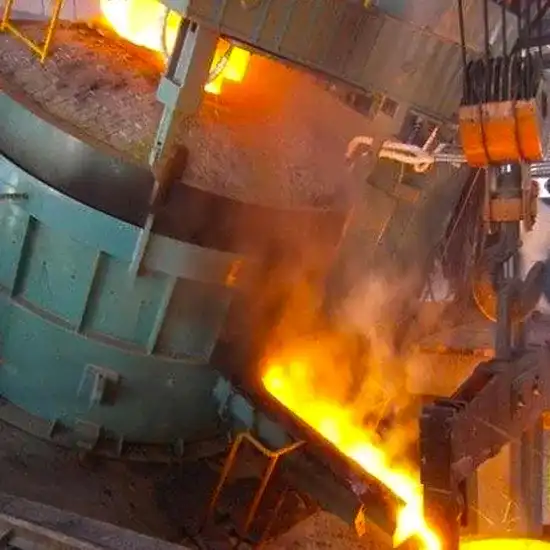
Understanding Industrial Refining Furnaces: Types and Processes
Metallurgical polishing is very different from original melting in how it works. When you melt something, it turns into a liquid. Refining equipment, on the other hand, only works on cleaning and improving the makeup. When planning production processes, this difference is very important because each stage needs different chemical and heat conditions.
Core Refining Technologies Explained
Modern refining systems use a number of tried-and-true technologies that are suited to the type of metal and the level of cleanliness needed. Ladle furnaces are great for making secondary steel because they can lower the carbon content of steel for cars to less than 30 parts per million (ppm) by controlling the heating of the electrodes and stirring the steel with argon. Electric arc configurations provide the intense heat needed to refine heavy steel. They can reach temperatures between 1500°C and 1700°C and keep the temperature under tight control within ±5°C. When working with smaller amounts of copper and aluminum alloys, where electricity use directly affects costs, induction-based systems are the best choice because they use less energy—often more than 90% less.
Another important feature is vacuum degassing. This process gets rid of the hydrogen and nitrogen that are dissolved in the material and cause flaws in the final product. Keeping the pressure below 67 Pascals pushes flammable impurities out of the melt, which is how purity rates above 99.5% are reached. This technology is very important for uses like aerospace-grade aluminum and electronic copper, where even a small amount of pollution can hurt the performance of the material.
Temperature Management and Metal-Specific Requirements
Accuracy in temperature has a direct effect on the results of refining. To make desulfurization and deoxidation processes easier, steelmaking needs temperatures that stay between 1500°C and 1700°C for a long time. The body of the furnace must have high-alumina or magnesia-carbon refractory linings that can withstand the toxic nature of molten steel while keeping the structure's integrity for long production runs.
Copper and aluminum refining usually takes place at much lower temperatures, between 700°C and 900°C, but it still needs very precise control. Too high temperatures speed up oxidation, which leads to more metal loss and a less stable final composition. Full degassing can't happen because there isn't enough heat. Advanced control systems constantly check the melt temperature and change the power input to keep conditions at their best during the processing cycle.
Environmental and Energy Considerations in Modern Operations
Regulatory compliance affects decisions about what equipment to buy more and more. Modern refining furnaces have pollution control connections that work with baghouse filters and scrubber systems. This makes sure that the levels of NOx and particles released meet EPA standards. Energy savings have the same effect on the ability to run a business. When we look at how much electricity induction and arc configurations use, we see that induction systems need about 350 to 400 kWh per ton to refine aluminum, while electric arc Industrial refining furnaces need about 400 to 500 kWh per ton, depending on the quality of the scrap and how well the process is optimized.
To reduce your impact on the environment while keeping up production, you need to carefully consider your fuel choices. Electric systems don't release direct pollution, but the environmental effects are passed on to the power sources. Gas-fired units are more flexible in how they work and have lower capital costs, but they need investments in ways to treat emissions. The best option relies on how much energy costs in your area, how reliable the power grid is, and what environmental concerns are most important to you at your business.
How to Choose the Right Industrial Refining Furnace for Your Production Needs
When buying equipment, decisions must be made that match the needs of production. When capacity and temperature range aren't matched, it can cause bottlenecks, inconsistent quality, and early equipment failure.
Capacity and Throughput Matching
The amount of production determines the basic tool needs. A facility that handles 50-ton batches needs very different equipment than one that handles 10 tons per heat. Shaanxi Heyuanxin makes refining systems that can be customized to have capacities ranging from 5 tons to 50 tons. This lets them be perfectly matched to the needs of the operation. When you go too big, you have to pay more for cash and energy per ton. Undersizing means that production steps have to be longer or there have to be more than one smaller heat, which increases work costs and wastes heat.
Batch regularity is just as important. Continuous casting requires quick changes between heats, which calls for strong refractory systems that can handle thermal cycling without breaking down too much. Facilities that only produce some things at a time profit from designs that focus on saving energy when they're not in use.
Metal Type and Purity Standards
Refining different metals is difficult in its own way. Desulfurization and carbon reduction are important steps in steel processing, which need tools that can support argon stirring and add calcium treatment to change the inclusions. When aluminum is processed, getting rid of hydrogen is a top priority. This requires vacuum degassing and maintaining a neutral atmosphere to stop re-oxidation. Oxidation-reduction cycling is often needed for copper applications. This means going back and forth between oxidizing conditions to get rid of sulfur and reducing stages to lower the oxygen content.
Understanding the target purity requirements helps choose the right technology. For semiconductor uses, getting 99.9% pure copper needs special polishing methods and careful control of the atmosphere. To make car structural steel that meets tensile strength standards, the compositional errors must be very tight, usually within ±0.05% for key alloying elements. This can only be done with improved stirring homogenization, and real-time spectroscopic analysis.
Operational Efficiency and Maintenance Demands
The total cost of ownership is much higher than the price of the car itself. The real practical costs can be found by looking at how fast electrodes are used up, how long refractories last, and how efficiently power is used. Systems using good refractory materials have working lives longer than three years, which means they need maintenance much less often and are down for much less time. Zoned lining configurations in furnaces allow targeted repairs at high-wear areas like slag lines without having to reline the whole furnace. This keeps production running as smoothly as possible.
Accessibility for maintenance affects the continuation of operations. Rapid thermographic inspection and preventative maintenance are possible with equipment that has water-cooled panels with accessible cooling circuits. This keeps catastrophic failures from stopping production for long periods of time. Laser profile and automated monitoring systems that track refractory wear can predict when maintenance needs to be done. This means that maintenance can be done during planned breaks instead of having to be done quickly in an emergency.
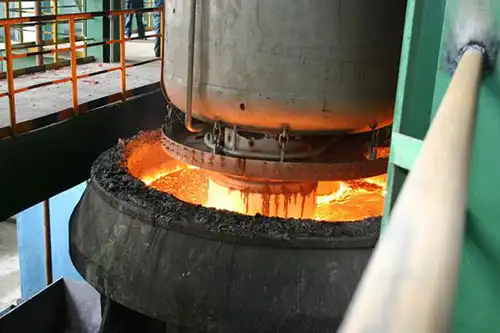
Comparing Industrial Refining Furnaces: Performance and Cost Analysis
Knowing how different types and setups of furnaces work differently lets you make smart investment choices that balance capability with budget.
Refining Versus Melting: Functional Distinctions
People still get melting and processing equipment mixed up when they're talking about buying it, but their jobs are very different. Melting furnaces use heat to turn solid materials into liquids, focusing on how efficiently they transfer heat. Refining ovens take in material that is already molten and use controlled processes to change its chemical and physical makeup. Using melting equipment for refining lowers the purity of the product, and using refining furnaces for primary melting wastes expensive capacity on tasks that don't need them.
This split of functions has an effect on how equipment is made. Some parts of refining systems aren't needed for melting, like vacuum chambers for degassing, porous plug systems for stirring the bottom, and advanced electrode control for precise power modulation. These features allow impurities to be reduced to less than 0.005%, which meets strict standards in the aircraft and electronics industries that melting equipment can't meet.
Technology Comparison: Induction vs. Electric Arc Systems
It is electromagnetic induction that makes the metal charge heat up directly. This gives the furnace great temperature uniformity and control accuracy. This method works best for batches smaller than 20 tons, where high capital costs are worth it for fast heating and accurate thermal control. When electrical efficiency reaches 90%, running costs go down. This is especially important for aluminum processing, which uses a lot of energy.
Electric arc systems are great for refining large amounts of steel, and they can easily handle batches of 20 to 50 tons. Even though the electrical efficiency is usually between 60 and 75%, which is lower than induction options, the total working costs are still competitive because the equipment needs less capital and has been shown to last in tough circumstances. Increasing the performance gap with induction technology by optimizing arc length and using foamed slag practices makes the process much more efficient.
Cost Structures: Initial Investment and Operating Expenses
When making a purchasing decision, you need to think about all of the possible financial effects. When compared to electric arc units of the same capacity, induction systems cost more, usually 30 to 40 percent more, but they use less energy per ton. How much you make and how much energy costs where you live affect how much you pay back. Facilities that run continuous production and move a lot of tons each year can often justify investing in induction by the energy savings they make over time. Electric arc systems are more flexible and cheaper to use, which is good for businesses that have irregular plans or work with a variety of materials.
Expenses for refractory materials are high ongoing costs. High-quality refractory materials raise the original cost of the Industrial refining furnace but make it last a lot longer, so it doesn't need to be replaced as often. Premium refractories can handle 2000 to 3000 heats, while inferior materials need to be relined every 500 to 1000 heats. Even though it costs more up front, superior refractory investment leads to 40–60% lower total maintenance costs over a typical five-year operational period.
Maintenance, Safety, and Best Practices for Industrial Refining Furnaces
Reliable furnace operation depends on strict repair plans and a wide range of safety measures that protect people and equipment.
Preventive Maintenance Strategies
Scheduled inspections keep big problems from happening that throw off production schedules. Every week, thermographic surveys find hotspots that are growing in water-cooled parts. This lets cables be replaced before coolant blockages cause the whole system to fail. Monitoring the refractory layer with laser profiling systems keeps track of wear patterns. This lets repair plans be coordinated with production schedules instead of just being put in place when something goes wrong.
Critical component repair times must match what the maker says. Depending on the amount of power and mechanical stress, water-cooled wires usually need to be fixed every 3000 to 5000 heats. Regularly checking the impedance of electrode systems can help find resistance problems early on, before they make power delivery less efficient. Regular replacement keeps performance stable and stops unplanned downtime that breaks customer promises.
Safety Protocols for High-Temperature Operations
Refining molten metal comes with its own risks that must be carefully managed. When teaching employees, it's important to stress the dangers of moisture contamination. Even a small amount of water touching molten metal can cause violent steam blasts. Equipment with moisture recognition systems gives you extra safety by stopping activities immediately when unsafe conditions appear.
It is still necessary to wear the right personal protective equipment (PPE). Heat-resistant suits made of aluminum, face shields, and special shoes keep operators safe from radiant heat and possible splash accidents. Setting up "exclusion zones" around working furnaces and using lockout-tagout methods during maintenance stops people who aren't supposed to be there from getting in while dangerous work is being done. These actions are in line with OSHA rules and help create a safety culture that protects your most valuable asset: your employees.
Energy Optimization and Sustainability Practices
Cutting down on energy use directly boosts profits while also helping the environment. Using automatic power management systems that lower backup consumption when not in use can cut electricity costs by 15 to 25 percent without affecting the ability to make things. Preheating charge materials with off-gas waste heat recovery improves thermal efficiency, which means less main energy is needed.
As environmental laws get stricter, businesses that use green tools will be in a better position. Using renewable energy sources where the grid infrastructure supports them shows that a company is responsible and could help it get better utility rates. These investments need a careful return on investment study, but they are becoming more and more of a competitive edge in markets that care about the environment.
Trusted Suppliers and Procurement Guide for Industrial Refining Furnaces
Partnering with well-known makers that offer full support lowers the risk of buying and guarantees long-term operating success.
Evaluating Supplier Credentials and Capabilities
Quality certifications are a basic way to judge the credibility of a supplier. Certification in ISO 9001 quality management shows that industrial processes are regular, and certification in ISO 14001 environmental management shows that a company is committed to running in a way that doesn't harm the environment. Suppliers of specialized metallurgical equipment should have the right safety certifications and show that they follow pressure vessel codes when needed. Patent libraries and research skills show technological leadership. For example, Shanxi Heyuan has over ten utility model patents and multiple software copyrights, which shows that it is always coming up with new ways to improve technology.
Product dependability is directly linked to the amount of knowledge a manufacturer has. Suppliers with a long history of working with a wide range of applications bring problem-solving skills that newer companies entering the market don't have. Heyuanxin has been in business for 16 years and has installed more than 400 systems around the world. This gives them a lot of experience with processing steel, aluminum, copper, and unique alloys. Because of this experience, equipment designs are now based on real-world production problems instead of ideas.
Service and Support Infrastructure
Offering a wide range of services sets capable suppliers apart from equipment vendors. Turnkey solutions that include design, manufacturing, installation, commissioning, and training for operators shorten the time it takes to finish a project and make it easier to coordinate. When problems happen, single-source accountability stops multiple contractors from pointing the finger at each other, which speeds up the resolution of the problem.
During operational situations, quick maintenance help is very important. When suppliers keep specialized service teams with quick response times, work interruptions are kept to a minimum when technical help is needed. When choosing a seller, looking at average response times and the availability of spare parts keeps you from finding out that the service wasn't good after the equipment was installed. Fast maintenance response is important to us because we know that every hour of unplanned downtime hurts your customers and your ability to keep your promises.
Custom Engineering for Specialized Applications
Standardized equipment works well for most tasks, but for special metalworking processes, custom solutions are often needed. Suppliers who offer engineering flexibility can help you find the best furnace configurations for your compositional goals, throughput needs, and space limitations. Custom process development makes sure that the refining factors match the properties of your raw materials and the specs of your product, instead of making process sacrifices to fit the equipment that is available.
Heyuanxin specializes in creating custom polishing methods and equipment sets that meet the specific needs of each customer. During the planning process, our engineering team works closely with clients to make sure that the end installations perform as planned. This partnership-based approach has led to successful projects ranging from regular steel refining to specialized non-ferrous metal uses that have very strict purity requirements.
Conclusion
To choose the right metallurgical Industrial refining furnace tools, you have to weigh the technical skills against working needs and the available budget. Figuring out the main differences between burner technologies—like induction vs. electric arc, vacuum degassing abilities, and temperature ranges—helps match tools to production needs. Real economic value is found by looking at the total cost of ownership instead of just the purchase price. This includes things like how much energy the product uses, how much maintenance it needs, and how long it's expected to last. When you work with well-known makers that offer full support, a track record of success, and engineering flexibility, you lower the risks of buying and set up your business for long-term productivity. The money you spend today on good refining equipment will have a direct effect on the quality of your products, how efficiently you run your business, and how competitive you are in the years to come.
FAQ
1. What capacity industrial refining furnace should I choose for my steel plant?
The capacity you choose will depend on how much you need to make, how often you need to cast, and the size of each batch. Steel mills that make 100 to 200 tons of steel every day usually benefit from 20- to 30-ton processing furnaces that can do more than one heat per shift. To keep production from getting stuck, facilities that do continuous casting need to match the tapping times to their capacity. Shaanxi Heyuanxin makes systems that can be customized from 5 to 50 tons, which lets them match the exact size to the needs of the operation. To make sure that investments in equipment will last through future growth without having to be replaced too soon, it's helpful to talk to experienced suppliers about both current needs and planned growth.
2. How do vacuum degassing systems improve metal purity?
Dissolved gases, mostly hydrogen and nitrogen, that are still in molten metal after primary melting are removed by vacuum degassing. These gases weaken the mechanical properties of hardened goods by causing holes and other flaws in them. When vacuum devices lower the pressure in the room below 67 Pascals, gases that are dissolved in the melt can escape. When argon stirring is added to this process, it reduces impurities by more than 99.5%, which meets the purity standards of the aircraft and automobile industries. This technology works especially well for aluminum alloys because the amount of hydrogen in them directly affects how well they cast.
3. What maintenance schedule should I expect for refractory linings?
How long a refractory lasts depends on the type of material used, the temperature at which it is used, and how intense the process is. Premium magnesia-carbon or high-alumina linings have working lives longer than three years under normal steel processing conditions, which means they can handle about 2,000 to 3,000 heats before they need to be relined. Lower working temperatures during aluminum processing usually make refractory last longer. Using laser profiling tools lets you keep an eye on wear and schedule repair for planned downtime instead of having to rush in during an emergency. Zoned lining designs let you fix only the places that get a lot of wear and tear, which extends the total service life and lowers maintenance costs and downtime.
Partner with a Trusted Industrial Refining Furnace Manufacturer for Superior Metallurgical Performance
To get consistent refining quality and operational reliability, you need equipment that is designed to work with your metalworking processes. Shaanxi Heyuan offers complete processing solutions and has over 400 sites around the world, 16 years of experience in specialized manufacturing, and several patents that show technological innovation. Our Industrial refining furnace systems are available in sizes ranging from 5 to 50 tons, with temperature control accuracy within +/- 5°C and impurity reduction rates reaching 99.5%. These features directly lead to better product quality and a competitive edge. We offer turnkey services that include design, manufacturing, installation, commissioning, and operator training as an Industrial refining furnace supplier with ISO quality management, environmental, and occupational health certifications. Our quick-response support team keeps your production schedules and customer commitments safe by helping with maintenance quickly. Our engineering team works together to create the best solutions for your specific needs, whether you need electric arc configurations for handling large amounts of steel or advanced vacuum degassing systems for working with specialty alloys. Email us at sxhyyj606@163.com to talk about how our tried-and-true refining technology can help your metalworking projects and to see all of our equipment.
References
1. American Foundry Society. (2020). Principles of Metal Casting. Schaumburg, IL: AFS. Available at: https://www.afsinc.org
2. ASM International. (2021). "Vacuum Degassing of Steel." ASM Handbook: Metallurgy and Processing. Materials Park, OH. Available at: https://www.asminternational.org
3. U.S. Department of Energy. (2019). "Energy Efficiency Opportunities in the Steel Industry." Industrial Technologies Program. Available at: https://www.energy.gov/eere/amo/industrial-technologies-program
4. The Minerals, Metals & Materials Society. (2022). "Advances in Secondary Steelmaking Technology." JOM Journal, 74(3), 892-903. Available at: https://www.tms.org
5. Occupational Safety and Health Administration. (2023). "Safety and Health Regulations for Construction: Hot Work." OSHA Standards. Available at: https://www.osha.gov
6. International Journal of Metallurgy and Materials. (2021). "Custom Furnace Design for Specialty Alloy Refining." Materials Processing Technology, 15(2), 134-147. Available at: https://www.springer.com/journal/42243


YOU MAY LIKE