
Where to Buy a High temperature heat treatment furnace?
July 29, 2026
Understand your thermal processing needs and find manufacturers who can provide precision-engineered high-temperature heat treatment furnaces. Suppliers with decades of metallurgical experience and recognised quality systems produce equipment that operates reliably at temperatures ranging from 1200°C to 1800°C. Shaanxi Heyuanxin Metallurgical Electric Furnace Equipment Co., Ltd. is a direct manufacturer with experience in aerospace, defence, and speciality materials processing. They offer customisable chamber configurations, energy-efficient designs, and comprehensive technical support, turning your purchase into a strategic partnership backed by ISO certifications and operational success across 400+ global installations.
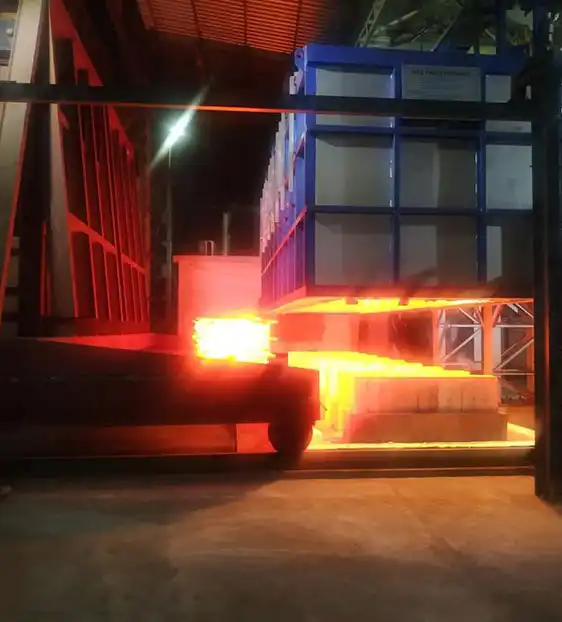
Understanding High-Temperature Heat Treatment Furnaces
Material transformation takes more than heating; thus, industrial manufacturing requires advanced thermal processing equipment. Advanced heating elements precisely elevate temperatures, modifying metal, ceramic, and composite microstructure and performance.
How Does Thermal Processing Technology Transform Materials?
During controlled heating cycles at 1000°C to 1800°C, materials' crystalline structures reorganise, residual stresses evaporate, and mechanical properties increase. Advanced insulation systems with high-temperature resistant linings reduce heat loss and maximise furnace chamber energy efficiency. This regulated environment inhibits oxidation and contamination, which is essential when treating aircraft turbine blades, medical implants, and defence
Core Benefits Driving Industrial Adoption
Energy efficiency lowers utility costs, and modern temperature control systems meet AMS 2750 and ASTM standards, meeting global certification bodies' strictures. Thermal treatment improves fatigue resistance, dimensional stability, and corrosion resistance, which are essential for high-stress components.
Applications Across Critical Industries
High-performance material industries use thermal processing equipment. For jet engine components, aerospace producers need precise heat treatment for nickel-based superalloys, maintaining ±3°C temperature constancy for blade longevity. Medical equipment makers coat surgical instruments and orthopaedic implants with biocompatible materials, while military businesses use titanium alloys for armour plating and structural components. Ceramic sintering yields near-theoretical density for semiconductor substrates, while powder metallurgy consolidates complex composites that traditional manufacturing cannot.
Key Factors to Consider When Buying a High-Temperature Heat Treatment Furnace
Successful procurement begins with defining operational parameters that align equipment capabilities with production objectives. Understanding the technical specifications, energy profiles, and maintenance requirements helps avoid costly mismatches between furnace design and application demands.
Defining Your Operational Requirements
Batch processing lets job shops and research institutions handle diverse metals and component sizes. Continuous processing systems boost standardised production throughput, reducing cycle times and labour costs. In regulated atmospheres, molybdenum and tungsten can function above 2000°C, but silicon carbide is cost-effective for moderate temperatures. Material compatibility assessment ensures that vacuum, inert gas, or decreasing boiler atmospheres prevent chemical reactions during thermal cycles.
Chamber size affects production and energy use. Forging dies and steel mill rolls fit in the 1500x1500x2000mm chambers, whereas turbine blade heat treatment works best in the 600x600x900mm zone. Heyuanxin can enhance heating efficiency and temperature uniformity by customising the chamber shape to the workpiece parameters.
Evaluating Furnace Types and Energy Profiles
Electric resistance furnaces are superior to gas-fired ones for precision thermal processing, thanks to better temperature control and cleaner operation. Power requirements of High temperature heat treatment furnaces (30kW–300kW) affect infrastructure and operating expenses. Programmable logic controllers and multi-zone heating create complex thermal profiles with ramp rates and soak durations for stress alleviation and age hardening.
Energy-saving features significantly impact long-term expenditures. Modern insulation cuts standby heat loss by 40%, while recuperative cooling uses waste heat for auxiliary activities. Sustainability-certified facilities prioritise green technologies.
Maintenance Protocols and Compliance Standards
Easy maintenance reduces downtime and extends equipment life. Modular heating elements can be replaced without chamber disassembly, reducing production delays. Suppliers with precise maintenance schedules and readily available spare parts ensure high-volume manufacturing continuity.
International safety standards protect workers and facilities. The ISO 9001 quality management and environmental management system certifications demonstrate responsible production and process control. Aerospace supply chains require traceability and process validation; hence, NADCAP-accredited equipment is allowed.
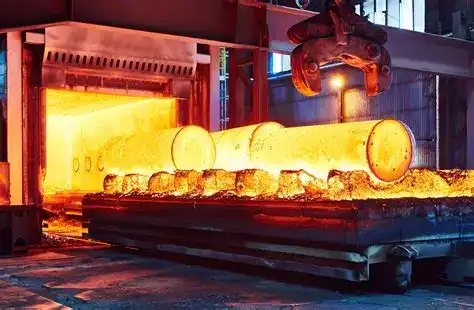
Where to Find Reliable Suppliers and Brands for High-Temperature Heat Treatment Furnaces?
Finding manufacturers with strong technical support and infrastructure separates successful installs from problematic acquisitions. Multinational enterprises, regional manufacturers, and custom engineering firms offer different benefits depending on project scale and technical complexity.
Globally Recognized Manufacturers
Since 2008, Shaanxi Heyuan New Metallurgical Electric Furnace Equipment Co., Ltd. has supplied electric arc furnaces, ladle furnaces, and thermal processing equipment to metallurgical plants, steel mills, and speciality materials processors, holding over 10 utility model patents and ISO quality management certifications. Their engineering staff works on 400+ global sites from design to commissioning and technical support.
Third-party certifications ensure production and process consistency. While environmental management system compliance shows sustainability, ISO 9001 accreditation ensures production quality. Procurement teams trust its 3A credit enterprise accreditation and after-sales service certifications for long-term collaborations.
Benefits of Authorized Dealers and Regional Distributors
Local technical representation speeds installation and streamlines warranty service. Replacement lead times for components are reduced from weeks to days by authorised distributors' spare parts inventory. Regional service experts knowledgeable about specific equipment models can repair and maintain equipment faster, reducing production disruptions caused by remote factory assistance.
Application engineers at established distributors help purchasers translate process needs into suitable equipment specifications. Their experience with several installations helps them choose configurations that maximise efficiency and reduce implementation errors.
Engaging Custom and OEM Manufacturers
Equipment manufacturers who customise rather than catalogue assist with difficult applications. Regular chamber geometries cannot support large workpieces or special fixturing. OEM partnerships provide private branding and proprietary control system integration to help equipment makers build manufacturing lines.
Communicating specifications requires workpiece dimensions, material compositions, temperature profiles, and manufacturing volume forecasts for High temperature heat treatment furnace. Process advice services from Heyuanxin incorporate operational goals into furnace design. Engineers assess thermal mass calculations, heating element configurations, and environment control requirements to meet performance targets within budge
Evaluating Price, Warranty, and Delivery Options
Financial planning for thermal processing equipment extends beyond initial purchase price to encompass total cost of ownership, risk mitigation through warranty coverage, and logistics coordination that meets project schedules.
Understanding Cost Factors
Chamber size, temperature, control system sophistication, and build quality affect new equipment prices. In precision thermal processing, a 600600900mm furnace at 1400°C and simple PLC controllers are used. Advanced multi-zone control and rapid quench cost more for larger chambers (1200x1200x1800 mm). Special atmosphere control or chamber geometry arrangements cost extra but offer features not found in normal designs.
Used equipment minimises capital investment but must be checked for service life, heating element condition, and control system obsolescence. Refurbished systems from trustworthy manufacturers offer savings, warranty protection, and improved components to improve dependability.
Technological premiums relate to performance-enhancing technologies. High-pressure gas quenching systems with rapid cooling cycles have higher acquisition costs, but they provide higher throughput and better metallurgical results. Despite higher upfront investment, refractory lining materials with longer maintenance intervals lower long-term operating expenses.
Warranty Terms and Service Agreements
The guarantee covers premature component failure and manufacturing defects. Heating elements, control systems, and structural components typically have warranties of 12 to 24 months, with extended coverage for critical applications. Service agreements prioritise preventative inspections and maintenance requests to find problems before they impede productivity.
From day one, manufacturers that offer on-site commissioning and operator training maximise equipment use. Heyuanxin optimises thermal profiles for specific materials and outcomes after installation. The sxhyyj606@163.com service network responds rapidly to technical questions and supports global installations with remote diagnostics and expedited parts deliveries.
Coordinating Logistics and Delivery Timelines
Complex equipment and manufacturer production schedules greatly impact lead times. Urgent projects can get standard setups from Heyuanxin in 15-20 days. Procurement managers must arrange 30-45 days for design validation, fabrication, and factory acceptance testing before shipping custom-engineered equipment.
International transportation is difficult and needs coordination with the shippers of large industrial equipment. Export paperwork, customs clearance, and port capabilities affect delivery timeframes. Communicate shipping preferences and receiving facility capabilities to suppliers to avoid project delays.
Making the Final Decision: How to Choose the Best High-Temperature Heat Treatment Furnace for Your Business?
Selecting optimal thermal processing equipment demands systematic evaluation, balancing technical performance, financial considerations, and supplier capabilities against long-term operational requirements and strategic business objectives.
Establishing Evaluation Criteria
Temperature uniformity certification ensures the working zone meets tolerances during thermal cycles. Equipment meeting AMS 2750G Class 1 requirements provides ±3°C uniformity for aerospace components, whereas Class 2 tolerances are suitable for less demanding applications. Faster ramp rates boost throughput but may compromise temperature uniformity in big chambers.
Heating element lifespan, control system redundancy, and reported mean time between failures are assessed for reliability. Transparent suppliers with thorough maintenance histories from current installations boost long-term performance estimates. Modern designs use 30-40% less power than historical equipment, thanks to enhanced insulation and recuperative mechanisms, which lowers operational expenses.
Cost evaluation considers installation, operator training, spare parts inventory, and expected maintenance costs over the equipment's 15-20-year service life. Total cost of ownership assessments show that premium equipment with high energy efficiency and reliability pays off better than budget options that need frequent repairs and use too much power.
Matching Capabilities to Production Demands
Aerospace manufacturers choose vacuum or high-purity inert gas systems to prevent reactive alloy oxidation. Automotive heat treaters that process vast volumes of standardised components use continuous furnaces with automated loading systems to maximise throughput. Batch furnaces with programmable multi-segment control systems are best suited for research organisations that work with a variety of materials and experimental thermal profiles.
Scalability ensures equipment can handle future production expansion without capacity limits. As product portfolios change, modular designs that allow chamber enlargement or auxiliary equipment integration protect capital investments.
Learning from Real-World Implementations
Using a Heyuanxin 900x900x1200 mm high-temperature heat treatment furnace, a Midwest aerospace contractor achieved 99.3% process repeatability on Inconel 718 turbine blade heat treatment, replacing ageing batch furnaces. The enhanced temperature control system lowered reject rates by 67% and increased daily throughput by 40%, providing a 14-month ROI despite the premium acquisition cost. Technical consultation optimised thermal profiles that earlier equipment could not attain, while the supplier's commissioning support and operator training ensured a smooth transition.
Titanium implant surface treatment using heat processing equipment has been successful for medical device producers. Properly selected equipment improves product quality and operational efficiency by reducing cycle times and ensuring regulatory compliance.
Conclusion
Understand operating requirements, evaluate technical specifications, and work with manufacturers with proven knowledge and extensive support to find the proper thermal processing equipment. Direct connection with experienced suppliers like Heyuanxin offers customised solutions, competitive pricing, and technical consultation, turning procurement into strategic capabilities development. Quality and innovation are evident in their ISO-certified manufacturing methods, patent portfolio, and 400+ global installations. Manufacturers with decades of metallurgical knowledge and responsive technical support appeal to buyers who prioritise temperature precision, energy efficiency, and reliability. Warranties, delivery times, and total cost of ownership should be assessed to ensure investments satisfy production and financial goals.
FAQ
What materials can be processed in a High temperature heat treatment furnace?
These furnaces accommodate diverse materials, including nickel-based superalloys, titanium alloys, stainless steels, tool steels, advanced ceramics, and refractory metals. Atmosphere control capabilities determine material compatibility—vacuum systems suit reactive alloys prone to oxidation, while inert gas environments protect sensitive materials during thermal cycles. Consultation with manufacturers ensures atmosphere specifications match your specific materials.
How do batch furnaces differ from continuous processing systems?
Batch furnaces load and unload discrete quantities of workpieces, offering flexibility for varied component sizes and thermal profiles. Continuous systems transport workpieces through sequential heating zones, delivering higher throughput for standardized production runs. Batch configurations suit job shops and low-volume speciality processing, while continuous furnaces optimize high-volume manufacturing where cycle time reduction drives profitability.
What energy-efficient features should buyers prioritise most?
Advanced insulation systems using ceramic fibre or graphite felt minimise heat loss during operation and standby periods. Programmable multi-zone heating concentrates energy where needed, reducing waste. Recuperative cooling systems capture exhaust heat for preheating incoming workpieces or auxiliary processes. Modern control algorithms improve the duty cycles of heating elements, extending component life while reducing power consumption by 30-40% compared to conventional designs.
Partner with a Trusted High-Temperature Heat Treatment Furnace Manufacturer
Shaanxi Heyuan New Metallurgical Electric Furnace Equipment Co., Ltd. delivers precision-engineered thermal processing solutions tailored to aerospace, defence, and speciality materials applications. Our High temperature heat treatment furnace models operate reliably between 1200°C and 1800°C, featuring customisable chamber configurations from 300×300×300mm to 1500×1500×2000mm and power options spanning 30 kW to 300 kW. As an established high-temperature heat treatment furnace supplier since 2008, we hold ISO quality certifications, environmental management credentials, and more than ten utility model patents protecting innovative designs. Procurement managers seeking reliable equipment for sale with comprehensive technical support can contact our engineering team at sxhyyj606@163.com to discuss project requirements. Visit hyyjfurnace-supply.com to explore our complete product portfolio and request detailed specifications. Our standard delivery timelines of 15-20 days for catalogue models and 30-45 days for custom configurations support tight project schedules while maintaining the quality standards that have earned us 3A-level credit enterprise status and installations across 400+ global sites.
References
1. Davis, J.R. (2002). Surface Hardening of Steels: Understanding the Basics. ASM International Materials Park.
2. Krauss, G. (2015). Steels: Processing, Structure, and Performance (Second Edition). ASM International.
3. Chandler, H. (1995). Heat Treater's Guide: Practices and Procedures for Nonferrous Alloys. ASM International.
4. Totten, G.E. & Howes, M.A.H. (1997). Steel Heat Treatment Handbook. Marcel Dekker Publishing.
5. Boyer, H.E. (1984). Practical Heat Treating. American Society for Metals Technical Publications.
6. ASM International Handbook Committee (1991). Heat Treating, ASM Handbook Volume 4. ASM International Materials Park.


YOU MAY LIKE