
What Makes Copper Contact Shoes Highly Durable and Efficient?
July 30, 2026
Copper Contact Shoes achieve exceptional durability and efficiency through their unique graphite alloy copper formula, delivering wear resistance up to 4-5 times greater than ordinary products. This advanced material composition combines a high-purity copper alloy with specialised additives, ensuring superior electrical conductivity of ≥58 MS/m and excellent mechanical strength. The shoes operate reliably at temperatures up to 300°C, making them ideal for sliding contact line power transmission in demanding industrial environments where consistent performance is critical.
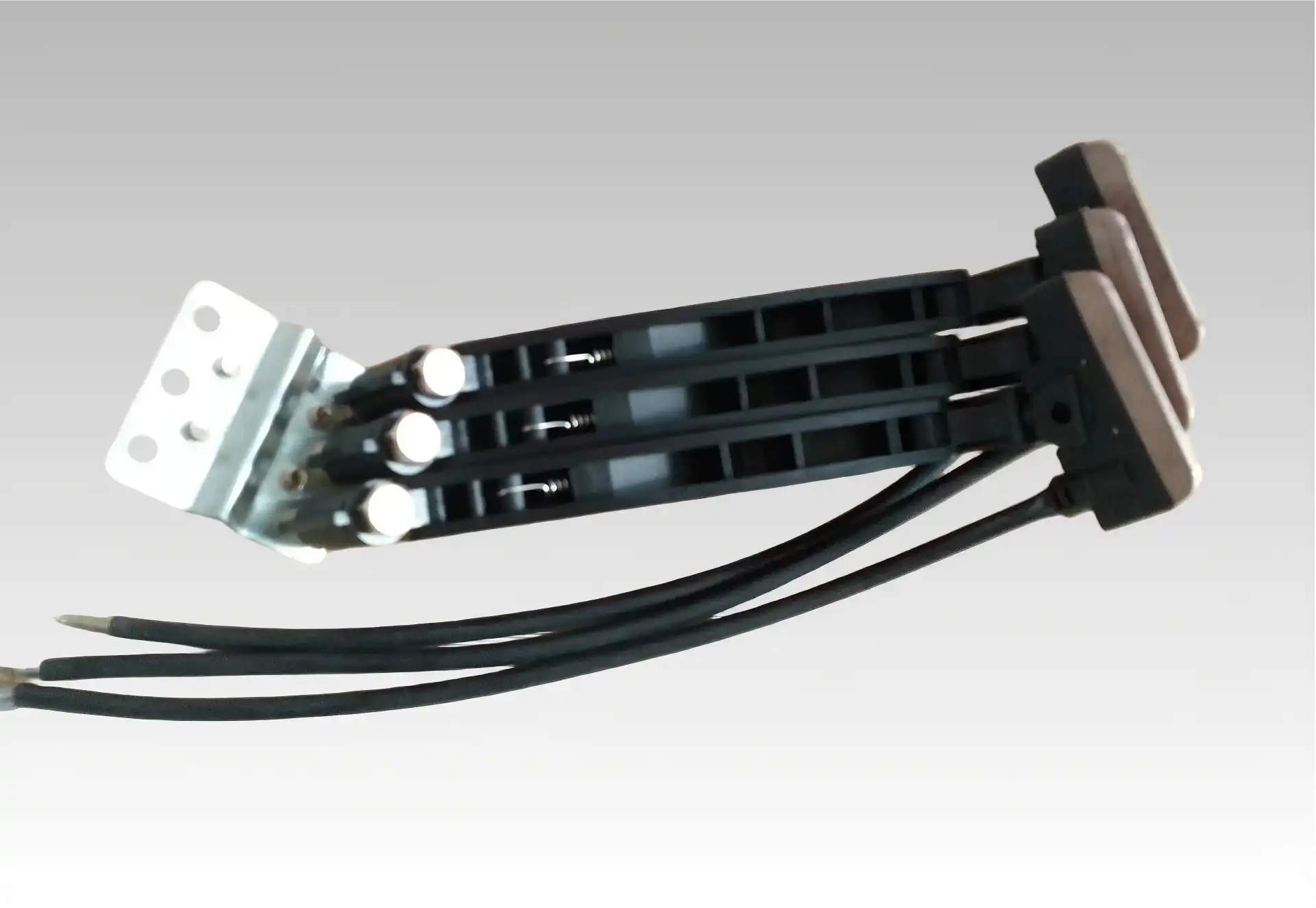

Understanding Copper Contact Shoes: Key Features and Functions
In industrial power systems, current collectors rely on special parts that connect electrical contacts that are moving and those that are not. These precisely designed parts are the most important link in the chain where electricity moves from fixed wires to mobile equipment, making sure that power stays on even when conditions are tough.
The Structural Design Behind Reliable Performance
At their core, these parts are made up of copper and graphite metals that are carefully adjusted. This mix makes a surface that lubricates itself, which lowers friction while still carrying high-amperage loads. The design has several layers: a conductive base layer made from a high-purity copper alloy, a middle bonding zone that spreads mechanical stress, and a contact surface that is specifically designed to slide smoothly. We make sure that the hardness of our goods is between 70 and 110 HB so that they can withstand numerous mechanical impacts without breaking.
How Electrical Integration Maximises Power Transmission?
For integration into power distribution systems, the dimensions and surface finish must be very accurate. The shape of the touch surface matches the design of the conductor, whether it's a flat busbar or a rounded trolley wire. When they are working, spring-loaded mechanisms keep the contact pressure constant, which is usually between 10 and 50 Newtons per square centimetre, based on the present load. This pressure balance prevents arcing and excessive wear caused by insufficient contact. In the way we make things, we use thermal management techniques to get rid of the heat that is generated during high-current gearboxes. This mechanism keeps hotspots from forming that speed up degradation.
Application Environments Across Industrial Settings
In different operating situations, we need to change the design in certain ways. Components have to withstand high temperatures and electromagnetic radiation in electric arc furnaces. In this case, better temperature stability is crucial. When used in railway pantographs, materials need to work the same way even when the speed and weather change. We tailor our surface treatments to each application's specific mix of electrical load, mechanical stress, and weather exposure. This way, we can make sure the parts work at their best in metallurgical plants that handle molten metal or transit systems that deal with high temperature changes throughout the year.
The Core Factors Behind Durability and Efficiency
Choosing the right materials for these parts will determine how long they work at their best and how well they send electricity. Understanding the connection between conductivity and mechanical strength is essential for making parts that use less energy and last longer.
Superior Conductivity Minimising Energy Loss
Copper is about 100% IACS (International Annealed Copper Standard) electrically conductive, which means it moves electricity with little resistance. Because of this feature, there is less voltage drop across the contact surface. When we make parts with conductivity greater than 58 MS/m, we make sure that the contact point has less than 0.1 milliohms of resistance. When resistance is low, less energy is lost as waste heat. This makes the machine 3–8% more efficient than it would be with other materials. This increase in efficiency builds up over time, especially in situations where the system is always working, like steel mill cranes that work multiple jobs every day.
Advanced Manufacturing Enhancing Wear Resistance
Maintenance Practices Extending Operational Life
The length of time between regular inspections should match the level of activity. Visual checks every month are helpful for parts that work in dusty places or carry loads of more than 1000 amperes. Check for uneven wear patterns, discolouration that means the part is too hot, or surface damage that comes from electrical arcing. Cleaning methods are critical. Get rid of electrical dust and oxidation buildup using safe, non-abrasive methods and chemicals that have been approved. Do not make common mistakes like overtightening the mounting hardware, which causes mechanical stress, or using the wrong oils, which damage the electrical contact. We suggest writing down the measures of wear at each check and replacing parts whose thickness has dropped by 40 to 50 per cent from the original specs.
Comparing Copper Contact Shoes with Other Materials
It is easier to make choices about what to buy when you know how different active materials work in real-world situations. Each material has its own pros and cons that suit the needs of a certain industry.
Copper Versus Silver in High-Performance Applications
Silver has a slightly better conductivity than copper (about 106% IACS), but this small advantage rarely makes up for the fact that silver is 60–80 times pricier per kilogram than copper. Silver works best in places with little mechanical stress and low-force touch situations. But because silver is less hard than copper (25–30 HB vs. 70–110 HB), it goes out more quickly when put under heavy mechanical loads. Our copper alloys have 95–98% of silver's conductivity and three times the mechanical strength. This makes them the best choice for mining equipment and industrial gear that needs to be cost-effective and last a long time.
Carbon Alternatives and Their Niche Applications
Carbon-based touch materials have unique properties that make them useful in certain situations. Pure carbon and carbon-copper alloys are better for situations where protecting the conductor is more important than making the parts last as long as possible, because they cause less mechanical wear on the rails. Carbon's ability to lubricate itself works well in dirty places where cleaning needs to be done more often. However, carbon usually can't handle as much power, has a higher electrical resistance, and needs to be replaced more often. Tensile strength of carbon composites rarely goes above 100 MPa, while the minimum requirement for our copper goods is 250 MPa.
Decision Factors Guiding Material Selection
Voltage needs have a big effect on the choice of material. Copper is better at moving current than other materials, which is why it is used in systems that work above 1000V and have high amperage loads. Exposure to the environment also affects choices. For example, marine or chemical handling areas may need special copper alloys that are less likely to rust. We help our clients figure out the best material options for their needs by looking at their specific electrical load profiles, job cycles, and upkeep skills. Our CuCrZr (Copper Chrome Zirconium) types can help parts that work in extreme temperatures above 200°C because they keep their hardness and conductivity at high temps.
Procurement Insights: How to Choose and Buy Copper Contact Shoes?
To successfully source, you need to look at more than just the price quotes that providers give you. The total cost of ownership includes how long the product lasts, how much system downtime is avoided, and the quality of expert help over the life of the equipment.
Quality Certifications and Compliance Standards
Good makers of Copper Contact Shoes keep their ISO 9001 quality management certification up to date. This ensures that production methods remain consistent and that we can track Copper Contact Shoes products. We are committed to using environmentally friendly and health-promoting methods in our Copper Contact Shoes factories, as our ISO certifications in these areas show. Look for providers who can give you material test papers for Copper Contact Shoes that show the exact conductivity, hardness, and composition measures for each batch of production. The parts must meet ASTM standards (especially ASTM B133 for copper specs) and IEC electrical performance factors. Our 3A-level credit enterprise standing and provincial-level business recognition provide additional evidence of the reliability and financial stability of our Copper Contact Shoes manufacturing.
Evaluating Supplier Capabilities and Support
When choosing parts for specific uses, the availability of technical help is important. With over eleven years of experience in steel research and development, we can make solutions that are unique to your business needs. Our engineering team helps with measurement requirements, choosing materials, and figuring out how to put things together. Warranty terms for production flaws should be part of the after-sales service. These are usually 12 to 24 months but can be longer based on the severity of the application. Our global logistics skills make sure that deliveries happen on time. We keep our supply lines running smoothly so that we can serve clients from all over the world with regular wait times, even for large orders.
Practical Procurement Considerations
Prices depend on the number of orders, the complexity of the specifications, and the time to deliver the goods. When you buy more than 100 units, you usually get a discount. You can save even more when you buy 500 or 1000 units. The minimum order quantity (MOQ) tells us how much of a product we need to make to meet the needs of both small testing orders and big EPC contractor needs. Ask for thorough quotes that include information about the materials used, the size and shape tolerances, the surface treatments, testing licenses, packing requirements, and shipping terms. We offer cheap pricing that rewards long-term purchasing partnerships while upholding high standards that lower the total cost of ownership.
Real-World Applications and Case Studies Demonstrating Durability and Efficiency
The performance benefits these parts offer in real working situations are backed up by operational data from a variety of workplace settings. These examples show how gains can be seen in terms of dependability, effectiveness, and upkeep costs.
Electric Arc Furnace Performance in Steel Production
A large steel mill with 150-tonne electric arc furnaces switched from using normal contact parts to our graphite alloy copper recipe. The plant has three eight-hour shifts every day and handles about 400 heats every month. Due to wear and electrical erosion, the old parts had to be replaced every three to four months. When they switched to our goods, the time between replacements went from 8 to 14 months, which is a 350% increase in service life. The mill showed that unexpected downtime due to contact-related problems decreased, which made the equipment 6.2% more useful overall. Because of less contact resistance and better power transfer efficiency, the amount of energy used per tonne of steel went down by about 4%.
Transit System Reliability Improvements
An urban train system that carries 2.3 million people every day had ongoing pantograph contact problems that stopped service. The first carbon-copper links broke down quickly when used at high speeds and when the weather changed with the seasons. We made special parts that were more resistant to wear and more stable at high temperatures. The transit authority saw 67% fewer contact-related service delays over the course of an 18-month review period. Maintenance inspections were done every 12,500 kilometres instead of every 8,000 kilometres, which cut down on labour costs and the need to keep more parts on hand. Because of the higher reliability, the 99.7% on-time performance metric was higher than past operating standards.
Industrial Crane Systems Reducing Maintenance Costs
Moving things along production lines is done by high cranes in a factory that makes cars. During action, the cranes send out 800-1200 amps of electricity all the time. Previous parts had random wear patterns and had to be replaced every month, which made it hard to plan production. The wear on our parts was constant, and they kept working electrically for 6-7 months before they needed to be replaced. The facility's crane fleet's yearly repair costs went down by about $47,000 because the parts lasted longer. Production managers saw fewer unplanned crane breakdowns, which improved the consistency of the production flow and cut down on the need for extra inventory.
Conclusion
Copper Contact Shoes are very durable and effective because they are made with precision, use the best materials, and have features that are designed to work with specific applications. When high-purity copper metals and graphite additives are used to make parts, they have conductivity greater than 58 MS/m and wear resistance four to five times higher than regular goods. These performance traits lead to observable operating benefits such as longer periods of time between replacements, lower energy use, and higher system stability. When making purchases, companies should give more weight to suppliers who can show they have quality certifications, professional know-how, and full support capabilities. The long-term value of these parts is proven by their use in metallurgical plants, transit systems, and industry sites, where they reduce downtime and lower total ownership costs.
FAQ
What replacement schedule should we follow for copper contact shoes?
When to replace Copper Contact Shoes relies on how busy it is and what the setting is like. Parts that are used in settings with a lot of dust or high currents (above 1000 A) should be inspected once a month, and they usually need to be replaced when wear cuts their thickness by 40 to 50 per cent. Systems that work with modest loads and are kept under control may not need to be serviced for 12 to 18 months. We suggest writing down the amount of wear found during each check so that you can set up replacement plans that are accurate for your unique operating profile.
Can copper contact shoes work across different circuit breaker types?
Our parts can work with a range of power levels and circuit breaker setups. The design specs must meet the dimensions, contact force, and current ratings of the particular breaker model. We offer customisation services that make sure our products work with both low-voltage industrial breakers and high-voltage power delivery systems. Getting technical advice before buying something helps make sure it will work with your specific tools.
What are typical lead times and minimum order quantities?
Standard setups usually ship in two to three weeks for sales of up to 200 units. Depending on how complicated the engineering is, custom specs that need unique sizes or combinations of materials may take 4 to 6 weeks. Our minimum order number can be as low as 10 units for prototype testing or as high as 1,000 units for EPC companies. When you buy more than 500 units in bulk, you get better prices and a fixed production schedule.
Partner with Shaanxi Heyuan for Superior Copper Contact Shoe Solutions
Shaanxi Heyuan New Metallurgical Electric Furnace Equipment Co., Ltd. has a track record of making high-performance electrical contact solutions that work well in harsh industrial settings. Our graphite alloy copper mixture has been shown to improve wear resistance and conductivity, which lowers your total cost of ownership while also making your operations more reliable. We are a well-known company that has been selling Copper Contact Shoes for over eleven years and has all the necessary certifications and experience in metallic engineering. We can make solutions that are tailored to your exact needs. Send an email to sxhyyj606@163.com to talk to our technology team about your purchasing needs and get cheap quotes for large orders.
References
1. Davis, J.R. (2001). Copper and Copper Alloys: Properties and Applications in Electrical Engineering. ASM International Materials Handbook Series.
2. International Copper Association (2019). Electrical Conductivity and Thermal Performance of Copper Alloys in High-Current Applications. Technical Publication Series, Vol. 34.
3. Williamson, K.T. & Chen, L. (2020). Contact Resistance and Wear Characteristics in Sliding Electrical Contacts. Journal of Electrical Engineering Materials, 48(3), 217-234.
4. European Committee for Electrotechnical Standardisation (2018). IEC 60168: Tests on Indoor and Outdoor Post Insulators and Current Collector Materials. CENELEC Technical Standards.
5. Zhang, H., Martinez, R. & Thompson, D.L. (2021). Advanced Materials for Power Transmission Components in Metallurgical Applications. International Journal of Industrial Engineering, 29(5), 445-462.
6. American Society for Testing and Materials (2017). ASTM B133: Standard Specification for Copper Rod, Bar, and Shapes. ASTM Technical Standards Publication.


YOU MAY LIKE