
What Makes an Automatic Vibratory Feeder Highly Accurate and Reliable?
July 30, 2026
An automatic vibratory feeder achieves high accuracy and reliability through precision-engineered vibration control mechanisms, robust material compatibility designs, and intelligent monitoring systems. These feeding systems utilize electromagnetic or motor-driven technology to maintain consistent amplitude and frequency, ensuring uniform material flow rates across extended production cycles. The anti-blocking material design prevents jamming during continuous operations, while adjustable parameters allow operators to fine-tune performance for diverse materials—from fine powders to granular substances. When properly maintained and calibrated, these feeders deliver exceptional repeatability in industrial environments, supporting uninterrupted production schedules critical to metallurgical, pharmaceutical, and manufacturing operations.
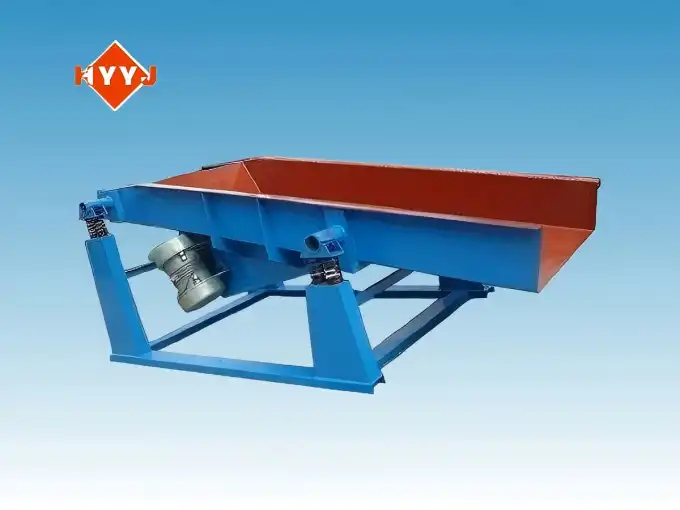

Understanding the Accuracy and Reliability Challenges of Automatic Vibratory Feeders
Many factors can hinder industrial feeding systems, reducing their effectiveness in challenging production environments. Material flow problems are still one of the hardest things for plant managers and engineers to solve. When vibration patterns change because of changes in power or worn parts, feeding rates become uncertain. This means that the equipment further downstream either cannot get enough or too much. When the temperature in the working area changes, it affects how well the electromagnetic coil works by changing the resonance frequency that controls how the material moves along the feed tracks.
Material Characteristics Impact Feeding Consistency
Different materials move in different ways, which directly affects how accurate the feeding is. Fine powders can stick together when they're wet, which can block the hopper output area. On the other hand, abrasive granular materials eat away at protected coats on feed surfaces over time, which changes the friction coefficients. Because of these changes, you need tools that can react to changing material features without needing constant human help. Production plants that work with different kinds of materials during different shifts benefit most from feeders that are made with wide working tolerances and the ability to change themselves.
Environmental Factors Affecting Long-Term Reliability
Harsh working conditions speed up the breakdown of parts in feeding equipment. When dust builds up on drive units, it makes them less effective at removing heat, which could lead to coil failures too soon in electromagnetic systems. Vibrations sent to mounting structures can loosen bolts by adding unwanted resonance frequencies that mess up the flow of materials. Chemicals in working settings can break down rubber separation elements or corrode metal parts. When procurement teams are aware of these environmental problems, they can choose feeders that are made with the right protective grades and materials for the job.
Core Design Principles That Ensure High Accuracy and Reliability
Carefully designed mechanical and electrical systems that work together are the basis of reliable vibratory feeds. How well electrical energy is turned into controlled mechanical shaking depends on how well the drive unit is designed. Electromagnetic drives let workers precisely control frequencies between 30 and 60 Hz, so they can fit the vibration characteristics to the needs of the material. Motor-driven systems can move bigger bulk materials with higher volume, but they aren't as precise when it comes to changing the frequency as electromagnetic systems.
The feeder frame's structural stiffness stops it from bending in ways that aren't needed, which would otherwise lose vibrating energy. Reinforced construction lets equipment keep working at the right level even when it's being used 24 hours a day, seven days a week, which is common in chemical and industrial processing plants. Isolation mounting systems keep the moving unit away from the support structure. This keeps energy from being lost and keeps vibrations from reaching other equipment. This design for separation also lowers acoustic pollution, which keeps noise levels in the workplace below the limits set by law.
Material Compatibility Engineering
For the feeder to work, the equipment's power must match the needs of the material handling. The shape of the hopper affects how the materials move. For example, high wall angles help cohesive materials fall off with the help of gravity, while textured surfaces stop sticky substances from sticking to them. Track surface treatments strike a mix between longevity and the need for gentle handling of materials. Pharmaceutical uses often ask for mirror-polished stainless steel to keep things clean and free of contamination. Mining, on the other hand, wants metals that are resistant to wear and can handle rough rock pieces. Feed rate values from 1 to 100 m³/h can meet the needs of a wide range of businesses with different throughput needs.
The form of the anti-blocking material in modern feeders stops bridging and rat-holing, which are typical problems when moving large solids. By strategically placing vibration nodes, the material doesn't get stuck in the sides of the hopper, which keeps the release flow steady. Operators can change the amplitude settings to increase the churning strength when working with materials that don't want to move easily, without overfeeding during normal operation. These flexible features cut down on unplanned downtime caused by breaks in the flow of materials by a large amount.
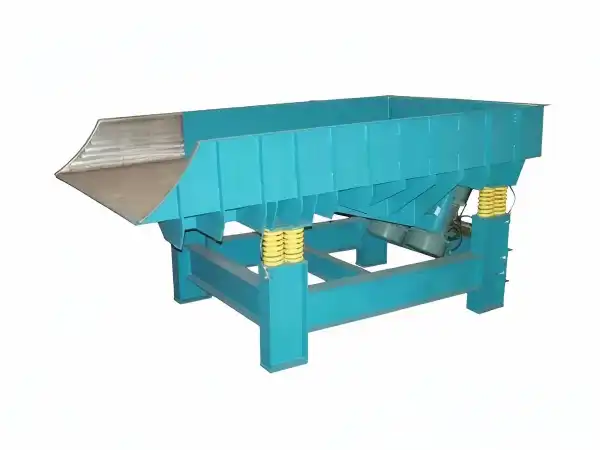
Energy Efficiency and Control Systems
Types of Automatic Vibratory Feeders and Their Accuracy Profiles
Industrial feeding options include several different design methods, each of which is best for a certain type of application. Bowl feeders are great at lining up and separating small parts during assembly. They use spiral tracks to line parts naturally through vibration and gravity. Linear trough feeders can move materials in a certain way over longer lengths, which makes them good for moving large materials from one step of a process to another. When it comes to bigger throughput uses, where regular mass flow rates are more important than exact part orientation, pan feeders are the way to go.
Electromagnetic Versus Motor-Driven Systems
When exact flow control and quiet operation are needed, electromagnetic feeders are the best choice. Alternating magnetic fields act on spring-mounted armatures to make these systems vibrate. This creates smooth sinusoidal motion patterns that are perfect for handling materials gently. In clean production settings, the lack of rotating parts cuts down on upkeep needs and increases service life. Motor-driven feeders use eccentric weights that spin on shaft sections to make vibration patterns that are either spherical or elliptical. This method produces more force and can move materials that are compacted or bridged, so it is chosen for heavy-duty mining and industrial uses.
Specialised feeder designs solve problems that are unique to each business. Grizzly feeders have screening features that separate material that is too big while they are feeding. When food is processed or medicines are made, tube feeders keep the material flow lines clean. They also keep dust from dry powder handling under control. Cascading multi-stage feeds allow material to move more slowly, which keeps particles from breaking down during large-volume transfer operations. Knowing these configuration choices helps engineers choose equipment layouts that meet the needs of their process and work within the limits of their integration capabilities.
Performance Characteristics Across Feeder Types
The main way to measure how accurate an industrial feeder is by its feed rate steadiness. When properly tuned to the properties of the material, high-quality electromagnetic devices keep discharge rates within ±2% over long periods of time. Motor-driven units usually have a few wider tolerances, but they can handle a wider range of material sizes without having to be adjusted. In most places, noise levels below 70 dB are enough to meet health and safety standards at work. However, acoustic barriers may be needed in places where noise is a problem. You can choose vibration rates between 30 and 60 Hz, which can handle materials from fine powders to 50 mm lumps. Lower frequencies are better for moving bigger particles.
Maintenance and Troubleshooting for Sustained Accuracy and Reliability
Preventative repair programmes keep feeders working well and prevent expensive, unexpected downtime. Visual checks are done every day to find loose bolts, material buildup, and old parts before they stop working. Motor bearings should be oiled once a week, and spring tightness should be checked regularly to keep mechanical systems working as designed. Deep cleaning every three months gets rid of built-up material layers that change the way vibrations work and make feeding less accurate. Every year, a full repair is done, which includes trying the drive coil, replacing the springs, and checking the structure's strength.
Condition Monitoring Technologies
Through characteristic frequency signatures in an Automatic vibratory feeder, vibration research tools can spot mechanical problems that are starting to occur. In an Automatic vibratory feeder, high-frequency parts of vibration bands are caused by worn bearings, while sub-harmonic resonances are caused by worn springs. By putting in constant accelerometers on an Automatic vibratory feeder, you can keep an eye on things all the time and get automatic alerts when factors go beyond what is considered normal. With this method in an Automatic vibratory feeder, maintenance teams can plan fixes for scheduled breaks in production instead of having to deal with breakdowns that happen unexpectedly. Monitoring the temperature of electromagnetic coils in an Automatic vibratory feeder can find cooling system problems before the insulation fails, which prevents major damage to the drive unit.
Common Issues and Diagnostic Approaches
Feeding rate drops are usually caused by changes in the material's properties rather than problems with the tools. Material cohesion increases with moisture content, so a larger shaking amplitude is needed to maintain flow. Before making changes to the machine settings, operators should check the material specs. Noises that don't make sense usually mean that the mounting hardware is loose or the isolator springs are worn out. Both of these problems can be easily fixed by performing a mechanical check. Electrical problems show up as varying levels of shaking or a total failure of the drive. By measuring the source voltage and coil resistance, you can figure out whether the trouble is with the drive unit or the control electronics. If testing doesn't help, talking to the equipment's maker is the best way to make sure the problem is properly diagnosed and fixed.
Procurement Considerations for Selecting the Most Reliable and Accurate Automatic Vibratory Feeder
When choosing feeding tools, you need to think about more than just the initial purchase price. The name of the supplier and the quality of the manufacturing have a direct effect on the long-term costs of ownership through the need for upkeep and dependability. Companies that have ISO quality management certifications and written processes for checking their products show that they are committed to making sure that manufacturing standards are always met. Looking at case studies from similar applications can help you understand what performance is expected in the real world and what interface problems might come up.
In many ways, the technical requirements and the process requirements must match up. Feed rate capacity should be 20–30% higher than peak demand to account for changes in the process and lumps in the flow of materials. The hopper's 10–500-litre volume strikes a mix between buffer storage and the unit's small size. Material suitability is more than just meeting basic size requirements. It also includes meeting requirements for chemical protection, temperature tolerance, and keeping things clean. Checking these factors when choosing a vendor keeps expensive mistakes from being found during commissioning.
Total Cost of Ownership Analysis
The purchase price is only a small part of the total cost of the feeder over its lifetime. Electromagnetic and motor-driven systems use very different amounts of energy. For equipment that is always running, the yearly power costs could reach thousands of dollars. Maintenance needs change depending on how complicated the design is and how good the parts are. For example, expensive spring materials and protected bearings require less service but cost more at first. How long a failure lasts depends on how many spare parts are available. When compared to suppliers who need international shipment wait times, those who keep parts in stock locally and offer overnight shipping cause fewer production pauses.
Warranty coverage and service agreements protect you financially against early failures and give you access to expert help. Manufacturers who offer full guarantees that cover both parts and labour for 12 to 24 months show that they are confident in the durability of their products. Longer service contracts that include yearly checks and preventative maintenance keep things running smoothly while shifting the costs of maintenance labour to yearly costs that are easier to budget for. These deals are especially helpful for places that don't have repair staff with specialised knowledge in vibration equipment.
Customisation and Integration Support
Standard catalogue feeders work well for many common tasks, but custom methods are often better for more complicated tasks. Customisation choices include different bin shapes for different types of material flow, different track layouts for parts that aren't orientated normally, and built-in weighing systems that allow for gravimetric feed control. Suppliers that offer engineering design services can help you get the best feeder specs for your needs, which could lead to better performance than with standard setups. Installing help makes sure that everything is mounted correctly and calibrated correctly at the start, which speeds up the starting process. Training programmes teach practical information to plant workers, helping them keep things running smoothly and fix problems as they arise.
Conclusion
Automatic vibratory feeder systems work very accurately and dependably when they are well designed, well made, and well matched to the job. Precision vibration control mechanisms make sure that the flow of material stays the same in a wide range of working conditions, and the strong construction can handle tough industrial settings. By choosing the right feeder types based on the properties of the material and the needs of the process, you can avoid performance problems and costly working interruptions. Maintenance plans that keep equipment working well over its longer life protect the money that was spent on it. Industrial operations are set up for success with feeding systems when they do a full review of their suppliers that includes expert skills, support infrastructure, and total ownership costs. As production needs rise and new material handling problems appear, working with experienced manufacturers becomes more and more important for keeping up with the competition and keeping operations running smoothly.
FAQ
What factors most significantly impact automatic vibratory feeder accuracy?
Controlling the volume and frequency of vibration are the main factors that determine accuracy. How well these factors stay stable during running depends on the quality of the drive unit. Material qualities like particle size distribution, moisture content, and flow properties affect how well the material feeds when the machine settings are changed. To get the accuracy levels you want, you need to make sure that the feeder settings are properly calibrated to match the features of the material.
How does electromagnetic drive technology differ from motor-driven systems in practical applications?
Because they are quieter and can change frequencies more precisely, electromagnetic systems are perfect for precise feeding in controlled manufacturing settings. Motor-driven feeders produce more force by spinning eccentric weights, which makes them better at handling compacted materials and meeting the high flow needs that are common in heavy industrial settings. Which one to use relies on how the materials need to be moved, the working conditions, and the level of skill needed for each job.
What maintenance schedule ensures optimal long-term feeder reliability?
Visual checks done every day catch problems early, and greasing done once a week keeps mechanical parts in good shape. Cleaning once a month keeps material from building up and affecting function. Testing the drive system every three months and doing a full repair every year, which includes replacing the springs, keeps it accurate over the years of use. Using vibration sensors in condition tracking systems allows for predictive maintenance, which cuts down on unnecessary downtime by finding problems early, before they happen.
Partner with Shaanxi Heyuan for Superior Vibratory Feeding Solutions
Shaanxi Heyuan New Metallurgical Electric Furnace Equipment Co., Ltd. has been creating and making precise feeding systems for tough industrial uses for more than 15 years. Our automatic vibratory feeder line uses both electromagnetic and motor-driven technologies to work well in chemical, industrial and materials handling settings. We have more than ten utility model patents, which shows that we are dedicated to engineering innovation and constant growth. Our commitment to making the best products is shown by our ISO quality management certifications and 3A-level credit business standing. Email our expert team at sxhyyj606@163.com to talk about the problems you're having with moving things. We offer full solutions, from the initial design advice through installation, testing, and ongoing technical support, as a reputable automatic vibratory feeder provider. Visit hyyjfurnace-supply.com to look at all of the tools we have to offer.
References
1. Anderson, M.J., & Williams, R.K. (2019). Industrial Bulk Material Handling: Equipment Selection and Process Design. Manufacturing Engineering Press.
2. Chen, L., Thompson, D.S., & Morrison, K.P. (2021). Vibration Control Systems in Automated Feeding Equipment. Journal of Industrial Automation, 45(3), 287-304.
3. European Federation of Material Handling. (2020). Technical Standards for Vibratory Conveying Equipment: Design and Performance Guidelines. Brussels: EFMH Publications.
4. Patel, A.R. (2018). Electromagnetic Drive Systems: Theory and Industrial Applications. Academic Engineering Publishers.
5. Roberts, J.M., & Zhang, W. (2022). Predictive Maintenance Strategies for Material Handling Systems. International Journal of Production Engineering, 38(2), 156-173.
6. United States Department of Labour, Occupational Safety and Health Administration. (2021). Noise Control in Industrial Facilities: Compliance Guidelines for Material Handling Equipment. Washington, DC: OSHA Technical Manual.


YOU MAY LIKE