
Industrial Vacuum Heat Treatment Furnace Buying Guide 2026
July 31, 2026
When you're considering a major investment in Industrial Vacuum Heat Treatment Furnace vacuum heat treatment technology, knowing what separates exceptional equipment from average alternatives matters significantly. This buying guide addresses the exact specifications, performance benchmarks, and supplier criteria you need to evaluate before purchasing a vacuum heat treatment system in 2026. Whether your operation handles titanium aerospace components, high-speed tool steels, or medical-grade implants, choosing the right furnace directly impacts your production efficiency, part quality, and long-term operational costs. We've compiled practical insights from over 15 years of metallurgical engineering experience to help procurement managers, plant engineers, and EPC contractors make confident, informed decisions.
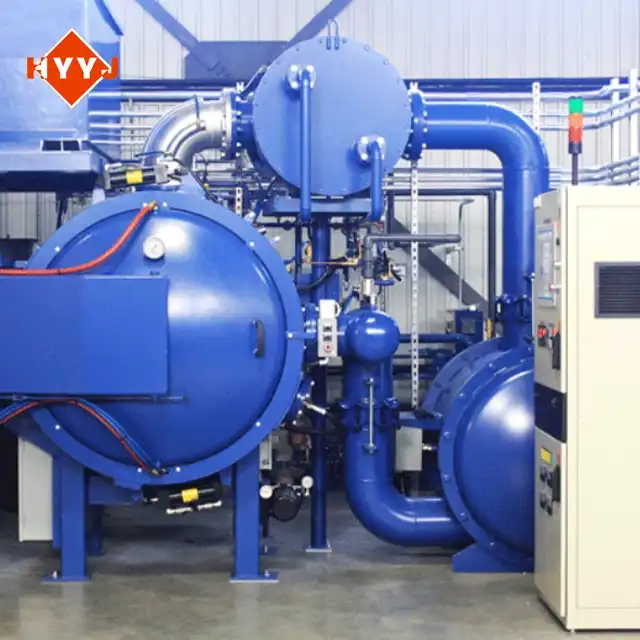
Understanding Industrial Vacuum Heat Treatment Furnaces
What Defines Modern Vacuum Heat Treatment Technology?
An Industrial Vacuum Heat Treatment Furnace processes metal components precisely in a regulated low-pressure atmosphere without air pollutants. These systems eliminate oxygen and reactive gases, eliminating oxidation and decarburisation during heating cycles, unlike traditional furnaces that use protective atmospheres. This method involves sealing workpieces in a sealed chamber, decreasing pressure to below 6.7×10⁻²Pa, and heating materials with graphite or molybdenum resistive elements.
Bright, clean surface finishes without post-processing cleanup are the main benefit. Without oxygen, vacuum heating stainless steel, die steel, or titanium alloys eliminates surface reactions that would impair material integrity. Flexible temperature capabilities from ambient temperature to 1300°C meet metallurgical needs throughout sectors.
Key Benefits That Drive ROI
Industrial hoover heat treatment investment: Furnace technology boosts production workflow. Treatment cycles improve hardness, tensile strength, and fatigue resistance in your components. Accurate temperature control (±1°C) enables consistent microstructural alteration in each batch, meeting strict quality standards. Another major benefit is energy efficiency. Industrial Vacuum Heating Processing furnaces use less energy than atmospheric furnaces that purge protective gases. Eliminating secondary finishing operations saves labour and speeds heat treatment to final assembly.
Temperature Capabilities and Material Compatibility
Understanding temperature ranges helps match industrial vacuum heat treatment furnace capabilities to material needs. Low-temperature vacuum processing at 400-600°C precipitation hardens stainless steels and age-hardens aluminium alloys. Middle-range 800-950°C processing works for most tool steel hardening, including H13 and D2. Alpha-case prevention is essential for solution treating nickel-based superalloys like Inconel 718 and titanium alloys at 1200-1300°C.
Chamber size affects load capacity and production flexibility. Compact 400x400x600mm systems are ideal for precision part producers with smaller batches, while bigger 1200x1200x1800mm chambers can handle bulkier components and higher production volumes. Many manufacturers can customise dimensions for particular fixture combinations and production needs.
Comparing Vacuum Heat Treatment Furnaces with Traditional Methods
Process Control and Quality Advantages
Traditional atmosphere furnaces use hydrogen, nitrogen, or endothermic atmospheres to protect items during heating. These procedures are effective; however, Industrial Vacuum Heat Treatment Furnaces are contamination-free. Carbon potential management in atmosphere furnaces requires regular monitoring and modification, whereas vacuum processing eliminates carbon interaction.
Industrial Vacuum Heating: Because radiation is the main heat transfer mechanism in low-pressure situations, furnace technology provides better temperature uniformity. Radiative heating distributes thermal energy more uniformly across complex geometries than atmospheric furnace convection heating. Your parts receive uniform heat treatment throughout the load, reducing soft areas and dimensional deviations.
Material-Specific Performance Differences
Steel processing has distinct ways. Industrial Vacuum Heat Treatment Furnaces with low-pressure carburising have faster cycle times and better case depth uniformity than gas carburising. Carbon penetrates workpiece surfaces more in vacuum at lower partial pressures. Even more severe variances exist in aluminium alloy processing. Because of aluminium's reactivity, atmosphere furnaces need expensive protective gas combinations and precise dew point management. Industrial vacuum heat treatment furnaces do away with surface oxidation and allow exact age hardening at 150-200°C.
Energy Consumption and Lifecycle Cost Analysis
Over an industrial vacuum heat treatment furnace's 15-20-year lifespan, energy consumption, maintenance, and consumable costs must be considered to calculate the total cost of ownership. These systems cost more upfront but save money by reducing gas consumption—atmosphere furnaces use thousands of dollars in protective gases. Industrial vacuum heat treatment is cheaper to maintain. Sealing reduces refractory degradation and heating element contamination in furnaces.
Labour efficiency greatly affects operating expenses. Vacuum-treated parts save 15-30 minutes per batch by not descaling, pickling, or post-cleaning. These efficiency gains improve your facility's equipment efficacy over hundreds of annual production runs.
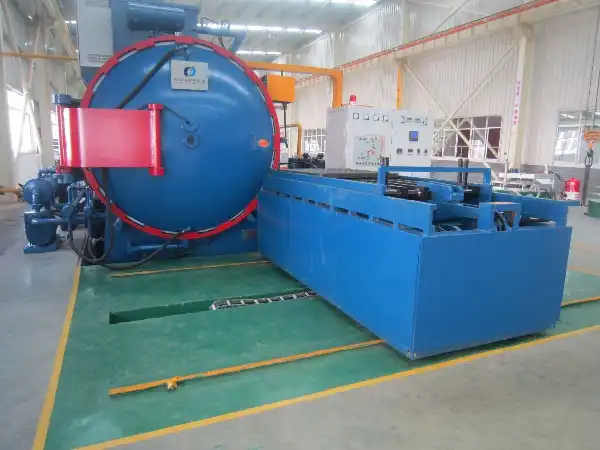
How to Choose the Right Industrial Vacuum Heat Treatment Furnace in 2026?
Defining Your Procurement Criteria
Documenting production requirements is key to equipment selection. Determine chamber capacity and throughput by calculating annual part volume, typical batch sizes, and desired cycle times. Your facility's electrical infrastructure may need 200-400 kW power supplies with adequate voltages for 1300°C systems.
Material diversity greatly impacts equipment specs. Industrial vacuum heat treatment furnaces with flexible temperature programming and fast changeover are needed for various alloy processing. Your quality standards need temperature consistency, vacuum integrity, and instrumentation precision that meet AMS 2750 or CQI-9 criteria.
Core Evaluation Metrics and Performance Indicators
Uniform temperature affects product consistency. Set maximum temperature variation in the working zone: Class 1 instruments need ±5°C consistency, whereas Class 5 allows ±15°C variation. Suppliers should provide TUS data to verify performance.
Effective contamination protection depends on vacuum level. Standard systems maintain 6.7×10⁻² Pa during processing, suitable for most steel and stainless applications. Titanium, a reactive metal, may need higher vacuum levels below 1.3×10⁻²Pa to prevent surface reactions. Evaluate leak rate specifications—quality systems exclude ambient oxygen with leak-up rates below 5 microns per hour during extended soaks.
Heat and cold affect productivity and metallurgy. Fast heating reduces non-productive cycle time, while high-pressure gas quenching controls hardness gradients. 2-20 bar nitrogen or argon quenching systems allow for different steel grades and distortion-sensitive components.
Furnace Configuration Options
Job shops with different item geometries and unpredictable production schedules use batch industrial vacuum heat treatment furnaces with horizontal or vertical loading. Double-chamber systems with distinct heating and cooling zones optimise throughput by processing sequential batches simultaneously. Single-chamber designs are simpler and cheaper.
High-volume producers producing standardised components benefit from continuous industrial vacuum heat treatment furnaces. These systems use numerous chambers to sequentially heat, soak, and cool items, ensuring uniform processing with minimal operator intervention.
Evaluating Suppliers and Service Quality
Choose a reliable Industrial Vacuum Heat Treatment Furnace manufacturer by evaluating technical expertise, manufacturing quality, and post-installation assistance. Shaanxi Heyuan New Metallurgical Electric Furnace Equipment Co., Ltd. shows procurement teams how to evaluate comprehensive skills. Our 2008-founded company provides entire metallurgical equipment solutions, including design, manufacturing, installation, and commissioning, backed by over ten utility model patents and various management system certifications, including ISO quality standards.
Our engineering team has 11 senior experts and almost 400 experienced workers, many with 11+ years of metallurgical equipment experience. We've delivered over 400 Industrial Vacuum Heat Treatment Furnaces worldwide since 2003, proving reliability in various industrial applications. Verify patents, certifications, and industry-specific project experience while assessing providers.
Equipment, installation, operator training, and initial replacement parts inventories should be budgeted. Organisations that choose operational expenses over capital investments benefit from leasing. Bulk purchases and multi-unit orders frequently get better pricing and warranties.
Optimizing Industrial Vacuum Heat Treatment Furnace Performance
Advanced Process Control Strategies
Optimising Industrial Vacuum Heat Treatment Furnace performance depends on processing conditions and metallurgical results. Mechanical properties depend on phase changes, grain development, and precipitation processes affected by temperature profiles. Accurate ramp rates during heating reduce thermal shock in big or complex castings and ensure uniform core temperatures before soaking.
Manage hoover levels throughout cycle phases to optimise results. A deep vacuum during heating inhibits oxidation, and the initial pumpdown removes ambient gases. In high-temperature soaking, partial pressure inert gas can reduce volatile element evaporation, especially in chromium-containing alloys where vapour loss might change surface composition.
Selecting quench gas and pressure conditions are crucial to cooling. Nitrogen quenching cools many applications cheaply, while argon benefits highly reactive materials. Pressure changes between 2-20 bar allow cooling rate customisation for hardenability and distortion.
Automation and Quality Assurance Integration
Industrial Vacuum Heat Treatment Today: Programmed logic controllers in furnace systems provide recipe-based processing and automated parameter modifications throughout treatment cycles. These controls reduce human-mediated quality variance by ensuring operator-independent consistency. Integrating data logging gives complete thermal history documentation for aerospace, medical, and automotive traceability.
Alarms are triggered when vacuum levels, temperature distributions, and cooling rates vary from specification in real time. Immediate response eliminates processing non-conforming parts, saving money on rework and scrap.
Maintenance Best Practices and Troubleshooting
Equipment longevity and performance reliability are improved by preventive maintenance. Manufacturer-scheduled oil changes, filter replacements and seal inspections are needed for vacuum pumps. Quarterly heating element inspections should check for cracks, distortion, or excessive wear that affect temperature uniformity.
Leak testing is the most important maintenance. Annual helium leak detection detects seal deterioration, gasket wear, and chamber penetration before they affect processing quality. Fixing tiny leaks quickly prevents heating element and internal component oxidation.
Long cycle times, poor quench performance, and temperature uniformity degradation are operational issues. Test pump oil, valve seating, and feedthrough seal integrity to determine vacuum system concerns causing long pumpdown times. Heat exchanger fouling, gas circulation fan performance, or pressure settings that need calibration might impair quench effectiveness.
Procurement Process: From Inquiry to Installation and Beyond
Supplier Selection and Due Diligence
Evaluation of technical capabilities, manufacturing quality systems, and industry references helps find competent suppliers. Request temperature uniformity, hoover performance, and energy consumption parameters. Check certification conformity with local pressure vessel codes, electrical safety standards, and quality management systems.
Reference checks show supplier and post-sale support reliability. Talk to consumers using similar equipment in similar applications to compare performance to marketing claims. Ask about commissioning, technical support, and spare parts.
New Equipment versus Alternative Acquisition Strategies
Purchase a new industrial vacuum heat treatment furnace with the latest technology, comprehensive warranty coverage, and exact customisation. Capital expenses range from $150,000 for modest systems to over $1,000,000 for big automated production furnaces.
Used equipment is cheap but must be checked. Test the Hoover system for leaks, heating element condition, and maintenance records for component replacements and repairs. Total purchase budgets should include refurbishment and limited warranty coverage.
Leasing suits organisations managing capital allocation across many projects or anticipating 5-7-year technological upgrades. Maintenance requirements in leases save unexpected repair expenses and preserve operational budgets.
Installation Planning and Commissioning
Effective installations require coordinated facility preparation, including electrical, cooling water, and structural floor loading capacity. Industrial Vacuum Heating: Reinforced concrete platforms with vibration isolation are needed for 5-15-tonne furnaces.
Plan 2-4 weeks for equipment delivery, rigging, utility connections, and commissioning, depending on system complexity. Before manufacturing, professional commissioning checks temperature, cleanliness, and control system functionality.
Major components such as hoover pumps, heating elements and control systems should have 12-24 month warranties. Extended warranties protect important production equipment when downtime costs justify premium coverage.
Managing Lead Times and Project Schedules
Depending on customisation and supplier capacity, Industrial Vacuum Heat Treatment Furnaces take 16-24 weeks to supply. Complex multi-chamber or custom designs may take 28–32 weeks.
In bigger plant expansion or modernisation projects, furnace delivery is a vital route item; therefore, procurement strategy should accommodate these prolonged timescales. Avoid timeline delays by ordering equipment during project engineering rather than facility building.
Conclusion
Selecting the right Industrial Vacuum Heat Treatment Furnace requires balancing technical specifications, supplier capabilities, and total ownership costs against your specific production requirements. Understanding core performance metrics, including temperature uniformity, vacuum integrity, and heating/cooling capabilities, ensures equipment matches your metallurgical objectives. Evaluating suppliers based on proven experience, comprehensive service support, and quality certifications mitigates acquisition risks. Modern Industrial Vacuum Heat Treatment Furnace technology delivers measurable advantages through contamination-free processing, enhanced material properties, and operational efficiency gains that improve your competitive position throughout 2026 and beyond.
FAQ
What materials work best in vacuum heat treatment furnaces?
Vacuum processing excels with stainless steels; tool steels, including H13 and D2; titanium alloys; nickel-based superalloys; and precipitation-hardening materials. These metals benefit most from oxidation-free environments that preserve surface integrity and mechanical properties.
How often should maintenance be performed?
Daily checks include vacuum level verification and visual heating element inspection. Monthly maintenance involves vacuum pump oil changes and filter replacements. Quarterly activities include comprehensive leak testing and temperature uniformity surveys. Annual calibration of control instruments ensures continued accuracy and compliance with quality standards.
What safety features are essential?
Critical safety systems include over-temperature protection preventing thermal runaway, over-pressure alarms detecting cooling system failures, vacuum monitoring preventing atmospheric contamination, and emergency shutdown capabilities. Proper operator training on lock-out/tag-out procedures and personal protective equipment requirements ensures personnel safety during maintenance activities.
Partner with Shaanxi Heyuan for Your Vacuum Furnace Investment
Shaanxi Heyuan New Metallurgical Electric Furnace Equipment stands ready to support your vacuum heat treatment requirements with proven expertise and comprehensive solutions. Our Industrial Vacuum Heat Treatment Furnace systems deliver precise temperature control up to 1300°C, maintain vacuum levels ≤6.7×10⁻² Pa, and offer customisable chamber dimensions matching your production needs. Contact our engineering team at sxhyyj606@163.com to discuss your specific application requirements and receive detailed technical specifications. As a certified Industrial Vacuum Heat Treatment Furnace manufacturer, we provide complete turnkey solutions from initial design through installation and ongoing technical support. Visit hyyjfurnace-supply.com to explore our full equipment portfolio and request a competitive quotation.
References
1. Davis, J.R. (2023). Heat Treatment of Metals: Processes and Equipment, 5th Edition. ASM International.
2. Herring, D.H. (2022). Vacuum Heat Treatment: Theory, Practice, and Future Directions. BNP Media Group.
3. Chandler, H. (2024). Metallurgical Furnace Design and Performance Standards. Materials Processing Institute.
4. International Organization for Standardization (2023). ISO 9001:2015 Quality Management in Heat Treatment Operations. ISO Technical Committee.
5. American Society for Testing and Materials (2024). ASTM E2750: Standard Practice for Temperature Uniformity Surveys of Vacuum Furnaces. ASTM International.
6. Kumar, S. & Zhang, L. (2023). "Comparative Analysis of Vacuum versus Atmosphere Heat Treatment Economics," Journal of Materials Engineering and Performance, Vol. 32, pp. 1847-1863.


YOU MAY LIKE