
What Factors Affect Positive Pressure Dust Collector Efficiency?
July 17, 2026
Positive pressure dust collector efficiency hinges on several interconnected elements: filter media quality, airflow velocity balance, fan impeller durability, maintenance frequency, and system design integrity. Unlike negative pressure configurations, these systems push dust-laden air through filters under elevated internal pressure, which demands robust sealing to prevent fugitive emissions while maintaining capture rates exceeding 99%. Material selection, particularly for the fan positioned upstream of filtration media, significantly impacts longevity when processing abrasive particulates. Understanding these variables enables metallurgical plants, steel mills, and mining enterprises to optimize equipment performance and reduce operational costs.
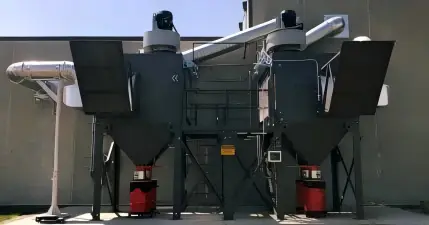
Understanding Positive Pressure Dust Collector Efficiency
Efficiency in industrial dust collection is more than just getting rid of particles; it's the balance between how well the filters work, how much energy they use, and how long the business can keep running. We use three important metrics to judge the performance of these Positive Pressure Dust Collectors: the rate at which particles are captured, the difference in pressure across the filter media, and the uniformity of the volumetric flows.
How Do Positive Pressure Systems Operate?
The basic idea is to put the fan ahead of the filter box. This makes a setting inside where the static pressure is higher than the atmospheric pressure. With this "push-through" design, dirty air is pushed into the plenum, where particles press against filter media. There are clear benefits to this setup in some situations, especially when using lighter-gauge housing, which can lower capital costs by 15–20% compared to vacuum-based options. But this benefit comes with a technical cost: the fan blades come into direct contact with air that is full of dust, so the impeller has to be made harder to handle the wear and tear.
Measuring Efficiency Parameters
The air-to-cloth ratio impacts particle capture. Ideal industrial mining ratios are 3:1 to 6:1. Lower levels improve filtering but increase system size and expense. Magnehelic gauges measure pressure loss in real time, revealing filter cake buildup. Cleaning cycles or media replacement occur when the gauge reads above 6 inches of water. No matter how regular the airflow, deviations of more than 10% from the design requirements indicate seal failure or ductwork blockage, which lowers system performance.
Different fields have different efficiency standards. Steel mills that process electric arc furnace dust must filter 0.3-micron particles at 99.9% accuracy to meet EPA emission regulations. Woodworking shops that process more sawdust may be able to relax standards. System power should match application needs to minimize over-engineering and compliance errors.

Core Factors Affecting Positive Pressure Dust Collector Efficiency
How well these systems work in ongoing industrial operation depends on several factors that work together. Identifying and dealing with each issue is important for the long-term success of the Positive Pressure Dust Collector, and following the rules.
Filter Media Selection and Performance
Any dust collection device works by filtering dust. Positive Pressure Systems now use felted polyester bags for general use, pleated cartridges for small installations, and PTFE membrane-coated components for submicron capture. Shaanxi Heyuanxin Metallurgical Electric Furnace Equipment Co., Ltd. uses cutting-edge PTFE membrane technology to filter out over 99.9% of particulates and maintain pressure dips between 1 and 6 inches of water gauge over 1,000 to 100,000 CFM airflow.
PTFE coatings impede surface filtration, not deep filtration, to prevent particles from entering medium fibres. This makes filters last 40–60% longer than normal felted materials in dusty environments like ladle furnaces. The membrane doesn't like water; thus, it keeps the filter dry when working with hot metal off-gases that condense during cooling.
Media lifespan affects lifecycle costs and replacement times. Temperature resistance is crucial in thermal processing. Some aramid blends can withstand 400°F, but regular polyester breaks down above 275°F. Chemical resistance is necessary when working with corrosives. Silicone-treated fibreglass can survive acidic vapours that would degrade raw cellulose media.
Airflow Dynamics and Pressure Balance
Effective airflow management distinguishes efficient systems from ineffective ones. The fan must provide enough static pressure to overcome filter resistance, pipe friction, and elevation changes while maintaining mass flow rates. Small fans don't gather particles fast enough, so they settle in horizontal duct lines and pose cleaning issues. However, large fans lose energy and wear out media quickly due to high-velocity particle impact.
Pay attention to system graphs, which indicate how airflow and static pressure fluctuate with working conditions, to balance pressure. Dust cake in filters increases resistance, slowing airflow unless the fan has a higher curve point. Variable frequency drives allow real-time adjustments to maintain the goal CFM even when pressure changes. Our clever pressure control systems constantly monitor pressure and adjust fan speed to maximize energy savings and collection efficiency.
The system's performance depends on ductwork geometry. During horizontal runs, particles can fall out at transport speeds below 3,500 feet per minute. Bends and transitions wear faster at transport speeds over 5,000 FPM. The "sweet spot" of 4,000 to 4,500 FPM is maintained with proper ductwork size. This ensures particles are transferred reliably without harming components early.
Fan Impeller Durability and Protection
One problem with Positive Pressure Systems is that fans can be exposed to dirty airstreams. In negative pressure systems, fans move air that has already been cleaned. In these units, however, particles are thrown directly at the impellers. Because of this, material engineering needs to focus on abrasion protection and structural stress.
AR400 abrasion-resistant steel is used to make backward-inclined impellers that last longer than normal mild steel construction. Even though radial blade designs aren't as good at moving air, they are even better at resisting wear in very rough situations with metal oxides or mineral dusts. Dynamic balancing to ISO 1940-1 Grade G2.5 norms reduces the wear on bearings caused by vibrations, which means that repair shutdowns aren't needed as often.
When dust conditions allow it, pre-filtration techniques can reduce the amount of dust that the rotor is exposed to. Upstream cyclonic filters get rid of 70–85% of the particle mass, mostly the larger particles above 10 microns that do the most damage. The cyclone outflow goes straight to the fan inlet of the baghouse, which greatly lowers the erosive loads. This two-step process works really well in steel mills that deal with mill scale and mining operations that process rock concentrates.
Maintenance Protocols and Cleaning Cycles
Regular, proactive maintenance improves long-term performance the most. Since pulse-jet cleaning doesn't work well on swollen, pressurized bags, Positive Pressure Systems employ reverse-air or mechanical shakers to clean filters.
One section at a time, reverse-air cleaning releases bags to break up dust buildup. A moderate procedure that preserves media integrity requires 4–8 sections to operate constantly during cleaning rounds. Shaker mechanisms mechanically move the cake in filter units. Shakers work, but they stress and shorten media life more than reverse-air techniques.
Rather than predefined timings, our self-cleaning devices start cleaning based on differential pressure levels. This demand-based solution eliminates energy-wasting cleaning methods that accelerate media wear. Before airflow stops due to pressure drop, it removes cakes on time. Cleaning occurs every 30 minutes while the machine is stressed and every 4 hours otherwise.
Even though technology has advanced, physical checks are still needed. Visual inspections every three months reveal rust in the frame, hopper, and bags. Before housing plates fail, ultrasonic thickness testing finds inner wear and tear. Monitoring bearing temperature and vibration can predict fan problems weeks in advance, allowing maintenance to be scheduled rather than done rapidly, which stops output.
Structural Integrity and Seal Performance
Positive pressure makes barrier maintenance tougher. Internal pressure seeks exit through structural weaknesses. This necessitates severe leak prevention measures beyond those required for a negative pressure system.
Lighter materials must be balanced against pressure vessels while building dwellings. 12–14 gauge carbon steel is sufficient for most usage below 15 inches of water gauge. However, higher pressures or rust-prone situations require bigger-gauge stainless steel. Dye-penetrant or x-ray testing on welded gaps is needed to examine full-penetration welds for defects. Pinhole leaks can generate uncontrolled emissions that violate environmental standards and expose workers to too much radiation.
Special risks exist with access door covers. Pneumatically squeezed inflatable gasket systems shut better than compression gaskets, which degrade over time. Hopper discharge valves need rotating or double-flap airlocks to maintain system pressure and let dust escape. Single-flap designs provide pressure pulses that damage filter cakes and reduce collection.
Comparison: Positive Pressure Dust Collector Efficiency Versus Alternatives
Knowing how Positive Pressure Dust Collectors compare to other technologies helps buying teams make smart choices that are in line with budget and business needs.
Positive Versus Negative Pressure Configurations
Fan placement—the key architectural change—has various consequences on efficiency. Negative-pressure devices filter air before the fan. This saves the impellers from wearing down, but the housing must be tougher to prevent vacuum-induced collapse. Most tools are 15–25% heavier and costlier due to this structural state. Positive pressure is cheaper upfront, but it requires more fan main. This modification savesd can leak emissions if seals fail.
Efficiency measurements support negative pressure for dangerous or explosive dust usage that requires comprehensive control. Vacuums pull leaks inside instead of pushing unclean air into workspaces. Positive pressure is best for high-volume, low-toxicity jobs like moving grains and working with wood, where putting it outside allows modest escape emissions without legal issues.
Baghouse Systems and Cyclonic Separators
Traditional baghouse designs use pressure or vacuum combinations; therefore, direct comparison is based on their integration. Combining cyclonic pre-separators and positive pressure baghouses creates two efficient stages that maximize each technology's benefits. Before big particles impact the filter medium, the cyclone removes 70–85% of dust by mass through rotational separation. This method reduces baghouse size by 40–50% and triples filter life.
Standalone cyclones function 80–90% of the time for particles larger than 20 microns, but they fail terribly at removing submicron particles, which harm people's lungs and are rigorously monitored by regulators. For metallurgy operations that produce small fume particles that must be caught at 99% or more, cyclones function best as pre-treatments, not principal controls.
Energy Consumption and Operational Costs
Lifecycle cost analysis shows details that aren't clear when comparing buy prices. Because they need more pressure to push through the filter resistance, Positive Pressure Systems use 8–12% more energy than negative pressure units of the same size. But when the structure is lighter, it costs less to build and doesn't need as much of a base. When used in rough conditions, fans need to be replaced every 18 to 24 months, which adds to ongoing costs that aren't present in negative-pressure systems where fans work in clean airstreams.
Designs that use less energy and include variable frequency drives and IoT-enabled tracking tools can make up for lost efficiency through better operation. Our systems lower running costs by changing the fan speed automatically to keep the goal airflow even when the filter resistance changes. This uses 20–30% less energy than fixed-speed designs and increases component life by reducing mechanical stress.
Procurement Considerations to Maximize Dust Collector Efficiency
When choosing Positive Pressure Dust Collectors that will keep working well after years of hard industrial use, you need to look at more than just the technical specs. You also need to look at the supplier's skills and their support system.
Evaluating Manufacturer Credentials and Support
Equipment durability depends on initial design and continuous expert assistance. For over ten years, Shaanxi Heyuanxin Metallurgical Electric Furnace Equipment Co., Ltd. has specialized in metallurgical dust control and has over ten utility model patents and computer software copyrights, demonstrating its innovation. Our ISO 9001, ISO 14001, and OHSAS 18001 certifications ensure worker safety, environmental protection, and quality during planning, manufacture, and commissioning.
Provincial company registration and 3A credit standing verify a business's financial security and honesty. These are crucial when selecting partners for long-term projects. There is little downtime during maintenance since experienced support and spare parts are readily available. Our experts can assist you in fixing common issues and increasing system performance when output conditions vary 24/7.
Customization for Application-Specific Requirements
Metallurgical uses like collecting fumes from electric arc furnaces, treating off-gas from ladle furnaces, and controlling dust in mine operations are all different and need custom solutions. Most of the time, generic equipment doesn't work perfectly across this range. We are experts at unique engineering solutions that fit the process factors to the right collector size, filter media choice, cleaning mechanisms, and tracking systems.
Modular design philosophy enables future expansion without complete system replacement. Adding more filter sections lets production go up, and new tracking technologies can be added to control systems that have been updated. This adaptability saves investments in capital against becoming obsolete, increasing the useful life of equipment beyond the usual 15–20 year replacement cycles.
Balancing Capital Expenditure and Operating Costs
The purchase price is merely the down payment on the home's final cost. Over the life of the equipment, how much energy is used, how often and how much it costs to change filters, how much repair work is needed, and how much production is lost during unplanned downtime must be studied. Due to their reliability and efficiency, 20% more expensive systems have 40–50% lower lifetime costs.
Bulk purchases save money, which benefits firms with multiple locations or large structures. Sticking to one manufacturer makes spare parts easy to monitor, teaches maintenance crews to use standard tools, and often offers bulk discounts. Standardization should never compromise job-specific equipment. Making equipment work in varied conditions wastes time and money.
Practical Tips and Strategies to Enhance Efficiency in Existing Systems
Targeted changes can bring back speed in even older Positive Pressure Dust Collector installations without having to replace the whole thing.
Implementing Predictive Maintenance Programs
Predictive maintenance reduces downtime and extends part life. The filter is getting blind due to differential pressure trends; thus, the media must be replaced before the life of partsibration analysis can detect worn-out bearings weeks before they seize, allowing for planned downtime repairs instead of costly ones.
You can view real-time system data on the cloud with IoT tracking. Remote diagnostics lets techs examine parameters, adjust control settings, and predict issues without visiting the site. Maintenance staff receive automated alerts when parameters exceed permitted ranges. This allows them to resolve the issue before it affects efficiency or equipment.
Upgrading Filter Media and Components
Adding current filter media to old systems often makes a big difference in how well they work for a small cost. Putting PTFE membrane elements inside standard felted bags raises efficiency from 95% to 99.9%, which could get rid of emission violations and the costs that come with them. Better filtering also lowers the buildup of gunk on equipment further downstream, like heat exchangers and other process equipment, where waste gases pass.
Adding variable frequency drives to fans that run at a steady speed lets the airflow be changed on the fly to meet practical needs. Within 12 to 24 months, the drives pay for themselves by saving energy. They also reduce noise and mechanical wear, which are extra benefits. Upgrading old relay-based controls to PLC systems with touchscreen screens makes it easier for operators to work with the system and lets them use more complex control methods that weren't possible with older systems.
Optimizing Cleaning Cycles and Airflow Settings
A lot of systems run with factory-set settings that were never optimized for the conditions of the real programme. Changing the regularity of the cleaning cycle based on observed differential pressure instead of set timers prevents both excessive cleaning that wastes energy and insufficient cleaning that stops airflow. The best time to start cleaning is when the pressure drop hits 4-5 inches of water gauge. This is early enough to avoid too much resistance but late enough to allow a filter cake to form, which improves submicron capture.
Verifying airflow through pitot tube traverses often shows that real performance is 15–20% different from what was planned. Designed capture speeds can be restored by fixing damper linkages, clearing up ducting obstructions, and balancing multiple pickup spots. These changes don't cost much, but they make up for big losses in efficiency that have built up over the years of use.
Conclusion
The Positive Pressure Dust Collector's effectiveness depends on how well the filter media works with airflow, how long the fan lasts, how often it needs to be serviced, and how strong the structure is. Systems that handle high-concentration metallic dusts work best when they are custom-designed for the job at hand instead of being modified from standard designs. By buying tools from companies with a track record of excellence, full support, and the ability to customize their products, you can be sure that they will keep working efficiently for decades of tough service. With proactive upkeep, strategic upgrades, and ongoing performance tracking, dust collection can go from being a legal requirement to a competitive advantage that lowers costs and makes the workplace safer.
FAQ
What is the ideal filter replacement interval for positive-pressure dust collectors?
Instead of following a set plan, when to replace filters relies on the type of dust, how fast it loads, and how well it filters. Keep an eye on the changes in the difference pressure. If the standard pressure rises 50% above the new filter values after cleaning, the filter needs to be replaced. In metallurgical uses, this usually happens every 18 to 36 months. However, corrosive conditions or temperature cycling can make the time between visits shorter, to 12 to 18 months.
Can positive pressure systems handle combustible dust safely?
Yes, but only with the right technical controls. Install blast venting that meets NFPA 68 standards and isolated valves to stop the fire from spreading to equipment that is linked. Keep no-go zones around the Positive Pressure Dust Collector because events involving positive pressure can send fires outward. Negative pressure systems are better for uses involving aluminum, magnesium, and medicinal dust because they naturally keep highly flammable materials safer.
How do I choose between positive and negative pressure configurations?
Look at three important factors: how poisonous the dust is, how rough it is, and where it will be installed. Negative pressure is best for poisonous materials that need to be completely contained or for installations inside where fugitive fumes are not acceptable. For outdoor setups that deal with non-toxic, moderately abrasive dusts and where lighter building and lower starting costs are valuable, choose positive pressure. Talk to manufacturers with a lot of knowledge to figure out what your unique application needs.
Partner with Shaanxi Heyuan for Superior Dust Collection Solutions
To get the most out of metallic dust control, you need both high-tech tools and partners who are dedicated to your business's success. Shaanxi Heyuanxin Metallurgical Electric Furnace Equipment Co., Ltd. is one of the best companies that makes Positive Pressure Dust Collectors. They offer full solutions from planning to execution, and they have more than ten years of experience in this field. Our systems have smart settings and strong construction that make them 99.9% efficient at filtering while also using less energy and needing less upkeep.
Our modern factory is in No. 01 Chenjiatai Village, Maquan Sub-district Office, Qindu District, Xianyang City, Shaanxi Province, China. It makes special dust removal systems for electric arc furnaces, ladle furnaces, and mining operations around the world. Our engineering team gives you personalized advice to ensure the best performance for your individual application, whether you're upgrading existing installations or ordering new ones. Get in touch with us at sxhyyj606@163.com to talk about your dust control problems and find out how our tried-and-true technology and full support can help your business. You can look at our full line of mining equipment options at hyyjfurnace-supply.com.
References
1. Anderson, J.R. (2019). Industrial Dust Collection Systems: Design and Performance Optimization. McGraw-Hill Professional Engineering.
2. Cooper, C.D. & Alley, F.C. (2021). Air Pollution Control: A Design Approach (5th ed.). Waveland Press.
3. National Fire Protection Association. (2020). NFPA 68: Standard on Explosion Protection by Deflagration Venting. NFPA Publications.
4. Patel, S.K. & Singh, R.N. (2018). Comparative Analysis of Positive and Negative Pressure Dust Collection Systems in Metallurgical Applications. Journal of Environmental Engineering, 144(8), 04018067.
5. Richardson, M.L. (2020). Filtration Media for Industrial Air Pollution Control: Selection and Performance Criteria. Elsevier Science.
6. United States Environmental Protection Agency. (2022). Control of Particulate Matter Emissions from Electric Arc Furnaces. EPA Technical Document Series.


YOU MAY LIKE