
Tilting-ladle-type automatic pouring machine for High-Precision Pouring?
July 8, 2026
A Tilting-ladle-type automatic pouring machine is designed to pour with exceptional accuracy in harsh casting conditions. Servo-driven turning mechanisms and real-time weight feedback systems work together in this high-tech casting equipment to control the flow of molten metal with amazing accuracy. Pouring precision is usually within a ±1% error range. By automating tilt angle, speed, and trajectory, these machines get rid of the errors that come with pouring by hand. This provides repeatability that is needed for safety parts in cars, parts for spacecraft, and industrial equipment where precise dimensions and metal integrity must be maintained.
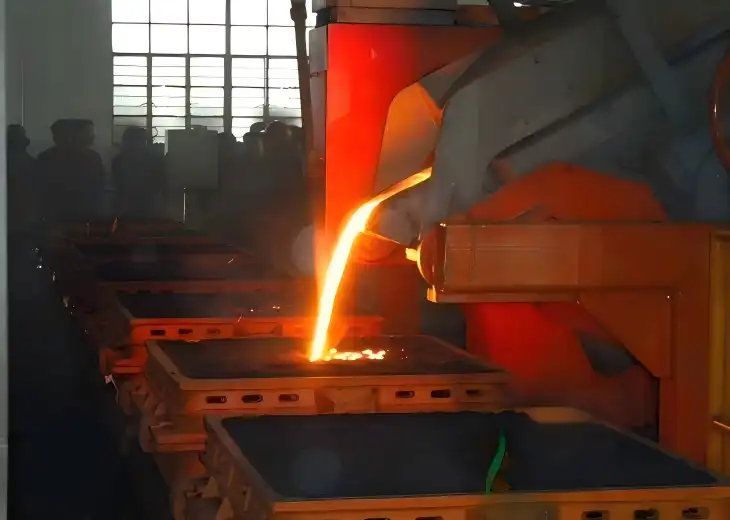
Understanding Tilting-Ladle-Type Automatic Pouring Machines
Modern foundries are under more and more pressure to make casts without any flaws while keeping their costs low. Traditional hand pouring adds factors that lower the quality of the casting: operator fatigue lowers regularity, response time limits accuracy, and exposure to high temperatures creates safety risks. Automated pouring systems solve these problems by changing how molten metal reaches the mould hole with technical solutions.
Core Components and Operational Architecture
Any automatic pouring system is built around three parts that work together as a whole. A heavy-duty tilting carriage on accurate rollers is part of the mechanical system. This carriage can support ladles weighing between 100 and 1,000 kilograms. The motors are servo motors, with an angle precision of ±0.1 degrees. This means that the metal stream can be controlled consistently during the important pouring window.
The system's brain is made up of sensor networks. High-temperature load cells constantly monitor the weight of the ladle and figure out the flow rates as the metal comes out of the spout in real time. Optical sensors pick up the flowing stream itself and send input to the PLC controller, which changes the tilt speed on the fly. Using pyrometers to keep an eye on the metal's temperature makes sure it stays in the right thickness range, which stops it from solidifying too quickly or becoming too flexible, which can lead to mould erosion.
Industrial-grade programmable logic devices and easy-to-use touchscreen displays are used in the control design. Operators can save factors like the starting tilt angle, acceleration curves, and cut-off time in order to program different pouring recipes for different casting geometries. This feature for managing recipes is very useful in high-mix production settings where quick switching between product lines determines how well the equipment works overall.
Virtual Pivot Technology Explained
Virtual pivot point calculation is one thing that sets advanced systems apart from basic turning mechanisms. The ladle's centre of gravity keeps moving as the molten metal pours out. Without making up for it, this shifting of weight changes the path of the filling, which moves the metal stream away from the mould seam. Motion control algorithms that are very smart can guess these shifts and make real-time adjustments to the tilt axis to keep the pour stable even though the mass is changing. This is very important when filling moulds with narrow gates or complicated runner systems.
Advantages of Tilting-Ladle Automatic Pouring Machines Over Traditional Methods
When metallurgical companies invest in technology, they want to see real results, not just claims of better performance. A study that compares automatic Tilting-ladle-type automatic pouring machines to traditional human operations shows big improvements in many areas of operations that have a direct effect on profits and competition.
A material increase in yield may be the most obvious way to make money. When you pour metal by hand, you usually lose 3 to 7 per cent of it because you overfill, spill, or make bad casts that need to be melted again. This waste is cut down to 1% to 2% by automated systems that stop the flow at exact target amounts during precise weight-based pours. For a medium-sized mill that works with 50 tonnes of metal every week, this increase in speed pays for a lot of raw materials every year, which is a strong argument when metal prices change.
It's very important to think about worker safety in fields where people work near molten iron at 1,500°C or aluminium at 700°C. Keeping workers away from direct sources of heat, toxic fumes, and possible splash dangers greatly lowers the risk of damage. When you put proven risk-reduction steps in place, it's easier to follow safety rules, and insurance rates often go down. In addition to caring about people, accidents at work cost a lot of money because of wasted work time, medical bills, and the chance of being sued. This makes automation an investment in operating stability.
Quality, Consistency and Defect Reduction
Poor filling method is often the cause of casting flaws like cold shuts, slag inclusions, and porosity. When the flow rates change during a single pour, metal that comes into the mould at different temperatures makes areas with weak fusion. Automatic systems follow set flow rates with great accuracy, making sure that every mould gets the same treatment. Statistical process control data from car foundries shows that defect rates dropped from 8–12% when pouring was done by hand to 2–4% when automation was added. This means that fewer customers will reject the product, and the brand's name will be better.
Taking care of slag is another important benefit. The controlled tilting design keeps the slag on top of the metal that is still there, while the clean metal below runs through the spout. Some more modern ladles have lips that look like teapots and physically stop slag from entering, even when pouring quickly. Vision systems on high-end models can find slag breakthrough and stop the pour automatically, keeping dirty casts from going into later steps.
Practical Applications and Case Studies
Precision pouring equipment is useful in many different types of production because it can meet a wide range of casting needs. Getting to know application-specific versions helps procurement teams figure out how well these tools fit into their work environments.
Automotive Brake Component Manufacturing
A Midwest car supplier that made safety-critical brake callipers had to deal with high rejection rates all the time because of porosity flaws in thin-wall sections. When you pour metal by hand, you cause turbulence that traps air bubbles in the stream. X-rays showed that the facility had 68% less porosity after adding an automated tilting system with laser-guided sprue cup placement. The machine's ability to keep the head pressure in the filling bowl constant stopped turbulent flow, which made it easy for metal to fill complicated mould shapes. When the automated system met the high-speed moulding line's cycle time, it cut down on bottlenecks that caused extra inventory to be needed between processes. This increased production throughput by 23%.
Ductile Iron Municipal Infrastructure Casting
The strength of ductile iron is needed for heavy-duty uses like manhole covers and valve housings. This is achieved by carefully adding the right amount of inoculum during filling. An automatic pouring system at a city casting plant now feeds inoculant wires at the same time. The PLC in the equipment starts the inoculant feeder exactly when the load cell weight loss shows that metal flow has started. This exact time makes sure that the number of nodules and the flexibility of the material are the same across production lots, which is very important when parts need to meet ASTM A536 Grade 65-45-12 requirements. The system's recipe store lets it instantly adapt to different casting weights, so it can handle the mix of products at the plant without having to be recalibrated by hand.
Aerospace Investment Casting Integration
Foundries that make aerospace parts using investment casting need to make wax patterns that are very accurate in terms of size. These factories used Tilting-ladle-type automatic pouring machine technology to fill aluminium and magnesium wax patterns instead of putting metal straight into sand moulds. The accurate flow control keeps the shell from getting damaged and makes sure that all the holes in complicated turbine blade shapes are filled. After installing automation, one aircraft supplier on the West Coast saw a 15% drop in pattern scrap and 30-minute faster production runs per pattern batch.

Maintenance and Safety Guidelines for Optimal Machine Performance
Automated pouring equipment needs structured repair routines that take into account both mechanical wear patterns and the stability of the computer system in order to keep working well over time. When casting plans are tight, proactive care keeps unexpected breaks from happening during production shifts.
Scheduled Inspection Routines
Calibration of the load cell should be a top concern because measurement drift has a direct effect on the accuracy of the pour. The ±0.5% accuracy requirement is met by checking every three months against approved reference weights. Sensor zero points can be slowly moved by thermal cycling from room temperature to radiation exposure close to molten metal. Before the sensor fails, technicians should check the heat shields around the fixing points for the load cells and replace any insulation materials that are worn out.
Every six months, the position of the servo motor encoders is checked. Even small amounts of mechanical play in bearing systems can cause positioning mistakes that build up during a tilt cycle. To find out how much shaft runout there is, maintenance teams use dial markers and compare the numbers to the manufacturer's tolerance standards. Temperature-resistant grease plans say that mechanical pivot points should be oiled every 500 hours of use, or every three months for normal job cycles.
Updating software is just as important as maintaining hardware. Manufacturers of control systems put out software changes that fix edge-case logic mistakes or make it easier for controllers on moulding lines to talk to each other. Updating during planned repair times keeps shifts from being interrupted in the middle of them. When you back up recipe files before you make changes, you avoid losing data that would need to be reprogrammed, which takes time.
Safety Protocol Compliance
Every month, emergency stop circuits are tested to make sure they can immediately cut power to servo drives. To keep the ladle from moving without being managed, these devices must react within 100 milliseconds. Back-up mechanical brake engagement adds an extra layer of safety by stopping the tilt mechanism automatically when the power goes out. To make sure that gravity-assist return features work right, testing includes simulating power outages in controlled settings.
Monitoring the heat exposure of nearby equipment keeps sensitive gadgets from breaking down too soon. By using thermal cameras to make a picture of how heat moves around the pouring station, hot spots that need more protection can be found. Thermal problems with servos can be avoided during long production runs by making sure the cooling system works properly, whether the motor jackets are cooled by forced air or water.
Procurement Guide for Tilting Ladle Automatic Pouring Machines
To buy capital equipment, you have to find a balance between technical specs, total ownership costs, and the quality of your provider relationship. When you buy something, it's important to think about more than just the price. You should also think about the installation help, the depth of the training, and the long-term service available.
Evaluating Technical Specifications Against Production Needs
Capacity matching is the basis for choosing the right tools. A spoon that is too small means that it has to be reloaded too often, which wastes energy and floor space. On the other hand, equipment that is too big wastes energy and floor space. The right size of funding can be found by looking at current production levels and growth forecasts for the next five years. Instead of specialised single-purpose setups, mid-range capacity with changeable recipe programming works best for facilities that make more than one product line.
Integration problems can be avoided by making sure that the control system works with the current plant automation infrastructure. Standard industrial interfaces like Profibus, EtherCAT, and Modbus TCP make it easy for equipment to talk to moulding line PLCs and plant SCADA systems. Proprietary communication methods might need pricey software solutions or make it harder to grow in the future. Before shipping, compatibility is checked by asking for an example of a real protocol contact during factory acceptance testing.
Supplier Assessment Criteria
Long-term equipment reliability depends on the framework for after-sales care. Checking to see if sellers have regional service centres with full spare parts stocks is a good way to tell the difference between committed partners and transactional vendors. Longer periods of downtime can be avoided by committing to response times for emergency support and, ideally, 24-hour local access for key components. Training programmes that give working staff hands-on experience at source facilities or customer sites ensure they are ready to go before production starts.
Customisation options can meet the unique needs of every foundry. Suppliers who offer engineering adjustment services can change the shape of the ladle to work with special alloys, add sensors chosen by the customer, or change the frame's measurements to fit the building's restrictions. When evaluating a provider, looking at portfolios of past custom projects gives you confidence in their engineering delivery skills.
Conclusion
Precision pouring technology is an investment that will bring foundries up to date by making casts better, using materials more efficiently, and making the workplace safer. Automated tilting systems give reliable results that can't be matched by human methods. This is especially true when making parts where the success of the product depends on their accuracy in size and metal integrity. The operational data from many different industries shows that execution problems can be solved with the right planning, which includes figuring out how to integrate new systems and teaching staff. If mining plants want to stay competitive, they need to adopt technology so they can keep up with changing quality standards and keep production costs low.
FAQ
How does automated pouring reduce casting defects compared to manual methods?
Automated systems take away the need for people to change the tilt speed and flow rate. Instead, they use preset filling curves to keep things like cold shuts and porosity from happening because of turbulence. Real-time weight monitoring changes the flow of metal in a way that keeps fill rates constant, even if the user is tired or not very skilled.
Can the machine handle different metal types without extensive reconfiguration?
Through recipe-based scripting, modern Tilting-ladle-type automatic pouring machines can work with iron, steel, aluminium, and other metals. The tablet lets operators choose the right metal profile, and the system changes things like tilt acceleration and temperature limits automatically, without making any mechanical changes.
What integration challenges exist when adding automated pouring to existing production lines?
The main things to think about are how to divide up the available room, how much power to use, and which communication protocols can be used with moulding line controls. Suppliers with a lot of experience do site surveys to find potential problems and give integration roadmaps that keep production as smooth as possible during installation.
Partner with Shaanxi Heyuan for Precision Pouring Solutions
The Shaanxi Heyuan New Metallurgical Electric Furnace Equipment Co., Ltd. has a track record of providing solid Tilting-ladle-type automatic pouring machine options to foundries. Our engineering team has more than ten years of experience developing metallurgical tools, and they can make custom systems that work well with your working setting. We put every machine we make through strict factory acceptance tests to make sure it meets the highest standards for pouring accuracy, synchronisation response, and safety system reliability. We know what high-volume casting facilities need because we are a qualified maker with ISO quality management certification and multiple utility model patents. Get in touch with our technical experts at sxhyyj606@163.com to talk about your unique pouring problems and set up a meeting. You can look at all of our tools at hyyjfurnace-supply.com and learn how Heyuanxin's precision pouring technology can help you make better castings while cutting down on costs.
References
1. Campbell, J. Complete Casting Handbook: Metal Casting Processes, Metallurgy, Techniques and Design. Butterworth-Heinemann, 2015.
2. Dieter, G.E. and Bacon, D. Mechanical Metallurgy. McGraw-Hill Education, 2018.
3. Beeley, P.R. Foundry Technology. Butterworth-Heinemann, 2001.
4. American Foundry Society. Casting Quality Standards and Defect Analysis Handbook. AFS Publications, 2019.
5. Steel Founders' Society of America. Steel Casting Handbook, 8th Edition. SFSA Technical Publications, 2020.
6. Groover, M.P. Fundamentals of Modern Manufacturing: Materials, Processes, and Systems. John Wiley & Sons, 2020.


YOU MAY LIKE