Movable Ladle Transfer Car: Is It Essential for Modern Foundries?
July 10, 2026
Without a doubt, the Movable Ladle Transfer Car is an important part of modern foundries. These special vehicles make it possible to move molten metal between processing stations quickly and safely, directly solving important practical problems in metallurgical settings. They greatly increase production while also making workers safer by getting rid of jams caused by high cranes, lowering the risk of dangerous spills with precise PLC controls, and letting flexible floor-level logistics work. Modern foundries that don't have this equipment have more downtime, more safety issues, and less efficient production. This is why Movable Ladle Transfer Cars are essential equipment and not just extras.
Introduction
Being able to move liquid metal is one of the most dangerous and important jobs in steel plants and foundries. When transporting ladles full of liquid steel at temperatures of up to 1600°C, you need tools that are both highly precise and completely safe. We have seen how operational movement and process efficiency directly affect how competitive a foundry is in the tough metals market of today.
This talk gives B2B procurement workers a full picture of ladle transport systems by looking at how they work, what they offer, and how important they are strategically. By learning about these specialised cars, you can make smart buying choices that meet your long-term operational goals, ROI expectations, and compliance needs. In today's foundries, they need tools that can work with complicated production processes and make safety and cycle times better in a way that can be measured.
Understanding Movable Ladle Transfer Cars and Their Importance
Core Components and Operating Principles
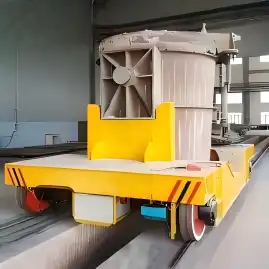
A Movable Ladle Transfer Car is a heavy-duty method for moving materials that was designed to work in metallurgical settings. These units are different from regular industrial carts because they have box-girder frames made of Q345B high-strength steel with stronger heat insulation. Precision drive systems, advanced control interfaces, and multi-layer insulation protect sensitive electrical parts from radiant heat. These are all parts of the basic design.
These vehicles can get power in several different ways, based on the needs of the building. Rail-powered designs that use conductive systems allow for continued operation 24 hours a day, seven days a week, without stopping to recharge. Battery-powered types are easier to move across concrete floors and between parallel workshop bays, which is where overhead cranes can't go. Cable reel systems are a cheap way to move things over shorter distances within certain operating zones.
Application Scenarios in Steel Production
The main use is in electric arc furnaces, where cars move tapped molten steel from EAF stations to places where it is refined in ladle furnaces. This area with a lot of interference needs strong conductive train power systems that can keep working even when there are electromagnetic problems and airborne particles. The constant flow between the melting and polishing steps has a direct effect on the total production rate and the quality of the metal that is made.
Cross-bay transport apps show yet another important use case. In integrated steel mills, ladles often have to be moved from one workshop building or production line to another. These complicated paths are navigated by trackless, battery-powered units with differential steering systems. These systems connect melting bays to continuous casting machines. This adaptability gets rid of the need for set infrastructure while still allowing for exact placement within ±5mm tolerances, which is needed for automated pouring systems.
Load Capacity and Safety Engineering
These days, units can hold anywhere from 5 to 300 tonnes, and their structures are built with safety factors of 1.25 to handle concentrated loads and heat expansion pressures. Dual-motor configurations provide operating redundancy—if one motor fails, the backup drive system can still move the loaded ladle to its target, keeping the molten metal from solidifying too quickly inside the vessel.
Key Benefits of Movable Ladle Transfer Cars for Modern Foundries
Enhanced Operational Flexibility and Reduced Downtime
Production settings are always changing as they get bigger, their processes get tweaked, and their layouts get rearranged. With fixed transfer methods, it's hard to change how things are done to meet changing output needs. Movable Ladle Transfer Cars entirely change this model by letting routes be flexible and work flows be changed on the fly, all without having to make big investments in infrastructure.
By getting rid of schedule issues for overhead cranes, facilities see a clear drop in downtime. When multiple processes are competing for the same limited lifting resources, traditional operations that only use cranes often hit jams. Dedicated floor-level transport sets up parallel logistics routes that let things move at the same time, which used to need to be coordinated one step at a time. When these specialised transport methods are put in place, production managers regularly report that furnace-to-casting cycle times drop by 15 to 20 per cent.
Advanced Safety Features and Risk Mitigation
When working with materials that can seriously hurt someone if they come into contact with them or spill them, worker safety is still the most important thing. These cars have many layers of protection that cover both operating risks and emergencies. Variable frequency drive technology provides soft-start acceleration patterns that get rid of jolts that could damage the surface of liquid metal and cause splashes.
The following combined safety systems completely handle risks:
- Emergency braking mechanisms featuring backup circuits that go into action immediately if the control signal goes out or if laser scanner arrays sense an obstacle.
- Thermal monitoring sensors that keep an eye on the temperature of the deck and sound a warning if the heat level rises above certain levels, which keeps electrical parts from getting damaged.
- Overload protection systems that keep things from working past their stated capacity, protecting the structure's integrity and stopping catastrophic frame breakdowns.
- Remote operation capability that lets users stay away from areas of high heat radiation while still having full control of the car through wireless connections.
These safety traits don't work alone; they work together. Dead-man braking procedures need constant approval from the operator and stop movement automatically if contact with the control system breaks down. Laser scanners that avoid collisions make virtual safety zones that keep people and fixed equipment from coming into contact with each other. This level of thorough safety engineering is in line with ISO standards and CMAA guidelines for tools used to move metal materials.
Cost-Effectiveness and Energy Efficiency Analysis
Investing in capital equipment needs a strong financial case based on how much it will cost to run and how much energy it will use. Compared to hydraulic systems, electric rail systems are more energy efficient, turning 85 to 90% of the electricity that is given into useful mechanical work. This economy directly leads to lower running costs over the long-term life of the equipment.
With rail-powered configurations, you don't have to pay to change batteries or build charging facilities. Facilities that have ongoing production plans benefit the most from a power supply that doesn't stop output for battery swaps or charging cycles. When figuring out the total cost of ownership, you have to include the cost of upkeep. Electric drive systems need a lot less care than hydraulic pumps, valves, and fluid management systems.
Environmental compliance issues are becoming more and more important in buying choices. At the point of use, electric systems don't make any direct emissions. This helps companies with their green efforts and follows the rules in places with strict air quality standards. Having energy tracking built into PLC control systems lets you see exactly how much energy is being used. This lets you improve processes and find ways to be more efficient.

Comparison and Selection Guide: Movable Ladle Transfer Car vs Fixed Transfer Car
Mobility Advantages and Operational Constraints
Permanent rail installations connect set places inside production buildings as part of fixed transfer systems. These setups work best for high-volume tasks where the flow of work between established sites stays the same. The investment in infrastructure makes designated transport lanes that are best for certain route configurations and load needs.
In dynamic work settings, Movable Ladle Transfer Car options are better from a strategic point of view. Layout changes are made to make room for new equipment or process redesigns without having to do major train repair projects. Equipment repositioning is helpful for multi-facility operations because it lets cars be used on more than one production line during maintenance times or changes in demand.
Accessibility for maintenance is very different between setups. Fixed rail systems need special ways to check the tracks and change the rails every so often because wheels wear them down over time. Mobile units that run on batteries need to have their power systems serviced regularly. This includes checking the performance of the cells and replacing the batteries every three to five years, based on how often they are used and charged.
Selection Criteria for Application-Specific Requirements
Specifications for purchases must include a number of important factors that make sure the tools will work with the needs of the business. The highest weight of the ladle, including the molten metal, determines the load capacity. Safety margins must be added to account for dynamic loading during the acceleration and braking stages. Power system choice is based on travel distance and cycle frequency. For longer trips, rail power setups are better than battery configurations.
The operating temperature affects the choice of materials and the need for heat safety. Facilities with little heat protection between the lines of travel and the furnace sources need better insulation systems and parts that can handle high temperatures. Customising the track gauge makes sure that it works with the current infrastructure or that the space is just right for keeping the vehicle stable when it's carrying the most weight.
Different uses have different needs for positioning accuracy. When pouring by hand, larger positioning errors are acceptable, but when automated systems connect to robotic pouring mechanisms, they need to be precise within millimetre ranges. This level of accuracy is reached by closed-loop tracking input built into PLC control systems that have rotary encoders and limit switches. These systems are connected to the facility's MES and SCADA networks.
Supplier Evaluation and Technology Trends
Long-term equipment performance and business stability depend on manufacturing relationships that can be counted on. Established providers have a lot of experience using their products in a wide range of industrial settings and can provide examples of sites where performance can be checked. Portfolios of certifications that include ISO 9001 quality management systems and other relevant industry standards show that a company is committed to using consistent manufacturing methods.
Predictive repair and operations analytics are two new technologies that have come out recently. Instead of fixed-interval service, condition-based maintenance scheduling is possible with sensor arrays that check bearing temperatures, motor power draw, and brake wear. This method cuts down on maintenance tasks that aren't needed and stops unexpected failures before they happen by finding faults early.
Maintenance, Operation, and Safety Best Practices
Operator Training and Certification Standards
For tools to be used effectively, operators must first go through thorough training programmes that cover both normal activities and what to do in emergencies. Certified training programmes teach students how to handle vehicles, manage loads, and spot hazards that are special to working with hot metal. Operators must show that they are good at using remote operation tools and know how controls respond and how to stop the system in an emergency.
Metallurgical plants that have strict certification standards say they have fewer operating issues and less damage to equipment from improper handling. Before taking over control on their own, new operators should work with more experienced staff during controlled operation times that are part of their training. As the Movable Ladle Transfer Car gets better and adds new safety systems or control features, regular training lessons keep skills up to date.
Preventive Maintenance Programs and Inspection Protocols
Systematic repair that takes care of worn-out parts before they break down makes equipment last longer and be more reliable. Visual checks of the wheel surfaces once a week look for heat damage or unusual wear patterns that could mean the wheels aren't aligned properly. When used in hot places, forged steel wheels made from 42CrMo alloy steel need extra care because thermal cycling speeds up the formation of wear cracks.
Scheduled lubrication with high-temperature greases keeps drive and bearing systems from wearing out too quickly. Maintenance times of 300 working hours keep the oil from breaking down after being exposed to heat for a long time. Every year, non-destructive tests like ultrasonic examination and magnetic particle inspection find problems inside structural welds and wheel axles before they get too big.
Connection integrity and insulation state are the main things that electrical system upkeep looks at. Terminal blocks go through stages of thermal expansion and contraction that can loosen bolts over time. This can lead to connections with high resistance and the risk of an arc flash. Checking for thermal degradation of cable insulation wrapped in protective fibreglass braiding is important, especially in route areas close to ladle tracks where radiant heat is most intense.
Safety Protocol Integration and Audit Procedures
Comprehensive workplace safety includes more than just the features of the equipment itself. It also includes operating processes and rules that apply to the whole building. Workers are less likely to be exposed to moving cars and heat radiation when there are clear floor markings and limited access to designated transport routes. Aural warning systems let people close know when cars start to move, giving them time to avoid being affected by noise in noisy foundries.
Regular safety checks by experienced inspectors make sure that the manufacturer's instructions and government rules are still being followed. These tests look at how well the emergency stop works, how well the brakes hold up under full load, and how accurate the sensor tuning is. Documenting test results and corrective actions helps keep regulations in line and protects you from harm by showing that you did your homework when maintaining your equipment.
Procurement Insights: Buying, Leasing, and After-Sales Considerations
Financial Analysis: Purchase vs. Lease Options
When buying capital tools, you have to think about a lot of different financial factors, like matching short-term costs with long-term operating costs. An outright buy takes a large amount of money up front, but it gets rid of ongoing lease payments and gives you full control over the business. This method works best for financially stable organisations that have enough cash on hand and have long-term production plans that make ownership worth it.
Leasing deals keep working cash available for other investments and give people access to new technology. Making monthly lease payments makes running costs regular, which makes budgeting easier. Some leases include repair services, which shifts the risk of how well the equipment works to the lessor. Leasing gives companies that are growing quickly or don't know what their long-term production rates will be a way to avoid the risks of asset loss if their capacity needs change.
Financing Options and Warranty Considerations
Equipment makers and specialised industrial loan companies offer a range of payment plans to fit people with different levels of debt. Instalment purchase deals let you own something right away while spreading out the costs of buying it over 3–5 years. Down payments for these deals are usually between 20% and 30% of the value of the goods, and interest rates depend on the buyer's credit history and the current state of the market.
The scope of the warranty has a big effect on the total cost of ownership estimates. For 24 to 36 months, full guarantees cover major parts like drive systems, structural elements, and control electronics. These warranties protect against costs during the first few months of use. Extended protection choices that cover more than the normal terms should be looked at, especially by centres that don't have their own metallurgical equipment repair experts.
Selecting Reliable Manufacturers and After-Sales Support
Long-term support skills must be included in the factors used to choose a supplier, in addition to the price of the equipment itself. We at Shaanxi Heyuanxin Metallurgical Electric Furnace Equipment Co., Ltd. have been experts in Movable Ladle Transfer Car systems for more than ten years. We have learned a lot about how they are used in steel mills, foundries, aluminium smelters, and facilities that make non-ferrous metals. Our production skills, which are backed by a number of utility model patents and computer software copyrights, show that we are constantly coming up with new ideas to meet changing customer needs.
How quickly technical help responds has a direct effect on how much output can go on when equipment breaks down. When compared to general industrial equipment providers, manufacturers who have specialised service teams with metallurgical equipment knowledge can figure out what's wrong and fix it faster. Parts can be bought from authorised regional distributors, which cuts down on downtime by providing fast arrival of parts without long foreign shipping delays.
Customer references from similar uses can tell you a lot about how well the equipment works in the real world and how good the manufacturer's help is. Procurement teams should ask for contact information for installations that are already in place. If they can, they should also visit the sites to see the equipment in action and talk to building management and repair staff about users' experiences.
Conclusion
Movable Ladle Transfer Car systems are very important in modern foundries because they can solve some of the most difficult problems that come up when working with liquid metal. These specialised Movable Ladle Transfer Car systems solve production problems, improve worker safety with advanced safety features, and give facilities the freedom they need to grow. Investment reasoning goes beyond the original capital costs and includes things like better safety records, higher business efficiency, and less downtime. All of these things add up to a big ROI.
Before making a purchase choice, you need to carefully look at the technical specs, the supplier's skills, and their long-term assistance promises. Partnering with experienced makers and choosing equipment that fits specific business needs is the best way to make sure that implementation goes smoothly and that the equipment continues to work well for a long time.
FAQ
What distinguishes movable ladle transfer systems from fixed installations?
Mobile units offer route freedom and layout adaptability that can't be found in fixed train systems. Fixed systems follow set rail paths, while battery-powered versions move around on their own on concrete floors. This movement is helpful when the facility needs to grow or when the process needs to be rearranged, which requires changing the transport route.
How frequently should maintenance inspections occur for vehicles operating in high-temperature environments?
Baseline tracking includes visual checks once a week of the wheels, structural parts, and electrical links. Every 300 hours of use, high-temperature grease should be used to keep things running smoothly. Every year, non-destructive testing with ultrasound or magnetic particle tools finds flaws inside the material before they get too big. In metallurgical settings, thermal cycling speeds up component wear compared to situations where the temperature is constant.
What safety features prevent molten metal spillage during transport?
Variable frequency drives that are managed by a PLC offer soft-start acceleration, which gets rid of the jolts that damage liquid metal surfaces. The designs of decks include spill guards and drainage lines that keep leaks away from the chassis's parts. When the control signal goes out, the emergency brakes kick in immediately. This keeps the car stable when it has to stop suddenly.
Partner with Shaanxi Heyuan for Your Ladle Transfer Solutions
The ladle delivery systems that Shaanxi Heyuan New Metallurgical Electric Furnace Equipment Co., Ltd. makes are exactly what you need. Our factory makes very precise vehicles that can carry loads of 5 to 300 tonnes and have PLCs that control how precisely they are placed. These vehicles are perfect for constant casting operations and tough mechanical tasks. We are committed to quality, as shown by our ISO 9001 recognition, environmental management system credentials, and 3A-level credit business standing.
Our engineering team helps with everything, from the first plan meeting to installation, commissioning, and ongoing technical support. As a well-known company with more than ten utility model patents, we bring years of experience to every project. Find out how our advanced control systems, heat-resistant parts, and flexible design make our products work reliably in the harshest foundry conditions.
Contact us at sxhyyj606@163.com to discuss your requirements with our technical specialists or visit hyyjfurnace-supply.com to explore our complete product range and request detailed specifications.
References
1. American Foundry Society. (2023). Materials Handling Systems in Modern Steel Foundries: Safety and Efficiency Standards. AFS Technical Publication.
2. Chen, W., & Liu, X. (2022). "Thermal Management and Structural Design of Heavy-Duty Ladle Transfer Equipment." Journal of Metallurgical Engineering, 15(3), 245-260.
3. International Organisation for Standardisation. (2021). ISO 8686-1: Cranes—Design Principles for Loads and Load Combinations—Part 1: General. ISO Standards Publication.
4. Metallurgical Industry Equipment Safety Committee. (2023). Best Practices for Molten Metal Handling Equipment: Operational Guidelines and Maintenance Protocols. Industry Technical Manual.
5. National Safety Council. (2022). Industrial Safety Standards for High-Temperature Material Handling in Steel Production Facilities. NSC Industrial Division Report.
6. Wang, H., Johnson, R., & Martinez, P. (2024). "Predictive Maintenance Technologies for Metallurgical Transport Systems: A Comparative Analysis." International Journal of Industrial Equipment Management, 18(1), 78-95.


YOU MAY LIKE