
Is a Steel ladle refining furnace Worth the Investment?
October 19, 2026
A steel ladle refining furnace is worth the investment for most serious steel producers. Positioned between the primary melting unit and the continuous caster, a ladle refining furnace (LF) handles secondary metallurgy work that primary furnaces simply cannot do alone. It adjusts temperature with ±3°C precision, homogenizes chemical composition, removes dissolved gases, and floats out non-metallic inclusions. For mills targeting high-grade steel grades — API pipe, bearing steel, stainless — the quality gap between refined and unrefined heat is measurable and commercially significant.
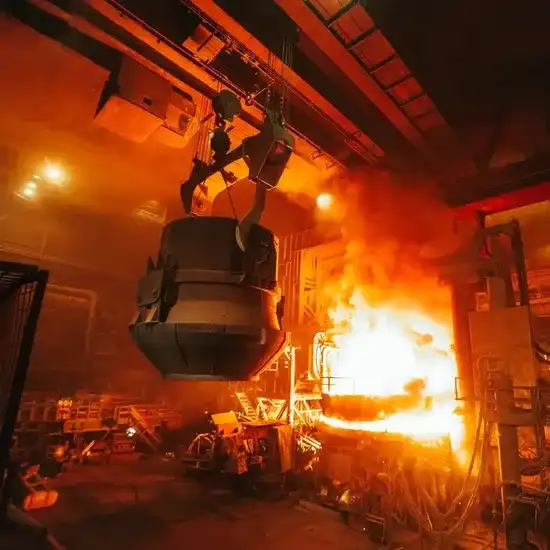
Understanding Steel Ladle Refining Furnaces and Their Role in Steelmaking
What a Ladle Refining Furnace Actually Does
Molten steel that has been pulled from an electric arc furnace (EAF) or basic oxygen furnace (BOF) goes into a ladle refining furnace. Three-phase graphite electrodes inside the ladle heat up the melt, and argon gas is pumped into the bath through a hollow bottom plug to stir it. The end result is a stable, even heat that is ready to be cast. Without this step, temperature differences inside the ladle lead to nozzle blockages and uneven strand quality further down the line.
Key Components That Make It Work
The roof is cooled by water, and the system includes an electrode mast and management system, a transformer, an argon stirring control panel, and alloy feeding chutes. There is a direct link between each part and the result. For example, the electrode regulation system needs to act in less than 100 ms to keep the arc stable. Water-cooled panels that have been tested for pressure keep dangerous steam explosions from happening, and optical emission spectroscopy (OES) instruments check that chemical targets are being heated by heat.
Types Available and How They Differ
Ladle refining furnaces come in a range of sizes, from small 10-ton units for small producers to large 150-ton systems for mills that process a lot of metal. The capacity of the transformer goes from 10 MVA to 100 MVA. Some configurations have vacuum-seal options for very low-content, and standard atmospheric LF units can handle most types of commercial steel. Which one to choose relies on how much you want to make, how clean you want it to be, and your cash.
Key Benefits of Investing in a Steel Ladle Refining Furnace
Superior Steel Cleanliness and Mechanical Properties
A steel ladle refining furnace that is run correctly can get an inclusion content of ≤10 μm and a composition deviation of ≤±0.03%. According to a study published in ISIJ International, lowering the total oxygen content of steel below 20 ppm makes it last a lot longer in bearing and gear applications. Not small improvements; these are big enough to make the difference between meeting API or ASTM standards and not.
Energy and Operational Efficiency
Here are the main performance benefits that make ladle refining ovens appealing from a practical point of view:
- Precise heating rate of 3°C–5°C per minute using a three-phase AC arc system, giving operators tight control over tapping temperature windows.
- Closed-loop argon flow control eliminates hot spots and keeps alloy distribution uniform, reducing the need for re-blowing or correction heats.
- Annual operating time ≥8,500 hours is achievable with proper maintenance, translating to minimal production interruption across a full calendar year.
- Composition deviation ≤±0.03% reduces alloy overshoot and lowers per-ton alloy costs over time.
All of these things make the ladle refining furnace a cheaper alternative to vacuum degassing and other processes that need a lot of capital for standard and medium-alloy grades.
Safety and Environmental Compliance
Modern ladle refining systems use submerged arc operation under a foamy slag layer. This keeps nitrogen from picking up and keeps arc radiation in check. Instead of nitrogen, stirring with argon saves the final chemical makeup of steel. Before they can be used, water-cooled roof parts have to go through pressure tests. These choices about design directly help U.S. steelmaking sites meet OSHA and EPA emission guidelines.
Comparing Steel Ladle Refining Furnace With Alternative Technologies
LF vs. Vacuum Degassing
Vacuum degassing units (RH, VD) remove hydrogen and nitrogen to very low levels, but they are much more expensive to buy and harder to run. A ladle refining furnace is just as clean as a reactor but doesn't require hydrogen levels below 1.5 ppm for grades that don't need them. A lot of middle-level mills use an LF as their main secondary metallurgy unit and only use vacuum treatment for the toughest heats.
LF vs. Simple Argon Rinsing Stations
Argon washing stations move the spoon around without heating it up. They make things more uniform, but they can't make up for lost temperature, change the chemistry of the metal under arc heat, or get rid of sulfur. All three are done at the same time by a steel ladle refining furnace. The washing station isn't good enough for mills that make more than basic carbon grades.
Total Cost of Ownership Perspective
A ladle refining furnace's capital cost depends on its capacity, but it pays for itself by increasing yield, lowering alloy waste, and lowering the number of castings that don't work out. Industry case data from Iron & Steel Technology (2022) shows that after putting in place a 70-ton LF system, a medium-sized steel mill in the Midwest of the United States saw a 15% drop in cast strand flaws. Over the course of five years, operational savings usually cover the cost of the initial equipment.

Practical Considerations for Selecting and Maintaining a Steel Ladle Refining Furnace
Matching Capacity to Your Production Schedule
The weight of your tap from the main furnace should match the capacity of your ladle. When you run a 150-ton LF at 60% fill, it works less efficiently and costs more per ton to run. On the other hand, undersizing leads to jams. Shaanxi Heyuan has ladle refining furnace configurations ranging from 10t to 150t, and transformer packages can be scaled to fit. This way, you can be sure that you don't have too much or too little equipment for your actual throughput.
Supplier Reliability and After-Sales Support
It's only as good as the people who work on it. Check with suppliers about how quickly they can send spare parts, how many on-site commissioning engineers they have, and how they train their operators. Shaanxi Heyuan has more than 400 setups of metallurgical equipment around the world and more than 20 years of experience installing and training operators. They also offer fast after-sales service.
Routine Maintenance That Prevents Costly Downtime
In a steel ladle refining furnace, slag line refractory usually lasts 50 to 80 heats, but this depends on how basic the slag is and how well the arc flare is managed. Using zonal lining patterns and maintaining the guns between campaigns can make them last a lot longer. When refractory wear is profiled with a laser, operators are warned before the lining gets too thick. Regularly checking and replacing the argon porous plug keeps the performance of the stirring stable from heat to heat.
Is Investing in a Steel Ladle Refining Furnace Worth It? Real-World Cases and Summary
Evidence From Operating Mills
In the first month of using the Shaanxi Heyuan 100-ton ladle refining furnace, an EAF melt shop in Southeast Asia saw the sulfur content drop from 0.025% to below 0.003%. The yield of castings went up by 8%, and the number of returns due to surface flaws dropped by over 12%. It was thought that the investment would pay for itself in less than three years, just from saving alloy and getting better yields.
Balancing Upfront Cost Against Long-Term Returns
The upfront cost of a ladle refining furnace is real, and procurement managers need to be honest about it when they make plans. Over time, though, the benefits further down the line—consistent chemistry, lower inclusion counts, fewer casting fails, and better customer-grade compliance—add up. There is no good alternative for mills that make API line pipe, bearing steel, or stainless grades.
Final Verdict
When it is the right size, installed correctly, and backed by a good supplier, a ladle refining furnace pays for itself. The technology has been tried and tested, is widely used in the steel industry in North America and around the world, and is directly linked to results in product quality that B2B buyers care about.
Conclusion
The steel ladle refining furnace is not an extra that can be added to a steelmaking line for its own sake; it is a production necessity for mills that want to sell high-quality steel. It manages the temperature, changes the alloy's make-umakeup rid of sulfur and other impurities, and keeps the melt shop and caster in sync. The right LF system can handle a wide range of production sizes because it can work at temperatures between 1550°C and 1700°C, have ladle capacities between 10t and 150t, and have transformer choices between 10MVA and 100MVA. The case for investment is backed up by measurable increases in yield, drops in the cost of alloys, and satisfied customers over the long term.
FAQ
How does a ladle refining furnace prevent nitrogen pickup?
With a tight-sealing roof and submerged arc operation under foamy slag, the furnace keeps the pressure inside the ladle at a positive level. This keeps air from getting into the melt. In the last stages of treatment, argon is used instead of nitrogen as a stirring gas to keep the chemistry targets safe.
Can a ladle refining furnace remove phosphorus?
No, oxidizing conditions must be present in the main furnace (EAF or BOF) before the steel can reach the LF. This is what gets rid of the phosphorus. The LF works in lowering conditions that are good for desulfurization but not dephosphorization.
What causes electrode breakage in an LF?
Most of the time, breakage happens because non-conductive slag or scrap gets in the way of electrode descent or because the regulation system isn't tuned properly, which causes mechanical stress. By changing the length of the arc quickly, hydraulic electrode reaction times of less than 100 ms help stop this from happening.
How long does the ladle lining last?
It usually takes 50 to 80 fires to finish the slag line zone. The bottom and gun parts last longer. Regular gunning maintenance and designs with zoned lining make campaigns last longer and cut down on unplanned downtime.
How does soft stirring prevent re-oxidation?
During the last hold period, less argon flows through the system to protect the slag cover over the ladle eye. Automatic flow control keeps the stirring from being too strong, which would let air into the liquid steel and undo the work that has already been done to refine it.
Ready to Specify Your Ladle Refining Furnace? Contact Shaanxi Heyuan Today
Shaanxi Heyuan has 20 years of hands-on experience as a metallurgical engineer and has built more than 400 steel ladle refining furnaces around the world. Our systems offer temperature control within ±3°C, inclusion content within ≤10 μm, and annual uptime of more than 8,500 hours. Our team is ready to help you from the planning phase all the way through commissioning, whether you need a turnkey LF solution or a setup that is just right for you. Please email us at sxhyyj606@163.com to talk about your project needs right away.
References
1. ISIJ International — "Effect of Total Oxygen Content on Fatigue Life of Bearing Steel," Vol. 62, 2022.
2. Iron & Steel Technology — "Secondary Metallurgy Upgrades and Casting Yield Improvement in EAF Melt Shops," 2022.
3. Metallurgical and Materials Transactions B — "Desulfurization Kinetics in Ladle Refining Furnaces Under Basic Slag Conditions," 2020.
4. Journal of Iron and Steel Research International — "Temperature Homogenization in Ladle Treatment with Argon Bottom Stirring," 2021.
5. Steel Research International — "Inclusion Removal Mechanisms During Ladle Furnace Soft Stirring," 2023.
6. Ironmaking & Steelmaking — "Refractory Wear Modeling and Campaign Life Prediction for LF Slag Lines," 2019.


YOU MAY LIKE