
Industrial Reverse Blower for Efficient Air Handling Solutions
July 22, 2026
Dust removal systems for metallurgical plants require air handling equipment with constant pressure management and energy efficiency. Industrial reverse blowers create reverse airflow for filter cleaning in electric arc and ladle furnace dust collection. Regenerative blowers create steady negative pressure that quickly restores filter material performance, making them essential for continuous steelmaking operations where downtime leads to significant output losses.
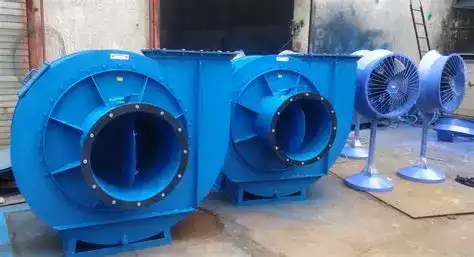
Understanding Industrial Reverse Blowers: Technology and Applications
How Reverse Blowing Technology Works?
Industrial dust removal systems accumulate particulate matter on filter surfaces during operation. A reverse blower addresses this challenge by generating powerful airflow pulses that travel opposite to the normal filtration direction. This backflow dislodges accumulated dust, allowing it to fall into collection hoppers while restoring the filter's breathability. The technology relies on precise pressure control—too weak and dust remains adhered; too strong and filter media sustains damage.
Modern reverse-blowing equipment utilises regenerative impeller designs that compress air through a side-channel pathway. Unlike standard centrifugal fans that move large volumes at low pressure, these specialized units generate substantial static pressure within compact footprints. The impeller geometry creates multiple compression stages as air circulates through curved channels, building pressure incrementally before discharge.
Differentiating Air-Moving Technologies
Categories of air handling equipment often confuse procurement teams evaluating dust removal upgrades. Centrifugal blowers excel at moving high volumes of air against moderate resistance, making them suitable for ventilation applications. Positive displacement blowers deliver constant airflow regardless of system pressure, but require more maintenance due to moving contact surfaces.
Regenerative blowers occupy a middle ground, providing pressure capabilities approaching positive displacement units while maintaining the reliability of non-contact designs. A reverse blower specifically optimised for filter cleaning applications incorporates adjustable pressure controls and pulse timing mechanisms. This specialisation ensures compatibility with baghouse filters, cartridge collectors, and other fabric-based dust removal systems common in metallurgical facilities.
Critical Applications in Heavy Industry
Metallurgical plants face unique air quality challenges. Electric arc furnaces generate intense heat and heavy dust loads during steel melting operations. Dust removal systems protecting these environments require robust reverse blowing capabilities to maintain filtration efficiency. A properly specified Industrial Reverse Blower handles ambient temperatures exceeding standard industrial conditions while managing the fine particulate characteristic of steel production.
Ferroalloy manufacturing presents even harsher conditions. Furnaces processing silicon metal, ferrochrome, and similar materials produce chemically reactive dust that quickly blinds filter media. Reverse blowing systems serving these applications require corrosion-resistant construction and frequent cleaning cycles. The ability to adjust pulse intensity allows operators to match cleaning aggression to specific dust characteristics.
Refining operations benefit from automated reverse blowing sequences that synchronise with production cycles. During ladle transfer operations or continuous casting sequences, integrated control systems trigger cleaning pulses during low-production periods. This coordination prevents filter pressure drop from affecting overall system performance while extending filter service life.

Key Performance Factors and Maintenance Practices
Evaluating Pressure and Flow Characteristics
Airflow capacity determines how effectively a reverse blower can clean a given filter area. Units designed for metallurgical dust removal systems typically deliver flow rates between 20 and 80 cubic meters per minute. The pressure-rise capability—measured in kilopascals—defines the force available to dislodge adhered particulate. Applications involving sticky or compacted dust require pressure capabilities toward the upper range of 30 to 50 kPa.
Motor power ratings reflect the energy input needed to generate specified performance levels. Systems serving small baghouses may operate with motors below 5 kW, while large-scale industrial installations require power ranging from 20 to 200 kW. Energy efficiency becomes critical in continuous-duty applications where reverse blowing systems operate throughout multi-shift production schedules.
Acoustic performance impacts workplace environments and regulatory compliance. Well-engineered reverse blowers incorporate sound-dampening features that limit operational noise to 80 decibels or below. This level allows placement near occupied work areas without requiring additional acoustic enclosures or hearing protection mandates.
Distinguishing Heavy-Duty from Standard Models
Heavy-duty reverse blowing equipment incorporates reinforced housings, oversized bearings, and enhanced cooling systems. These features support continuous operation in high-temperature environments typical of steelmaking facilities. Standard industrial blowers may satisfy intermittent-duty applications or climate-controlled installations but lack the thermal management needed for furnace-adjacent placement.
Bearing specifications reveal durability expectations. Units designed for demanding metallurgical service specify sealed, grease-lubricated bearings rated for extended service intervals. The difference between 10,000-hour and 20,000-hour bearing life translates directly to maintenance labor costs and unplanned downtime risks.
Essential Maintenance Procedures
Reliable reverse blowing performance depends on consistent maintenance practices. Inlet filter elements require inspection every 500 operating hours to prevent dust ingress that accelerates internal wear. Cleaning or replacing these filters takes minutes but prevents costly impeller damage or bearing contamination.
Bearing lubrication follows manufacturer-specified intervals, typically ranging from 2,000 to 4,000 operating hours for grease-packed designs. Over-lubrication causes seal damage and overheating, while insufficient lubrication leads to premature bearing failure. Many modern installations incorporate automatic lubrication systems that eliminate manual servicing requirements.
Vibration monitoring detects developing problems before catastrophic failures occur. Baseline vibration measurements taken during commissioning provide reference points for ongoing condition monitoring. Increases beyond acceptable thresholds indicate bearing wear, impeller imbalance, or mounting issues requiring immediate attention.
Safety Protocols and Standards
Electrical systems powering reverse blowers require protection against overload, phase failure, and ground faults. Integrated motor protection devices automatically disconnect power when detecting abnormal conditions, preventing equipment damage and fire hazards. These safety features align with NFPA 70 National Electrical Code requirements governing industrial installations.
Pressure relief mechanisms prevent system over-pressurisation during blocked outlet conditions. Without proper relief provisions, a reverse blower operating against a closed discharge can generate destructive pressure levels or cause motor overload. Relief valves calibrated to system design pressures protect while maintaining normal operational capabilities.
Comparing Industrial Reverse Blowers with Alternative Solutions
Technical Performance Contrasts
Different air-moving systems serve overlapping applications with different performance. Centrifugal exhaust fans move lots of air but don't produce enough pressure to clean filters. Instead of intense pulses for dust dislodging, their broad, low-pressure distribution suits general ventilation.
Vacuum pumps generate severe negative pressure for material conveying or process applications, but they waste a lot of energy cleaning the filters. Repurposed equipment is inefficient, but a specialist Industrial Reverse Blower optimises dust collector maintenance pressure-to-flow.
Positive displacement blowers maintain downstream flow independent of resistance. This helps pneumatic conveying systems with varying backpressure from material loading. Conversely, reverse blowing applications operate against steady system resistance, eliminating the complexity and maintenance of positive displacement designs.
Energy Consumption and Efficiency
Operating costs dominate lifecycle expenses for continuously running air handling equipment. High-efficiency motors achieving premium efficiency classifications reduce electrical consumption by 12 per cent or more compared to standard designs. This improvement means that facilities that use equipment for 6,000 to 8,000 hours a year will see a drop in costs that can be measured.
Variable frequency drives allow precise airflow matching to instantaneous demands. Rather than running at full capacity continuously, VFD-controlled reverse blowers modulate speed based on filter differential pressure readings. This responsive control eliminates the energy waste inherent in constant-speed operation with throttling dampers.
Noise abatement features add minimal cost during procurement but deliver substantial operational benefits. Quiet equipment placement flexibility reduces expensive ductwork runs while improving workplace environments. The 80-decibel acoustic performance characteristic of well-designed reverse blowers allows installation near occupied areas without additional sound attenuation investments.
Procurement and Ownership Considerations
The purchase price is only a small part of ownership costs. Established manufacturers charge more for reliable technology that lasts longer and requires less maintenance. Budget-focused purchase decisions often lead to frequent component replacements, unplanned downtime, and shortened equipment lifecycles, negating initial savings.
ROI estimates should include energy efficiency differentials over anticipated service life. A 90-kW reverse blower that uses 12% less energy saves 10 kW. Operating 7,000 hours per year at $0.08 per kilowatt-hour saves $5,600, potentially recouping any price premium within a few years.
Whether a technology meets operational needs depends on its use. Equipment must withstand high temperatures, corrosive particulates, and severe duty cycles for metallurgical dust removal. Industrial Reverse Blowers designed for these conditions outperform general-purpose equipment modified for the job.
Procurement Insights: Choosing, Buying, and Installing Industrial Reverse Blowers
Evaluating Manufacturers and Suppliers
Since 2008, Shaanxi Heyuanxin Metallurgical Electric Furnace Equipment Co., Ltd. has provided entire metallurgical equipment systems from design to commissioning. We developed our enterprise-level reverse blowing technique after 11 years of R&D to meet steel production issues. This focused experience ensures equipment specifications meet electric arc furnace and ladle furnace demands.
Manufacturer credentials demonstrate quality and improvement. ISO 9001, ISO 14001, and ISO 45001-certified companies demonstrate systematic methods to product consistency and customer satisfaction. Organisational stability and commercial integrity are enhanced by our provincial enterprise designation and 3A credit status.
Patent portfolios show technical innovation, not commodity equipment. Heyuanxin protects its proprietary reverse blowing control algorithms and mechanical designs with more than 10 utility model patents and software copyrights. Distributors reselling ordinary catalogue equipment lack these intellectual property assets' performance advantages.
Key Purchasing Considerations
Industrial Reverse pricing Blowers show capacity, efficiency, and features. Small baghouses with 20-30 cubic meters per minute capabilities cost mid-range industrial equipment. Large installations with premium-efficiency motors and complex control integration require larger investments due to their increased capabilities.
Warranty terms defend against premature failures and show manufacturer confidence. Standard industry warranties cover materials and workmanship for 12–18 months after commissioning. Some manufacturers give 24 or 36-month warranties for important applications, demonstrating product durability.
Plant expansions and multi-site installations benefit from bulk orders. Standardising a reverse blower platform across several plants reduces spare parts inventories, maintenance training, and volume pricing. Large industrial project suppliers usually allow a production schedule and staged delivery.
Customization and Application Engineering
Many applications can use catalogue equipment, but metallurgical installations often need specialised solutions. Our engineers modify reverse blower designs for space limits, peculiar mounting requirements, or control system integration. These adjustments optimise performance rather than forcing operations to work around equipment limits.
Custom pressure and flow matching eliminates large equipment inefficiencies. Application engineering chooses the impeller diameter, motor sizing, and control parameters that meet performance requirements rather than choosing the next larger catalogue model. Precision reduces energy waste and equipment costs.
Environmental changes address site-specific issues. Coastal facilities need corrosion protection beyond industrial finishes. Maintaining performance in reduced-density air requires motor derating calculations or updated specs at high altitudes. These customisations prevent environmental influences from causing premature breakdowns.
Installation and Commissioning Services
Professional installation ensures reverse blowers function and last as expected. Poor foundation preparation, ducting alignment, and electrical installations can damage pricey equipment. Equipment providers offer turnkey installation services to reduce coordination issues and ensure system effectiveness.
Integration with existing dust-collecting infrastructure involves careful transition ducting, control signal cabling, and pressure sensor placement. Our commissioning technicians check pulse timing, match pressure setpoints to filter types, and train facility staff on operations. This thorough strategy prevents good equipment from producing average outcomes owing to incorrect application.
Performance validation testing records operating airflow, pressure rise, and energy consumption. These measurements ensure specification compliance and set baselines for future condition monitoring. Commissioning documentation aids equipment maintenance and troubleshooting.
Enhancing Efficiency and Reducing Operational Costs
Energy Conservation Through Advanced Design
Motor efficiency affects operational costs. Premium efficiency motors in modern reverse-blowing systems save more than 12 per cent of energy compared to standard efficiency alternatives. Over a 40,000-hour service life, this efficiency advantage on a 75 kW system saves roughly 360,000 kilowatt-hours—a substantial reduction in both operational expenses and environmental footprint.
Flow rate optimisation prevents energy waste from excessive equipment selections. Reverse blowers delivering excessive airflow for actual filter cleaning requirements consume unnecessary power while potentially damaging filter media through excessive pulse intensity. Proper application engineering matches equipment capacity to genuine system needs rather than applying arbitrary safety factors that compromise efficiency.
Intelligent control systems activate reverse blowing cycles only when the filter differential pressure indicates the necessity for cleaning. This demand-based operation contrasts with fixed-interval timer controls that waste energy cleaning filters unnecessarily. The result reduces average power consumption while extending filter life by minimizing mechanical stress from excessive pulsing.
Environmental Impact Reduction
Reduced energy use reduces carbon emissions. Each kilowatt-hour saved reduces CO2 emissions from grid power generation by 0.4 kg. Premium efficiency motor selection saves 360,000 kWh throughout the equipment lifespan, avoiding 144 metric tonnes of CO₂ emissions—the equivalent of 30 passenger vehicles for a year.
For facilities near residential areas, noise pollution affects worker health and community relations. Low-noise reverse blowers provide compliant operation without expensive sound barriers or enclosures. The 80-decibel operational noise level meets eight-hour shift occupational exposure limits without hearing protection, enhancing workplace quality and simplifying regulatory compliance.
Longer equipment life lowers manufacturing consequences from frequent replacements. A properly specified Industrial Reverse Blower with a five-year or longer service life reduces resource consumption, transportation emissions, and trash disposal. This durability matches corporate environmental strategies' emphasis on sustainable buying.
Scalability and Future-Proofing
Production capacity expansions challenge fixed air handling infrastructure. Modular reverse blowing systems accommodate growth through parallel unit additions rather than complete replacements. This scalability protects initial investments while providing flexibility to match equipment capacity to evolving facility requirements.
Control system compatibility ensures integration with advancing automation technologies. Modern reverse blowers use industry-standard communication protocols to connect to plant-wide monitoring systems, which enable remote diagnostics and predictive maintenance strategies. This connectivity future-proofs installations against obsolescence as operational technologies evolve.
Adaptability to changing dust characteristics supports process modifications or product mix changes. Reverse blowers with adjustable pulse intensity and timing parameters accommodate shifts from coarse to fine particulate or changes in dust loading without equipment replacement. This flexibility extends useful life while maintaining optimal cleaning performance across varying operational conditions.
Conclusion
Effective dust removal in metallurgical facilities depends on reliable reverse blowing technology that balances performance, efficiency, and durability. An Industrial Reverse Blower engineered specifically for steel production environments delivers the stable pressure control and adjustable cleaning intensity needed to maintain filtration system efficiency under demanding conditions. The energy-saving motor technology, robust construction, and application-specific design together provide long-term operational value that exceeds the initial procurement costs. Procurement teams can specify reverse blowing systems that support continuous production while minimising maintenance burdens and operational expenses throughout their extended service life by carefully evaluating capacity requirements, efficiency classifications, and manufacturer credentials.
FAQ
What airflow capacity does my dust removal system require?
Calculating proper airflow capacity depends on total filter area, fabric type, and dust characteristics. Baghouse filters typically require 1.5 to 2.5 cubic meters per minute per square metre of filter cloth. A 100-square-metre baghouse serving an electric arc furnace would need a reverse blower delivering approximately 200 cubic meters per minute. Cartridge collectors generally require lower volumetric flows but higher pulse pressures. Consulting with application engineers ensures proper capacity matching to specific installation parameters.
How often should maintenance be performed on reverse blowing equipment?
Maintenance intervals depend on operating conditions and equipment quality. Inlet filters warrant inspection every 500 hours in dusty environments. Bearing lubrication typically occurs every 2,000 to 4,000 hours for grease-packed designs. Annual comprehensive inspections of electrical connections, vibration levels, and control system calibration help prevent unexpected failures. Facilities with continuous production schedules benefit from predictive maintenance that monitors bearing temperatures and vibration trends, allowing servicing to be scheduled during planned outages instead of responding to failures.
Can reverse blowers be customized for specific metallurgical applications?
Customization options address unique facility requirements. Modifications include special materials that resist corrosive particulates, explosion-proof electrical classifications for combustible dust applications, and dimensional adaptations that accommodate spatial constraints. Control system integration allows coordination with existing dust collector automation or facility SCADA systems. Shaanxi Heyuanxin provides application engineering support to determine appropriate customisations, ensuring optimal performance within specific operational contexts while maintaining the reliability characteristics of proven base designs.
Partner with Shaanxi Heyuan for Superior Reverse-Blowing Solutions
Metallurgical operations demand air handling equipment that delivers consistent performance under challenging conditions. Shaanxi Heyuan New Metallurgical Electric Furnace Equipment Co., Ltd. combines specialized expertise in steel production environments with comprehensive reverse blowing technology engineered specifically for dust removal in electric arc and ladle furnaces. Our Industrial Reverse Blower systems incorporate premium efficiency motors, adjustable pressure controls, and robust construction proven through 400+ installations worldwide. As an established Industrial Reverse Blower manufacturer with ISO certifications and provincial enterprise recognition, we provide complete solutions from application engineering through commissioning and ongoing technical support. Contact our team at sxhyyj606@163.com or visit hyyjfurnace-supply.com to discuss your specific dust removal challenges and receive a customized solution proposal backed by 24-hour after-sales support.
References
1. Anderson, M.T., & Williams, R.J. (2021). Industrial Air Handling Systems: Design and Application. Technical Press Publishing.
2. Chen, L., Zhang, H., & Kumar, S. (2020). Energy Efficiency in Metallurgical Dust Collection Systems. Journal of Industrial Environmental Engineering, 45(3), 287-302.
3. Hoffman, D.K. (2019). Regenerative Blower Technology: Principles and Applications. Manufacturing Equipment Institute.
4. National Fire Protection Association. (2020). NFPA 70: National Electrical Code. NFPA Publications.
5. Peterson, G.R., & Thompson, A.L. (2022). Reverse Air Cleaning in Fabric Filter Systems. Powder and Bulk Engineering, 36(2), 44-52.
6. Williams, J.E., Martinez, C.P., & Lee, S.H. (2021). Dust Collection Systems for Steel Production Facilities. Industrial Press Technical Series.


YOU MAY LIKE