
How Does a High Frequency Furnace Improve Melting Efficiency?
July 22, 2026
A High Frequency Furnace improves melting efficiency by utilising electromagnetic induction to generate rapid, concentrated heat directly within the metal workpiece. Operating at frequencies between 10 kHz and 100 kHz, these systems eliminate traditional heating delays and achieve thermal efficiencies exceeding 85%. The electromagnetic field penetrates the material, creating eddy currents that produce instantaneous heat and reduce melting cycles by 30-50% compared to conventional resistance or fuel-based systems. This direct energy transfer reduces heat loss, ensures uniform temperature distribution, and enables precise control within ±5°C, making high-frequency induction heating the preferred choice for modern metallurgical operations seeking maximum productivity and energy savings.
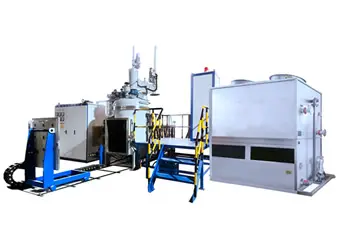

Understanding High-Frequency Furnaces and Melting Efficiency?
What Makes High-Frequency Heating Different
The fundamental principle behind High Frequency Furnace technology lies in electromagnetic induction. When alternating current passes through an induction coil at frequencies ranging from 10 kHz to 100 kHz, it creates a powerful magnetic field. This field induces eddy currents within conductive materials placed inside the coil, generating heat through resistance—a process known as Joule heating. Unlike traditional furnaces that heat from the outside in, this method delivers energy directly to the molecular structure of your metal charge.
Melting efficiency represents how effectively your equipment converts electrical energy into usable heat while minimizing losses. We measure these gains through several critical parameters: temperature uniformity across the melt, power utilization rates, heating speed, and overall energy consumption per ton of processed material. Modern induction heating systems achieve remarkable efficiency levels that traditional methods simply cannot match.
Measuring Real Performance Gains
Precision temperature control is crucial in metallurgical processes. Our high-frequency systems keep the melting cycle variations within ±5°C. This level of control improves product quality, saves material waste from overheating, and ensures batch-to-batch consistency for quality-critical applications.
Power utilisation efficiency reveals all. High-frequency furnaces convert over 85% of electrical energy into workpiece heat. Compare this to resistive furnaces with 60-70% efficiency or fuel-fired systems that lose 40-50% of energy through exhaust gases and radiant heat. Induction heating's electromagnetic stirring action maintains compositional uniformity without mechanical agitation, preventing segregation in static melting processes.
Speed Advantages That Transform Production
Production capacity and operational expenses depend on the melting speed. HFI systems heat materials 30-50% faster than conventional methods do. Production schedule flexibility changes when a steel charge reaches 1600°C in minutes instead of hours. Traditional procedures require molten heels between batches, which wastes energy and cash. Cold beginnings are feasible.
Rapid-reaction solid-state power sources allow quick start-stop. When production stops, energy use does too. Operational flexibility decreases idle power usage and permits real-time scheduling based on demand rather than heating cycles.
Identifying Melting Efficiency Bottlenecks in Traditional Furnaces
Energy Waste in Conventional Systems
Resistance furnaces rely on heating elements that must reach temperatures significantly higher than the target material temperature. This differential creates substantial heat loss through radiation and convection. The furnace chamber walls, support structures, and surrounding air all absorb energy that never reaches your product. We see facilities where 30-40% of total energy consumption is used only to heat the furnace infrastructure itself.
Arc furnaces present different challenges. While capable of high temperatures, electrode consumption adds ongoing material costs. Arc instability creates power fluctuations that stress electrical systems and reduce overall efficiency. The radiant heat from exposed arcs also creates uncomfortable and potentially hazardous working conditions requiring additional ventilation infrastructure.
Uneven Heating Creates Quality Problems
Thermal gradients within the melt lead to compositional inconsistencies. Heavier alloying elements settle while lighter components concentrate at the surface. This stratification requires additional processing steps—stirring, remelting, or homogenisation treatments—that consume time and energy and reduce yield. Temperature variations of 20-30°C commonly occur in large resistance-heated crucibles, making precise alloy formulation nearly impossible.
Surface oxidation and decarburisation become severe problems when heating cycles are extended over long periods. Extended exposure to atmospheric oxygen at elevated temperatures forms a scale that represents pure material loss. Protective atmospheres help, but add system complexity and operating expenses. The longer your material sits at a temperature, the more severe these losses become.
Maintenance Burdens and Downtime Costs
Heating elements in resistance furnaces decay continually. Weekly to monthly replacement cycles cause maintenance expenses and unscheduled downtime. Cooldown, access, replacement, and heating for each element change take 8-12 hours of production time. Interruptions dramatically reduce capacity use over a year.
Thermal cycling damages refractory linings. Cracks require repair or relining. As furnace chambers deteriorate, safety problems arise, and replacement is needed. These maintenance realities produce hidden costs that standard cost accounting overlooks, yet significantly affect your bottom line.
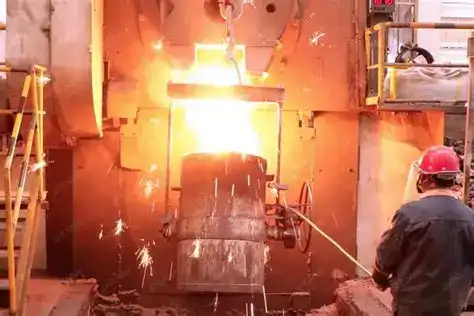
How High-Frequency Furnaces Break Through Melting Efficiency Barriers?
Electromagnetic Induction Delivers Direct Energy Transfer
High-frequency furnace technology's direct power source-workpiece linkage is its main benefit. Intermediate heating elements cannot fail or cause losses. Crucible walls and chamber structures stay cold because the magnetic field does not interact with non-conductive materials. Energy is used to process metal, not to heat containment systems.
Through the skin effect, 10–100 kHz frequencies provide accurate heating depth control. Higher frequencies concentrate energy near the surface, enabling rapid melting or surface treatments. Lower high-frequency frequencies penetrate deeper, appropriate for through-heating larger workpieces. This flexibility allows a single furnace platform to perform a variety of applications that would require many specialised units in older systems.
The electromagnetic field stirs molten metal. This continuous circulation reduces compositional stratification and temperature gradients without mechanical agitation. Greatly improved alloy homogeneity reduces post-melting processing. The method is especially useful in precious metal applications where handling losses must be minimised.
Advanced Control Systems Optimize Every Cycle
High-frequency induction systems today have intelligent process monitoring and automated control. Power control circuits adjust output instantly based on temperature sensors. Multi-stage heating programs optimise ramp rates for each material, preventing thermal shock in brittle alloys and maximising speed in ductile metals.
PFC and harmonic filtering purify electricity and protect your facility's power quality. These systems efficiently use grid current, avoiding reactive power charges that raise running expenses. IGBT-based solid-state inverters can regulate waveforms with microsecond response times, unlike thyristor-based systems.
Safety interlocks and circuits prevent faults. Overcurrent detection protects equipment from short circuits. Utility power spikes trigger overvoltage protection. Water flow monitoring shuts down cooling systems if flow rates drop below safe levels. Built-in protections reduce equipment failure downtime and extend service life.
Real-World Performance Data
When moving from resistance to high-frequency induction systems, steel-producing facilities reduce melting cycles by 38%, from 45 to 28 minutes. Cost reductions over thousands of production tonnes are achieved by reducing energy use from 720 kWh per tonne to 580 kWh. These upgrades boost floor area capacity and reduce production's environmental impact.
Precious metal refiners report yield increases of 2-3% for gold and platinum alloys. At platinum prices over $60,000 per kilogram, this yield improvement on 100 kg annual throughput saves $120,000–$180,000. Flameless heating reduces combustion byproducts, preserving metal purity for electronics and medical devices.
Mechanical parts processors report quality and efficiency advantages. Heat treatment using high-frequency systems achieves hardness consistency of ±2 HRC across batches, compared to ±5 HRC with the previous equipment. Consistency lowers rejection rates and post-processing grinding, lowering part costs and boosting customer satisfaction.
Maintenance Best Practices for Sustained Performance
High-frequency furnace systems run efficiently with preventive maintenance. Water quality control inhibits cooling circuit scaling, which limits heat transmission. Deionised or distilled water provides electrical isolation and effective cooling. Periodic conductivity testing and flushing preserve system integrity.
Induction coil examination detects problems before they fail. Cracks or distortion from heat cycling are seen. To detect turn-to-turn shorts, measure resistance. Coil design employing high-grade copper and water cooling channels extends service life to thousands of heating cycles. Modular designs enable quick replacement with minimum production interruption.
Power supply components benefit from regular cleaning and inspection. Dust on heat sinks inhibits cooling, causing premature failures. To tune capacitor banks, capacity testing is needed periodically. To detect hot spots, thermally photograph IGBT modules. These basic quarterly processes help minimise most accidental downtime.
Evaluating High-Frequency Furnace Options: Making Informed Procurement Decisions
Comparing Technology Alternatives
Understanding high-frequency induction, medium-frequency induction, resistance, and arc technologies helps choose melting equipment. High-frequency systems excel in quick heating, accurate temperature control, and lower batch sizes. Their 10-100 kHz frequency range makes them ideal for precious metals, laboratory research, small precision casting, and heat treatment, where surface quality and dimensional accuracy are crucial.
Medium-frequency furnaces of 150 Hz to 10 kHz melt ferrous metals in tonnes. Their deeper magnetic field penetration efficiently handles larger loads. Resistance furnaces have reduced capital costs but higher operational costs and limited control precision. Arc furnaces have the highest temperatures for particular applications, but high electrode consumption and power quality issues.
Technology selection should reflect application needs. Batches under 100 kg favour high-frequency systems. Induction technologies' quick start-stop and cleaning simplicity assist production quantities needing rapid alloy changes. Only current high-frequency equipment can provide precision control for quality-critical processes with tight tolerances.
Key Selection Criteria for Procurement Teams
Your production profile-based energy consumption forecasts should be a key factor. Power draw at various operational points should be specified, not simply peak ratings. Calculate annual electrical expenditures using local utility rates, including demand charges. A 15% more expensive system that uses 20% less energy pays for itself in 18–24 months.
Long-term ownership expenses depend on maintenance and parts availability. Single-source proprietary equipment exposes supply chains. Replacement parts for conventional industrial systems are competitively sourced. Access to trained technicians in your region helps manufacturers respond faster to urgent needs than those that require foreign travel.
Production volume compatibility aligns equipment to actual needs, not theoretical capacity. Oversized systems waste capital and perform poorly under partial loads. Undersized equipment causes production bottlenecks and overtime that promotes deterioration. Accurately assessing existing volumes and expected increases over the next 5-7 years drives capacity selection.
Supplier Credibility and After-Sales Support
Carefully assess the manufacturer's experience and industry repute. Metallurgical equipment designers and manufacturers with decades of experience make more reliable products. Patents show ingenuity, not copycat designs. ISO 9001, ISO 14001, and OHS certifications show quality and customer satisfaction.
After-sales service generally determines equipment uptime more than quality. Factory-trained engineers do thorough commissioning to ensure installation and operator training. Technical support by phone, email, and remote connection addresses difficulties swiftly. Domestic parts inventory allows prompt replacement without customs delays. Service contracts with preventive maintenance visits avoid breakdowns.
The best insights come from similar-application customer references. Speaking with operations managers utilising the equipment under consideration exposes real-world performance, reliability, and supplier response that marketing materials never show. Visitors to working plants can examine equipment in production and evaluate its capabilities.
Safety and Best Practices to Maximize Furnace Performance
Electrical Safety Fundamentals
HFI Systems operate at high power and voltage, needing tight safety standards. Equipment cabinets, control panels, and induction coils should be grounded to prevent electrical shock. Ground resistance testing at installation and annually ensures protection. Loose electrical connections cause arcing and fires, so tighten them to manufacturer specifications and inspect them often.
Maintenance of energised components requires the use of insulated gloves and face shields. Power is isolated before service work with lockout/tagout. Maintenance should only be done by high-frequency-trained electricians. RF energy has different risks than electrical frequency equipment.
Operator Training for Optimal Results
Comprehensive training programs teach operators equipment capabilities and correct operation. Startup procedures, material parameter selection, shutdown procedures, and basic troubleshooting should be taught. Practical experience under supervision promotes confidence and competence before independence.
Process-specific training addresses melting efficiency variables. Operators can maximise productivity by understanding how charge preparation—piece size, cleanliness, and beginning temperature—affects cycle time. Early problem detection is possible by distinguishing regular operational noises and visual signs. Empowered operators who grasp the "why" underlying procedures make better real-time decisions than rote followers.
Environmental Factors and Load Management
Proper ventilation ensures worker and equipment safety. Flameless induction heating yields no combustion byproducts; however, melting produces metal vapour and fumes that must be filtered. Before impurities enter the workstation, local exhaust systems around crucible apertures eliminate them. Makeup air systems reduce exhaust effectiveness by preventing negative building pressure.
Facility power utilisation is optimised using electrical load management. High-draw equipment operation is coordinated to avoid peak loads and utility demand charges. Power monitoring systems identify scheduling opportunities by tracking consumption. Off-peak electricity rate periods, when interruptible rates apply, reduce energy expenses for some facilities that use melting equipment.
Troubleshooting Common Issues Efficiently
Identifying symptoms and causes reduces downtime. Reduced heating power frequently signals cooling system issues—monitor water flow and temperatures. Erratic power distribution indicates control circuit or utility power quality issues. Induction coil noises may indicate mechanical resonance requiring support structure adjustments or electrical issues requiring prompt investigation.
Instead of addressing symptoms, systematic diagnostics find reasons. The history of cycle times, power settings, and unexpected events in operation logs shows trends. Benchmarking current performance against the baseline shows a decline soon. If operators pay attention, many issues present warning indicators days or weeks before catastrophic collapse.
A spare parts inventory that matches your equipment and consumption patterns balances availability with inventory capital. Long-lead components like capacitors, induction coils, and control boards require stock. Locally available standard components need not be inventoried. Due to their extensive installation knowledge, your equipment provider can recommend the best spares list.
Conclusion
High-frequency induction technology uses electromagnetic principles to greatly improve melting efficiency by providing rapid, direct, and controllable heating. Facilities adopting these systems consistently report cycle time reductions of 30-50%, energy savings exceeding 20%, and quality improvements that lower downstream processing costs. The combination of thermal efficiency exceeding 85%, precise temperature control within ±5°C, and no need for heating element maintenance creates strong economic advantages that usually justify the investment within two years of operation. As metallurgical operations face increasing pressure to improve productivity while reducing environmental impact, high-frequency furnace technology provides proven solutions addressing both imperatives simultaneously.
FAQ
What frequency range works best for different metal types?
Ferrous metals, including steel and cast iron, typically process most efficiently at frequencies between 10 and 30 kHz, where magnetic field penetration suits common charge sizes. Non-ferrous metals like copper, aluminium, and brass work well across 20-50 kHz ranges. Precious metals and small specialized applications often employ frequencies from 50 to 100 kHz for rapid surface heating. Material electrical conductivity and magnetic permeability, along with workpiece dimensions, determine optimal frequency selection. Our engineering team analyses your specific metals and batch sizes to recommend ideal frequency parameters during equipment specification.
How much space does a high-frequency melting system require?
Modern High Frequency Furnace installations occupy remarkably compact footprints compared to traditional equipment. A complete system, including a power supply, induction coil station, cooling unit, and control panel, typically requires 15-25 square meters of floor space. The solid-state power supply cabinets mount vertically, maximizing space efficiency. Unlike resistance furnaces requiring substantial clearance around hot chamber walls, induction systems generate minimal radiant heat, allowing closer positioning to other equipment. This space efficiency enables productivity improvements within existing facility footprints without costly building expansions.
What maintenance intervals should we expect?
Routine maintenance occurs quarterly and includes cooling water quality testing, electrical connection inspection, and capacitor bank verification—tasks requiring 2-4 hours of downtime. Annual preventive maintenance involves more thorough inspection of power components, induction coil resistance measurements, and control system calibration, typically completed within one shift. Major component replacements happen less often: induction coils last 3-5 years depending on thermal cycling intensity, cooling system pumps last 5-7 years, and power supply capacitors last 8-10 years. This predictable maintenance schedule allows planned downtime coordination with production schedules.
Can existing operators learn to run these systems easily?
Absolutely. Our commissioning process includes comprehensive operator training that covers all operational aspects. Most production personnel become proficient within 3-5 days of hands-on instruction. The automated control systems simplify operation—operators select material type, input target temperature, and initiate the heating cycle. Modern touchscreen interfaces provide clear feedback and guide users through procedures. High-frequency induction operation is much simpler and more consistent than managing combustion controls in fuel-fired equipment or positioning electrodes in arc furnaces.
Partner with Shaanxi Heyuan for Advanced Melting Solutions
Shaanxi Heyuan New Metallurgical Electric Furnace Equipment Co., Ltd. brings over fifteen years of specialized expertise in high-frequency furnace manufacturing and metallurgical equipment engineering. Our systems operate at frequencies from 10 kHz to 100 kHz, achieving thermal efficiencies over 85%. They have chamber sizes for workpieces from φ50 mm×100 mm to φ300 mm×500 mm and power outputs from 15 kW to 200 kW. As a certified high-frequency furnace supplier holding more than ten utility model patents and ISO quality management system certification, we provide complete turnkey solutions covering design, manufacturing, installation, commissioning, and long-term technical servicing. Contact our engineering team at sxhyyj606@163.com to discuss how our proven induction heating technology can optimise your melting operations. Visit hyyjfurnace-supply.com to explore our complete equipment portfolio and request a customized efficiency analysis for your specific application requirements.
References
1. Rudnev, V., Loveless, D., Cook, R., & Black, M. (2017). Handbook of Induction Heating (Second Edition). CRC Press, Manufacturing Engineering and Materials Processing Series.
2. Davies, E. J. (2019). Principles of Induction Melting and Heating: Technology, Process Control, and Applications. Industrial Heating Magazine Technical Publishing.
3. Zinn, S. & Semiatin, S. L. (2018). Elements of Induction Heating: Design, Control, and Applications in Metal Processing. ASM International Materials Engineering Handbook.
4. Lupi, S., Forzan, M., & Aliferov, A. (2020). Induction and Direct Resistance Heating: Theory and Numerical Modelling in Metallurgical Applications. Springer Materials Science and Engineering Monographs.
5. Okamoto, N. & Tanaka, H. (2016). Energy Efficiency Analysis of High Frequency Induction Furnaces in Steel and Non-Ferrous Metal Processing. Journal of Materials Processing Technology, Volume 238, Iron and Steel Institute of Japan Research Publication.
6. Kranjc, M., Zupanic, A., Miklavcic, D., & Jarm, T. (2018). Numerical Optimisation and Thermal Performance Analysis of Industrial Induction Heating Systems. International Journal of Heat and Mass Transfer, Elsevier Engineering Thermodynamics Series.


YOU MAY LIKE