
Industrial Furnace Hood for Foundry and Casting Applications
July 22, 2026
Foundries require emission control technologies that can resist severe temperatures, safeguard workers, and comply with environmental regulations. Industrial furnace hoods protect against fumes, particulates, and thermal risks in metallurgical operations. These specialised extraction devices capture pollutants above or next to melting furnaces before they can contaminate your facilities. Modern fume collection hoods use advanced thermal management and aerodynamic design to achieve nearly 95% collection efficiency, helping to meet regulatory pressures and operational challenges in casting operations. Making knowledgeable procurement selections for competitive foundry management is crucial since hood configuration affects worker safety and energy costs.
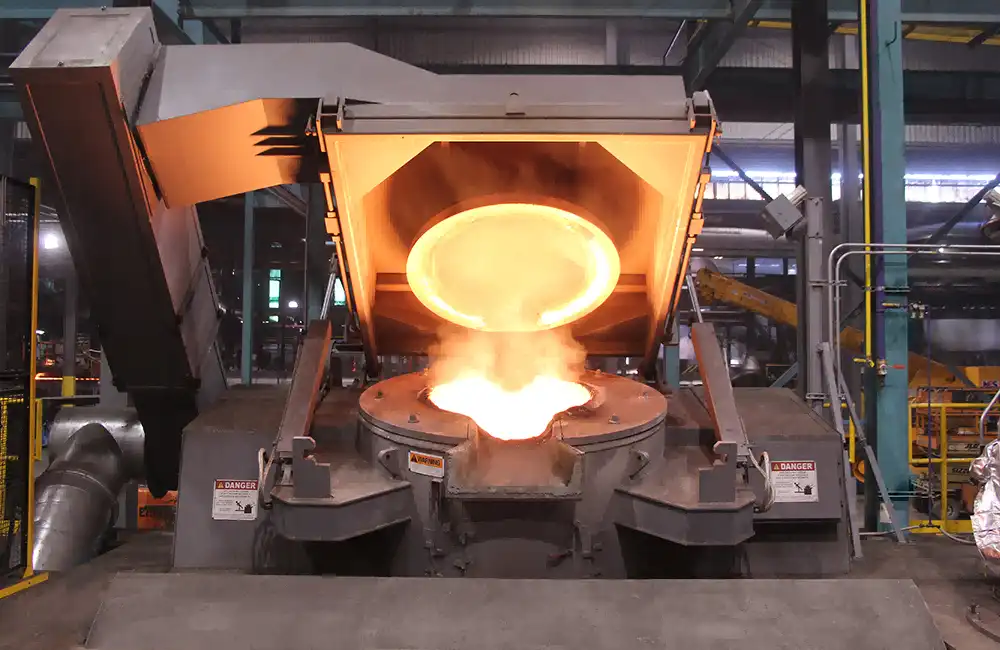
Understanding Industrial Furnace Hoods: Design, Function & Benefits
What Makes Furnace Hood Systems Critical for Foundry Operations?
Every foundry manager knows uncontrolled emissions pose health and regulatory problems. Metallurgical emission control equipment solves these issues with engineered capture velocities and thermal resistance. Basic principle: create enough airflow at the boiler entrance to counteract thermal buoyancy forces and prevent energy loss.
Hood canopy structure, water- or air-cooled cooling systems, ducting, and control dampers function together. Water-cooled membrane walls can resist 800°C thermal cycling by flowing pressured coolant through tubular panels. Like boiler walls, welded tube assemblies create a continuous pressure boundary that dissipates severe heat flux.
Material choice determines lifespan in corrosive, high-temperature situations. Air-cooled high-temperature zones use stainless steel grades (304H, 310S, or Inconel 600 for extreme temperatures) to resist oxidation and sulphur attack, while water-cooled variants use heavy-gauge carbon steel (ASTM A36/A516). Process chemistry and temperature determine the choice.
Core Benefits That Transform Foundry Operations
When designed properly, fume evacuation improves operational metrics. Cleaner air protects workers against silica dust, metal oxide vapours, and combustion byproducts. Capture hoods lower ambient particle concentrations by 70–85%, reducing respiratory complaints and enhancing worker retention.
Smart insulation and airflow management save energy. Heat loss from the furnace body is 15-20% lower with 85% heat retention than in uninsulated settings. Thermal management minimises natural gas or electricity use per tonne of metal treated, saving both money and emissions.
If your extraction system meets EPA NESHAP and OSHA exposure limits, regulatory compliance is easy. Documenting capture efficiency testing and maintenance simplifies permit renewals and deters enforcement. The Industrial Furnace hood is your principal compliance barrier, so risk management must include appropriate specifications.
Safety Standards and Certification Requirements
Suppliers that meet ASME Section VIII pressure vessel regulations for water-cooled components under pressure are reliable. AWS D1.1 structural welding standards include ultrasonic or dye penetrant inspection of important junctions for subsurface flaws. Quality measures prevent catastrophic failures like water seeping into molten metal, causing steam explosions.
ISO 9001 accreditation systematically controls manufacturing processes. ISO 14001 certifies responsible material procurement and waste handling. When researching vendors, make sure these certificates are current and cover the production plant making your equipment, not simply corporate headquarters.
Types and Comparison of Industrial Furnace Hoods for Foundry Use
Fixed Canopy Versus Mobile Hood Configurations
Fixed canopy hoods are above furnaces. This design increases structural strength and ductwork integration but decreases operating flexibility. Mobile side-draft or articulating hoods tilt boilers for pouring, and flexible high-temperature connections maintain capture during tapping. The optimum configuration depends on your workflow.
Fixed hoods help electric arc furnaces and induction melting systems with stationary containers. In EAF steelmaking, fume extraction and off-gas pre-cooling in the fourth hole protect the downstream fabric filters. To catch 95% or more pollution, canopy designs completely enclose the source.
Aluminium and iron foundries' tilting furnaces need mechanical room for pouring. Swivelling hoods aid. The capture hood is pulled away during metal transfer and returns to extraction after casting using counterweighted arms or pneumatic actuators. Transition movements complicate maintenance and reduce capture efficiency.
Material Selection: Stainless Steel Versus Galvanized Construction
Operational longevity and maintenance expenses depend on corrosion resistance. Above 600°C, 304H and 310S stainless steels don't rust, and below the sulphur dew point, acidic condensates from flue gases don't condense. Some materials cost 2-3 times more than carbon steel, yet eliminate regular repair and replacement in harsh settings.
Below 400°C, galvanised carbon steel performs well when corrosive species remain gaseous rather than condensing on the metal surfaces. The zinc layer protects against corrosion in the air for a short time, but it burns off at high temperatures. This material is suitable for controlled environment annealing line hoods and heat treatment furnaces.
Water-cooled membrane architecture keeps the surface temperatures of carbon steel below the oxidation threshold, extending service life. Even under 1,600°C furnace settings, cooling circuits keep steel below 150°C, preventing scaling and warping. Though cooling system maintenance is complicated, this method offers durability similar to stainless steel at lower material prices.
Comparing Industrial Fume Extraction with General Ventilation
Foundries are too harsh for lab fume hoods. Metallurgical applications require temperature ratings, structural strength, and capture velocities beyond commercial ventilation equipment. Equipment failure within weeks of installation due to confusion causes safety issues and unnecessary downtime.
General ventilation systems lack spark arrestors, refractory linings, and explosion relief mechanisms in furnace hoods. The aerodynamic design assumes thermal plume velocities of 5-8 m/s, which requires hood face capture velocities of 1.5 m/s or more. The design parameters are optimised using computational fluid dynamics modelling to ensure optimal capture without excessive ductwork pressure loss.
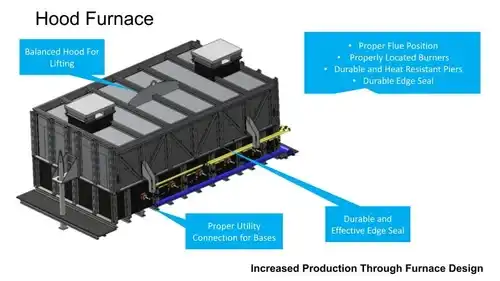
Selecting the Right Industrial Furnace Hood: A B2B Procurement Guide
Critical Evaluation Metrics for Foundry Applications
Standard airflow capacity is measured in cubic meters per minute (m³/min) or cubic feet per minute (CFM). The computation starts with furnace opening area, thermal plume velocity, and contaminant-type-based capture velocity. Undersized systems fail to limit emissions during charging, as furnace disturbance maximises fumes. Oversizing costs energy and increases negative pressure, drawing cold air into the melt and diminishing thermal efficiency.
Site-specific evaluation is needed for proper sizing, not tonnage-based guidelines. Induction furnaces for aluminium melting and electric arc furnaces for steel scrap processing produce various emission volumes. For optimal performance, Industrial Furnace Hood specifications must consider charge material composition, melting rate, and process cycle timing.
Process chemistry analysis determines corrosion resistance. Foundries melting high-sulphur iron or processing zinc-coated waste must upgrade materials due to aggressive corrosion. To prevent joint galvanic corrosion, get material test results proving the composition satisfies grades and welding consumables match base metal standards.
Custom Engineering Versus Standard Hood Designs
Standard catalogue goods fit standard furnace designs with conventional mounting. Custom designs are needed for restricted overhead clearance, structural impediments, or non-standard furnace geometry. Custom engineering costs 15-30% more but provides an ideal fit and performance that off-the-shelf products cannot.
By placing the catch hood laterally rather than above the furnace, low-profile side-draft systems overcome the above clearance issues. Higher air velocities compensate for poor capture geometry, retaining efficacy while addressing crane access limits. Three-dimensional facility scanning eliminates costly field alterations during installation by creating correct baseline measurements for unique design work.
Supplier Evaluation Criteria That Protect Your Investment
Certification verifies that supplier capabilities meet your needs. ISO 9001 quality certification documents manufacturing procedures, but does the scope statement include design engineering or merely assembly operations? Water-cooled hoods require pressure vessel design and fabrication by ASME-certified companies.
Technical support distinguishes qualified suppliers from equipment vendors. Can the provider confirm capture performance for your installation using computational fluid dynamics? Do their metallurgical engineers grasp your process issues? The 400-person professional team at Shaanxi Heyuanxin Metallurgical Electric Furnace Equipment Co., Ltd. includes 11 senior experts with the expertise needed to complete projects across various applications.
Manufacturing capacity impacts supply chain reliability and delivery times. Suppliers with several production facilities can handle demand spikes and equipment faults. Site visits to production plants verify capabilities versus marketing claims, making due diligence beneficial for big capital investments.
Case Studies and Practical Insights: Optimizing Hood Performance
Performance Improvements from Proper Hood Implementation
Engineered water-cooled membrane canopy hoods replaced ageing ones on three electric arc furnaces at a Midwestern steel factory. Testing after installation showed improvements in fume capture efficiency from 78% to 96%, lowering ambient particulates by 65%. The facility avoided EPA enforcement and cut OSHA respiratory incidents by 40% in 18 months. Better thermal control reduced steel production energy usage by 12% per tonne, repaying the capital investment in 22 months.
Tilting induction furnace hood repairs plagued a Southeast aluminium factory. Heat deformed the original air-cooled steel construction, generating fume-escaping holes. Upgrading to stainless steel swivelling hoods with ceramic fibre insulation increased capture efficiency and service life from 18 months to over 5 years. Due to less airborne dust and sand contamination, maintenance labour expenses lowered 55%, and scrap rates dropped.
Common Operational Challenges and Solutions
Exterior condensation suggests that cooling water temperatures are below the ambient dew point. This "sweating" causes slips and increases corrosion. Modulating cooling water flow keeps structures safe for workers and maintains external surface temperatures 5–10°C above the dew point. Operator-free temperature control systems maintain this balance.
Pressure surges during steelmaking oxygen lancing can destroy rigid duct connectors. Explosion relief dampers or flexible expansion joints avoid structural damage from transient pressure spikes. They protect the hood assembly and downstream filtering equipment by automatically activating when pressure exceeds design thresholds.
Tube failures result from mineral buildup in cooling circuits, reducing heat transfer efficiency. Closed-loop demineralised water with corrosion inhibitor cooling reduces scaling. Chemical cleaning annually or descaling during planned maintenance outages restores thermal performance. Water quality testing warns maintenance teams of treatment system faults before scale builds up.
Future Innovations in Emission Control Technology
Smart airflow regulation systems use real-time process monitoring to adjust extraction rates based on actual emission generation. Sensors detect furnace door opening, charging operations, and tapping sequences, automatically increasing airflow during high-emission activities and reducing flow during idle periods. This dynamic control reduces energy consumption by 20-35% compared to constant-volume systems, while still maintaining capture effectiveness.
Advanced refractory materials incorporating phase-change compounds provide enhanced thermal buffering. These materials absorb heat during peak temperature exposure and release it gradually during cooling cycles, reducing thermal stress on structural components. Service life increases while thermal efficiency improves through more stable temperature profiles.
Conclusion
Selecting Industrial Furnace hoods for foundry operations requires understanding the interplay between thermal management, emission control, and operational durability. Water-cooled membrane construction delivers superior performance in extreme-temperature applications, achieving 95%+ capture efficiency while maintaining structural integrity through thousands of thermal cycles. Material selection—whether stainless steel, carbon steel, or specialized alloys—must align with your specific process chemistry and temperature profile to ensure long-term reliability. Custom engineering solutions address site-specific constraints that standard designs cannot accommodate, delivering optimal performance despite overhead clearance limitations or unusual furnace configurations. The investment in properly specified extraction systems pays returns through regulatory compliance, improved worker safety, energy savings, and extended equipment service life that far exceed initial capital costs.
FAQ
What factors determine the right hood size for my furnace?
Hood sizing depends on furnace opening dimensions, process cycle characteristics, and contaminant generation rates. Calculate required airflow by multiplying the furnace opening area by the desired capture velocity (typically 1.5-2.0 m/s for heavy particulate). Account for thermal plume velocity, which increases dramatically during charging operations. A qualified supplier performs computational fluid dynamics modelling to validate capture effectiveness before finalizing specifications. Undersized hoods fail during peak emission events, while oversized systems waste energy and may disrupt furnace thermal profiles through excessive cold air infiltration.
How often should cooling circuits be inspected and maintained?
Water-cooled hood systems require quarterly inspections of cooling water quality, flow rates, and pressure readings. Annual ultrasonic thickness testing detects internal corrosion or scale buildup before leaks develop. Chemical descaling or mechanical cleaning should be performed every 2-3 years, depending on water quality. Closed-loop systems with proper water treatment extend these intervals but still need monitoring. Thermal imaging cameras identify hot spots indicating cooling circuit blockages or failures, enabling predictive maintenance that prevents catastrophic failures.
Can existing hoods be retrofitted to improve performance?
Many installations benefit from targeted upgrades without complete replacement. Adding insulation layers improves thermal efficiency and reduces external surface temperatures. Modifying the inlet geometry or adding side curtains enhances the capture velocity distribution. Installing variable frequency drives on exhaust fans enables energy-saving control strategies. A site assessment identifies cost-effective improvements versus full replacement. Facilities with structurally sound hoods often achieve 30-50% performance improvements through strategic modifications at 20-30% of new equipment costs.
Partner with Shaanxi Heyuan for Superior Emission Control Solutions
Our Industrial Furnace hood systems address the toughest challenges in foundry and casting operations through proven engineering and manufacturing excellence. Heyuanxin delivers complete turnkey solutions from initial design through commissioning and ongoing technical support, ensuring your emission control investment performs reliably for years. With over 400 installations across 15+ countries and certifications including ISO 9001, ISO 14001, and OHSAS 18001, we bring documented expertise to every project. Contact our engineering team at sxhyyj606@163.com to discuss your specific requirements and receive a detailed technical proposal. As a leading Industrial Furnace hood manufacturer, we offer customisable solutions backed by 24-hour after-sales support and a guaranteed 5-year service life. Visit hyyjfurnace-supply.com to explore our comprehensive product catalogue and discover how our emission control technology can transform your foundry operations while ensuring environmental compliance and worker safety.
References
1. American Welding Society. (2020). Structural Welding Code – Steel (AWS D1.1/D1.1M:2020). Miami: AWS.
2. Environmental Protection Agency. (2019). National Emission Standards for Hazardous Air Pollutants for Iron and Steel Foundries. Federal Register, 84(89), 21051-21089.
3. International Organization for Standardization. (2018). Quality Management Systems – Requirements (ISO 9001:2015). Geneva: ISO.
4. Szekely, J., & Themelis, N. J. (2018). Rate Phenomena in Process Metallurgy. Hoboken: John Wiley & Sons.
5. The American Society of Mechanical Engineers. (2021). ASME Boiler and Pressure Vessel Code, Section VIII: Pressure Vessels. New York: ASME Press.
6. Toulouevski, Y. N., & Zinurov, I. Y. (2017). Innovation in Electric Arc Furnaces: Scientific Basis for Selection. Berlin: Springer-Verlag.


YOU MAY LIKE