
How to Choose the Best Automatic Vibratory Feeder for Your Industry?
July 2, 2026
Your production line can go from being a bottleneck to a smooth process by choosing the right Automatic vibratory feeder. The choice depends on your understanding of the material's properties, the amount to be processed, and its compatibility with your existing tools. For metallurgical plants, mining operations, and heavy industry applications where continuous feeding accuracy directly affects furnace performance and overall production efficiency, an Automatic vibratory feeder is essential. It uses electromagnetic or motor-driven mechanisms to precisely control material flow.
Understanding Automatic Vibratory Feeders: Functionality and Benefits
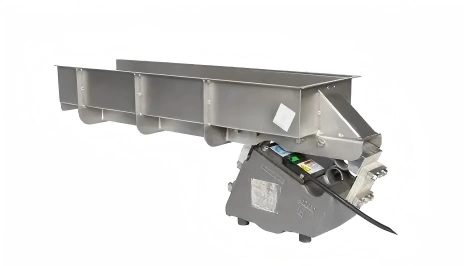
Automatic vibratory feeders have changed the way that businesses move large amounts of products and small parts. These machines use electromagnetic coils or mechanical motors to make controlled waves that move things along a set path at steady speeds. The basic idea is based on resonance frequency setting, in which the feeder works between certain frequencies to get the best movement of materials without damaging them or getting stuck.
Core Operating Mechanisms
A drive unit that turns electrical energy into mechanical shaking is what any Automatic vibratory feeder is built around. In electromagnetic versions, coil systems create pulsing magnetic fields, and in motor-driven forms, eccentric weights spin very quickly. Both methods give workers exact control over amplitude and frequency, which lets them fine-tune the flow of materials based on production needs.
Heyuanxin's units have amplitude sets that can be changed so that they can vibrate in a range of ways, from very softly for dust to strongly for heavy scrap materials. This flexibility is very useful in industrial processes where furnace charge materials have a wide range of particle sizes and densities.
Key Advantages in Industrial Settings
Modern Automatic vibratory feeders make changes that can be seen in a number of performance measures. The accuracy of feeding is within ±1%, which gets rid of the problems that come with filling by hand. This accuracy directly leads to better control of furnace temperature and less waste in casting processes.
A drop in the cost of labour is another strong gain. Multiple workers used to have to move materials by hand, but now there is only one automatic feeding system. This saves lives and makes the workplace safer by keeping people out of dangerous boiler areas. Because these systems stay in constant operation for long periods of time—often 24 hours a day, seven days a week—downtime is greatly reduced.
Paying extra attention to energy economy is important. Depending on their size, our feeders use between 0.25 and 5 kW, which is a lot less power than conveyor belt systems that handle the same amount of work. The electromagnetic drive design turns electrical input into mechanical motion with little heat production. This means that mining facilities, which are already very sensitive to temperature, need less cooling.
Criteria for Choosing the Right Automatic Vibratory Feeder
To make an informed choice, you need to carefully compare your operational needs with the Automatic vibratory feeder powers that are offered. As part of this process, the properties of the material, production number goals, space limitations, and long-term upkeep needs are all looked at.
Material Characteristics Assessment
Knowing what you're giving is the first step in choosing the right tools. Particle size distribution is very important—powders smaller than 200 mesh behave differently than solid materials or scraps with odd shapes. The bulk density of a material affects how it reacts to vibration. For example, lighter materials need different frequency sets than dense metallic compounds.
Temperature and the amount of moisture in the air are also factors. Materials that are already hot or powders that are sensitive to damp are often used in metallurgical processes. Our feeders can work with a wide range of temperatures so they can handle warm materials while keeping the flow steady. The shape of the anti-blocking material stops bridging, which happens when cohesive powders make arcs that stop the flow of material.
Throughput and Speed Requirements
The right Automatic vibratory feeder size and power level are based on the production ability. Our systems can handle feed rates of up to 100 m³/h, so they can be used for everything from small batch processes to high-volume, ongoing mining lines. There's more to figuring out needed flow than just measuring volumes. You have to take into account things like material settling, high demand times, and buffer capacity to keep lines from running out of space when downstream processes change.
Being able to change the speed gives you practical freedom. Stepless control from 0.5 to 5 m/min lets workers perfectly match feeding rates to furnace consumption rates, which change depending on the type of charge and the phase of operation. This ability to change in real time stops either too much feeding, which makes the boiler unstable, or too little feeding, which lowers output.
Integration and Installation Factors
Equipment choices are often limited by the amount of room available. Automatic vibratory feeders usually need less floor space than similar belt conveyor systems, but you need to make sure there is enough room for upkeep, adding materials, and getting to the hopper. Different types of mounting arrangements, such as floor-standing units and suspended systems, can be used in a variety of building plans.
Implementation is easier when it can work with current control systems. Modern feeders work well with PLCs and SCADA networks because they accept standard input signals and let you know how things are running. This connection lets automated production processes work, feeding changes on its own based on data from furnace sensors or software orders for timing.
Supplier Evaluation Criteria
The quality of the equipment rests a lot on how knowledgeable and helpful the maker is. Check out the total cost of ownership, which includes things like warranty coverage, spare parts available, and how quickly expert help responds. Companies that have ISO quality management certification show that they are committed to uniform production standards. This makes it less likely that products will break down or lose their performance before they should.
Patents show that a company is really coming up with new ideas, not just making copies of other products. Our collection has more than ten utility model patents that cover things like designs that keep things from blocking, methods for controlling vibrations, and ways to build things that don't wear out easily. Compared to traditional designs, these modern benefits mean that they will last longer and need less upkeep.
Types of Automatic Vibratory Feeders and Their Industrial Applications
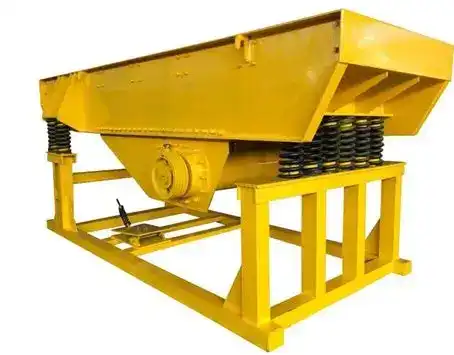
Different types of Automatic vibratory feeder setups are used for different tasks. By figuring out which type fits your production needs, you can avoid costly mismatches between what the tools can do and what the application actually needs.
Linear Vibratory Feeders
Linear designs move things in a straight line, which makes them perfect for moving things into ovens, mixers, or processing equipment in a certain way. The shaking moves things forward with a mix of vertical and horizontal parts. The movement speed is controlled by angles that can be changed. When materials need to move certain lengths from storage bins to furnace entry points, these units work great for charging in the metals industry.
The ability to increase or decrease capacity is a big plus. Linear troughs come in a range of lengths, from 500 mm for lab tools to 6 m for industrial units that handle tonnes of material per hour. The open trough form makes it easier to clean and check visually, which are both very important in places where changing between different alloys needs to be done carefully to avoid contamination.
Bowl Feeders and Orientation Systems
It's not very common in heavy metals, but circular bowl feeders are great at lining up parts. These systems work well for businesses that deal with small tools, computer parts, or pharmaceuticals that need to be aligned in a certain way before they can be processed further. The circular track design rotates and positions parts reliably by using gravity and well-thought-out tools.
Bowl shapes aren't often needed in metallurgical processes, but they are sometimes used in supporting tasks like sorting refractory materials by size or separating metallic fines from coarser parts. The sealed shape also helps keep dust inside when working with powdery materials that release particles into the air.
Custom-Designed Solutions for Specialized Needs
Catalogue items are good for most needs, but metallurgical processes often have special problems that need custom engineering solutions. Custom Automatic vibratory feeders can work with odd material qualities, high or low working temperatures, harsh chemical conditions, or custom furnace designs.
For customers working with materials ranging from -200°C cryogenic powders to +400°C prepared charges, we've come up with custom solutions. For these projects, we're using our more than ten years of experience in the metalworking field to make feeding systems that can work in difficult conditions and still keep the accuracy needed for furnaces to work consistently.
Maintenance, Troubleshooting, and Optimization for Long-Term Performance
Preventative repair and quick problem-solving are key to making sure that operations run smoothly. Understanding common failure types and how to stop them increases the uptime and return on investment of tools.
Routine Maintenance Protocols
Inspections that are planned ahead of time find problems before they get bad enough to cause unexpected shutdowns. Every three months, check the torque on the fixing bolts to make sure they are tight enough. Vibration can slowly loosen screws, causing unwanted motion that makes feeding less accurate. Check spring systems for cracks caused by wear and tear, especially on units that are used constantly at high amplitudes. Replace trough liners that are worn out before material leaks through and damages structural parts below.
How often something needs to be cleaned depends on its properties. Sticky or hygroscopic powders need to be cleaned more often so that buildup that changes the way vibrations work doesn't happen. Our self-cleaning trough design keeps buildup to a minimum, but full washdowns are still needed when switching products or for yearly maintenance.
Common Issues and Practical Solutions
Feed rate changes are often caused by electromagnetic coil wear or changes in the power supply voltage. Check the coil's resistance against its starting point; large rises in resistance mean that the insulation has broken down, which means the coil needs to be replaced. Voltage controllers keep the input power stable in places where the electricity source isn't always stable. This stops performance changes that mess up production schedules.
Noise levels above 70 dB are usually a sign of technical problems. Loose fixing hardware sends vibrations to structures that hold up the equipment, which raises the noise level throughout the building. Noise also spreads when isolation pads get worn down. Most of the time, sound problems can be fixed by replacing the vibration dampers and making sure they are installed correctly.
Material jamming usually happens because the frequency choices are wrong or the hopper design isn't good enough. When the cohesive forces between particles are stronger than the destructive forces from shaking, bridging takes place. Increasing amplitude or changing frequency can often get the flow going again, but if the problem keeps happening, the hopper may need to be changed to include higher discharge angles or motorised agitators.
Purchasing and Procurement Guidance for B2B Clients
When buying tools strategically, the up-front costs and long-term working value are weighed. Smart buyers don't just look at the purchase price; they also look at the total costs over the product's lifetime.
Pricing Factors and Budget Planning
The price of an Automatic vibratory feeder depends on its size, the materials it is made of, and how advanced its technology is. Basic units start at low prices and are good for small businesses. On the other hand, high-capacity systems with complex settings require big investments. Prices should be looked at in terms of how much they can handle—the cost per tonne of annual handling ability is a good way to compare different types.
Customisation costs more, but it makes sure that the product fits your needs perfectly. Standard wait times are between 6 and 8 weeks, but engineered solutions can take up to 12 to 16 weeks to develop, build, and test. Include these dates in your project plans, especially when working with the building of a new centre or the growth of a production line.
Evaluating Manufacturer Credentials
The choice of supplier affects how well equipment works for years after it is first installed. Companies with multiple industry licenses show that they have organised quality management, not just occasional great manufacturing. Our ISO 9001, environmental management compliance, and workplace health standards show that we are fully mature in all areas of our business.
How quickly problems are fixed depends on how much after-sales help is available. We keep technical support lines open through email at sxhyyj606@163.com, where engineers can help fix problems and improve speed. This quick help keeps you from having long periods of downtime that ruin the productivity gains that made you buy the equipment in the first place.
Shipping prices and arrival times are affected by how close a factory is to where the goods are being shipped. Our location in China's Shaanxi Province gives us access to shipping networks around the world and lets us keep our prices low. We offer a range of delivery options to meet the unique needs of each job, from 'ex-works' pickup to 'delivered duty-paid' delivery.
Conclusion
To pick the best Automatic vibratory feeder system, you need to carefully look at the features of the material, the needs of the output, and the supplier's abilities. The technical specs, like the maximum feed rate, the range of shaking frequencies, the amount of power used, and the noise level, must meet your practical needs while still leaving room for future capacity growth. Longevity, the amount of upkeep needed, and the level of manufacturer support all affect the total cost of ownership, which is different from the original purchase price. Metallurgical processes benefit most from feeders that are made to work in harsh conditions and still provide the accuracy needed for reliable furnace performance and high output efficiency.
FAQ
What determines feeding accuracy in vibratory systems?
The accuracy of feeding relies on how well the shaking control works, how the material flows, and how the hopper is designed. Electrical drives are easier to control than mechanical ones because they let you make small changes to the frequency and intensity. Our systems are accurate to within ±1% because they use smart tracking to account for changes in material density and automatically adjust settings to keep discharge rates constant no matter how full the hopper is.
How do I select between electromagnetic and motor-driven feeders?
Electromagnetic designs give you exact control, which is great for tasks that need to change the rate of something often or work with fragile materials. Motor-driven units work well in heavy-duty situations and don't need to be fine-tuned for control. Metallurgical processes usually benefit from electromagnetic systems because they are more sensitive and require less upkeep. For example, bearings and eccentric weights don't need to be replaced on a regular basis.
Can vibratory feeders handle high-temperature materials?
Specialised designs can handle the high temperatures that are usual in preparing metals. High-temperature electromagnetic coils, thermal expansion adjustment in mounting systems, and heat-resistant trough materials make it possible to work reliably with materials up to 400°C. The temperature of the material changes the way it vibrates, which means that the calibration needs to be changed. However, this doesn't stop vibratory feeding when the equipment specs fit the needs of the application.
Partner with Shaanxi Heyuan for Reliable Vibratory Feeding Solutions
The Shaanxi Heyuan New Metallurgical Electric Furnace Equipment Co., Ltd. has more than ten years of experience creating and making Automatic vibratory feeders for tough metallurgical uses. As a well-known company that makes Automatic vibratory feeders, we offer unique solutions that are backed by multiple patents, ISO certifications, and full support after the sale. Our engineering team knows how to deal with the unique problems that come up with furnace feeding systems and can help you from the beginning of the planning process all the way through installation and start-up. Please email us at sxhyyj606@163.com to talk about your unique needs and find out how our tried-and-true feeding technology can help you make more money while cutting down on costs.
References
1. Johnson, M. R., & Williams, T. E. (2021). Industrial Material Handling Systems: Design and Application. Manufacturing Engineering Press.
2. Chen, L., & Rodriguez, P. (2020). "Vibratory Conveyance Principles for Bulk Solids," Journal of Materials Processing Technology, 287, 116-132.
3. Anderson, K. F. (2022). Metallurgical Equipment Selection Guide for Process Engineers. International Metallurgy Publications.
4. Thompson, R. D., & Garcia, S. M. (2019). "Electromagnetic Feeder Performance in High-Temperature Applications," Industrial Automation Review, 45(3), 78-91.
5. Peterson, G. H. (2023). Maintenance Best Practices for Vibratory Equipment in Continuous Operations. Reliability Engineering Institute.
6. Mitchell, A. J., & Kumar, V. (2021). "Cost-Benefit Analysis of Automated Feeding Systems in Heavy Industry," Production Economics Quarterly, 34(2), 203-218.


YOU MAY LIKE