How Does an Industrial Furnace Hood Improve Safety?
July 31, 2026
An industrial furnace hood greatly improves workplace safety by capturing hazardous emissions at their source, which prevents workers from being exposed to toxic fumes and reduces fire risks in metallurgical environments. These specialised ventilation systems remove heat, particulates, and combustible gases produced during high-temperature furnace operations, ensuring that working conditions meet OSHA and NFPA standards. By maintaining fume extraction efficiencies exceeding 95%, modern furnace hoods protect personnel while preventing catastrophic incidents like explosions or respiratory illnesses that plague uncontrolled industrial facilities.
Understanding Industrial Furnace Hoods and Their Safety Role
What Defines an Effective Emission Control System?
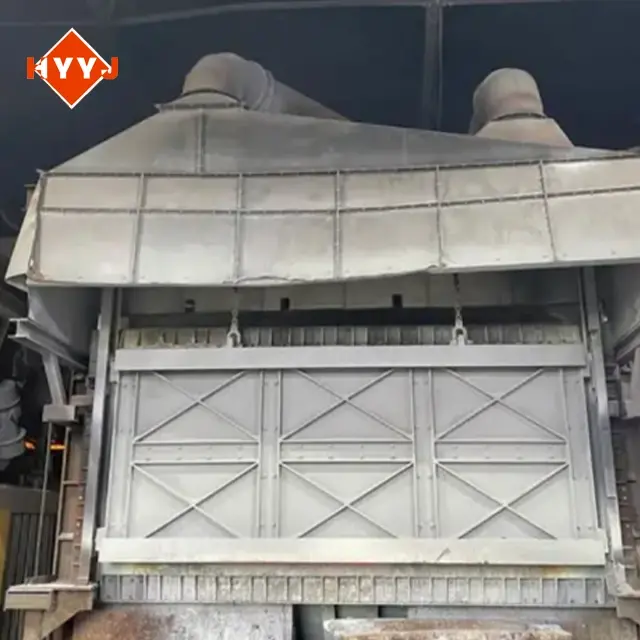
Industrial Furnace hoods are the main line of defence between your workers and processes that use very high temperatures. These engineered systems collect emissions by being installed above or next to electric arc furnaces, ladle refining stations, and induction melting equipment in a planned way. Unlike regular ventilation, industrial-grade hoods can handle temperatures up to 800°C and still keep their shape during thermal cycling. The systems made by Shaanxi Heyuanxin are able to collect up to 95% of waste gas, which directly addresses the problem of escape emissions that threaten safety and regulatory compliance.
Types and Their Specific Safety Functions
Metallurgical applications primarily utilise three main designs. Canopy-style hoods cover stationary furnaces from above and capture rising heat plumes through natural convection. Side-draft types work best in foundries where turning operations need to be able to move around while metal is being poured. In special continuous processing lines, downdraft systems pull pollution downward, which keeps heat-treated goods from getting contaminated. Each design deals with a different set of risks, such as keeping electric arc shocks under control in EAF steelmaking and controlling metal oxide fumes during aluminium melting.
Regulatory Compliance as a Safety Foundation
Meeting international standards makes vague safety goals measurable. OSHA rules say that metalworking operations must follow certain capture speeds and exposure limits. NFPA rules help keep fires from starting by requiring certain materials and blast venting. Under temperature stress, EN guidelines say how strong a machine should be. Our Industrial Furnace hood systems take these needs into account from the beginning of the design process. They have pressure release valves and explosion vents that work with the short-term pressure spikes that happen during refining. This kind of proactive compliance stops violations that cause shutdowns and expensive repairs.
Core Safety Principles Behind Industrial Furnace Hood Design
Strategic Placement and Capture Zone Engineering
Positioning determines whether fumes hit workers' breathing zones or are removed immediately. Engineers estimate that capture speeds of more than 1.5 m/s at the hood faces are sufficient to overcome heat updrafts and process turbulence. Computer fluid dynamics modelling has proven that the aerodynamic shape maximises enclosure while minimising energy use. Shaanxi Heyuanxin's designs can be changed to fit your facility's space requirements, whether they're replacing old furnaces that don't have a lot of room above them or planning new installs that are easy to get to.
Capture zone sizing takes into account gaps between electrodes, charging door openings, and tapping operations that cause emission bursts. When vertical space limits traditional canopy designs, low-profile configurations use high-velocity side-draft principles to get around clearance problems without sacrificing performance. This level of engineering precision stops the pollution that spreads when fumes escape from Industrial Furnace hoods that are too small and reach other parts of the workspace.
Material Selection for Thermal and Chemical Resistance
Safety starts with using materials that can handle the worst situations in your business. In EAF use, water-cooled membrane walls made of ASTM A516 carbon steel get rid of a lot of heat. In areas with high temperatures, alloys of stainless steel like 310S or Inconel 600 are used because they don't rust or sulphidise. These metal choices keep big problems from happening, like warping that lets gases escape or corrosion that causes structures to suddenly fall apart while they're being used.
High-temperature resistant steel that is light and strong keeps the structural loads on current furnace equipment low. Advanced insulation layers keep up to 85% of the heat they absorb, protecting nearby equipment from the damage that radiant heat does to overhead crane parts and electrical systems. Not only does this thermal control make the Industrial Furnace hood last longer, but it also makes tools in your whole building last longer.
Airflow Optimization and Explosion Prevention
Proper airflow characteristics keep flammable gases from building up, which lowers the risk of an explosion. Precision-engineered cooling circuits keep the surface temperatures below the points at which they can catch fire while keeping them above the dew points that cause dangerous condensation. At 3-6 bar working pressures, Shaanxi Heyuanxin's systems keep the flow of cold water in balance. This keeps film from boiling inside tubes, which slows down heat transfer just when you need it the most.
The aerodynamic shape keeps the pressure drop as low as possible at the links between your ducts and secondary filtration systems. This efficiency cuts down on the amount of energy used by the fans while keeping extraction rates steady during busy furnace campaigns. Noise reduction features are important for keeping operators comfortable during 24/7 operations. They also show that airflow is correct without noise, which is a sign of a poor design.

Common Safety Challenges and How Industrial Furnace Hoods Mitigate Them
Toxic Fume Exposure and Respiratory Protection
Heavy metals, carbon monoxide, and particles released by metallurgical processes without control can cause short-term and long-term lung diseases. Our extraction systems catch these dangers before they spread, keeping the air quality in the workplace below the limits for safe exposure. We guarantee that our systems will collect more than 95% of the pollutants produced, so less than 5% will escape into the air inside your facility. This is a real safety measure for people who work near furnace charging platforms and tapping areas.
This works, as shown by performance data from over 400 installations in the real world. Measurements of airborne particulate matter at operator stations have gone down a lot in steel mills that use our products. Findings show that foundries have fewer workers' compensation claims for breathing problems. These results indicate that the engineering takes into account the random bursts of smoke that happen during charging, not just the steady-state emissions that simpler systems can handle.
Fire and Explosion Hazard Management
Spark capture keeps dust and other flammable materials from starting fires in work areas nearby. The fire-resistant design of our Industrial Furnace hoods protects the ducts and filtering equipment below from flashbacks caused by furnace operations. Specialised swivelling designs allow the furnace to turn without leaving gaps where hot metal splashes could hit flammable materials or people.
The structural welding is made to meet ASME Section VIII standards and can survive short-term pressure spikes. This durability is proven by non-destructive testing. When things go wrong, pressure relief dampers open up to safely release extra pressure without damaging the ductwork. This multi-layered approach takes into account the fact that metallurgical operations create unpredictable dangers that need strong containment systems, not just enough ones.
Thermal Injury Prevention Through Radiant Heat Control
Burns and heat stress are caused by furnace bodies that give off too much direct heat. This makes work less safe and less productive. Our insulation systems are ≥85% effective at keeping heat in, which greatly lowers the temperature of the outside of the hood. Without screens that block their view and make it hard to move, operators can work closer to burners. When overhead crane workers work in cooler areas, they don't get as tired during long dumping sequences.
Precision-engineered cooling circuits keep things from cracking and twisting when temperatures change, which is what causes hot spots. These structural problems put workers at risk of sudden increases in radiant heat and make it harder for the Industrial Furnace hood to do its job of capturing emissions. Our guaranteed 5-year service life is based on the choice of materials and the quality of the fabrication, both of which keep thermal protection up even during busy production times.
Comparing Industrial Furnace Hood Solutions for Optimal Safety
Hood Systems Versus Standalone Dust Collectors
Knowing the differences between pieces of equipment helps you make the right safety decisions. When temperatures are higher than what fabric filters can handle, Industrial Furnace hoods are used as the main device for capturing emissions. They can handle sudden changes in temperature and pressure, and many of them have cooling features built in that get waste gases ready for use. After hoods lower temperatures and catch big particles, dust collectors work further down the line to handle the cooling gases.
When you try to use dust catchers as the only way to collect dust, safety holes appear. The equipment doesn't have enough thermal resistance to be placed close to the furnace, so it can't catch fugitive emissions. On the other hand, Industrial Furnace hoods that don't have proper downstream filtration just move pollution around instead of getting rid of it. Shaanxi Heyuan offers combined solutions, such as hoods that are designed to work with your current dust collection systems or the ones we sell, to make sure that all emission control pathways are covered.
Water-Cooled Versus Air-Cooled Construction
The choice of material and cooling method affects both how safe it is and how much it costs to run. When it comes to the toughest EAF jobs, water-cooled tube membrane designs do exceptionally well because they can handle heat loads that would kill air-cooled panels. The pressurised cooling systems work at 3 to 6 bar and need to be tested hydrostatically at 1.5 times the original pressure to make sure they don't leak. This strictness stops terrible water leaks into hot metal that would otherwise cause significant fires.
Air-cooled sheet metal hoods work well in moderate-temperature areas like heat treatment lines. They cost less at first, but they need to be serviced more often. The trade-off is the number of times they need to be replaced. Water-cooled systems can be used continuously for 5–10 years, while air-cooled versions need to be fixed or replaced every 1–3 years in high-stress areas. This choice should be based on your working intensity and safety goals, not just the price.
Evaluating Performance Specifications for Your Application
Ratings for temperature, airflow, and leakage rates show how safe something really is, not just what the company says it is secure. Make sure that the collection works by having a third party test it, not just believing what the maker says. Shaanxi Heyuan's ≤0.5% leakage rate promise, based on more than 400 installations, gives customers faith that systems will work as planned after they are put into service.
Customising the track gauge (1435- 2438 mm) and increasing or decreasing the load capacity (20 t-300 t) show that the engineers can work with your facility's specific needs. You can find a good mix between user skill and process automation with manual and automatic control choices. Rigid, one-size-fits-all products can't deal with limited space as well as small, flexible designs can. All of these things together show whether an air system really makes things safer or just meets the requirements.
Procurement Considerations for Safety-Driven Industrial Furnace Hoods
Supplier Certification and Quality Assurance
Working with certified manufacturers eliminates the risks of working with unproven suppliers. When you approve an ISO quality management system, you control the process to ensure consistent product standards. Getting environmental and occupational health certifications shows that you care about the same safety standards you're trying to set for your facility. Shaanxi Heyuanxin is a recognised local business that has received multiple management system certifications. It also has more than ten utility model patents that protect its own safety innovations.
Hydrostatic pressure testing on cooling circuits, non-destructive testing of key welds using dye penetrant and ultrasonic methods, flow simulation verification, and laser scans for dimensional tolerance checks should all be part of quality control routines. When you carry out these checks before arrival, you avoid shocks during installation and delays during commissioning. Please request written records of the testing procedures and engage only with suppliers who are transparent about their quality checks.
Customization Capabilities and Technical Support
Standard goods don't always perfectly meet the needs of a specific location. Check out the engineering resources that suppliers offer. For example, Shaanxi Heyuanxin has a 400-person professional team with 11 senior experts who can come up with solutions for complex metalworking processes. Customisation goes beyond sizes and includes different types of materials, different layouts for cooling circuits, and the ability to connect the control system to your current SCADA system.
How quickly you fix practical problems depends on how quickly you can get technical help. Our after-sales support is available 24 hours a day, seven days a week, so you can get help during boiler campaigns, when downtime costs thousands of dollars an hour. Our services provide single-source accountability by covering everything from design to commissioning to long-term maintenance. This unified approach is very helpful for resolving problems where furnace operations and ventilation performance interact in complicated ways.
Total Cost of Ownership and Risk Mitigation
The purchase price is only a small part of the total costs over the product's lifetime. Think about how much energy your system uses. The pressure drop optimisation in our systems lowers the cost of running the fans over years of ongoing service. How often you do maintenance and how easy it is to get replacement parts affect unplanned downtime costs. The promised 5-year service life and sturdy build keep replacement costs low, which is beneficial for budgets.
Value added by reducing risk often exceeds costs that can be measured. A huge water leak into molten metal could destroy furnace refractories and hurt people, causing losses that are much higher than the cost of buying high-quality equipment. Emissions violations that are hard to track cause fines and production stops, which affect the entire supply chain. These risks can be kept to a reasonable level by buying strong Industrial Furnace hood systems from well-known companies like Shaanxi Heyuanxin, which has over 400 sites in 15+ countries.
Conclusion
Safety in metallurgical processes rests on Industrial Furnace hoods that are properly designed and built to control emissions. These systems keep workers safe from breathing in toxic fumes, stop fire and explosion risks, and handle thermal risks that can hurt both people and equipment. To choose the right hood options, whether they need to be water-cooled for EAF use or have special features for casting work, you need to know the risks and performance needs of your process. You can be sure that your safety investments will provide measurable protection when you work with certified manufacturers that offer customisation, strict quality control, and full support. Shaanxi Heyuanxin has a history of success that shows how advanced engineering, backed by patents and installations around the world, can turn emission control from a legal requirement into a competitive advantage by making operations safer and more reliable for workers.
FAQ
How often should furnace hoods undergo safety inspections?
Every three to six months, regular checks ensure safety standards are met and efficiency is maintained. Water-cooled systems need to have the mineral buildup in the cooling ducts cleaned off every so often because it makes heat movement less effective. For keeping thermal conductivity high, we suggest closed-loop cooling with treated water as the standard in the industry. Visual inspections should look for cracks, corrosion, and weak welds. Operational testing should ensure that the capture velocity and leakage rates stay within the allowed ranges.
Can existing furnaces be retrofitted with improved hood systems?
Retrofitting is definitely possible as long as matching factors are looked at properly. Shaanxi Heyuan uses low-profile, high-velocity side-draft designs or small enclosures that improve capture efficiency without changing the clearances for overhead cranes. Before manufacturing, we use 3D scanning of current facilities to make sure the parts will fit and find any structural issues. The lightweight design keeps extra weight from putting too much on the existing furnace support structures. This lets safety improvements be made without having to completely rebuild the facility.
What certifications indicate reliable furnace hood suppliers?
Certification as an ISO quality management system shows that there are rules in place to make sure that production standards are always met. Compliance with OSHA, NFPA, and EN standards means that a product meets globally recognised safety standards for thermal protection, structural integrity, and emission control performance. Look for suppliers who have written down their testing procedures for things like hydrostatic pressure testing, non-destructive weld examination, and flow simulation verification. Multiple management system certificates and over ten utility model patents, along with Shaanxi Heyuanxin's recognition as a provincial-level company, provide the technical expertise and quality commitment needed for safety-critical applications.
Partner with Shaanxi Heyuan for Superior Industrial Furnace Hood Solutions
Shaanxi Heyuan New Metallurgical Electric Furnace Equipment Co., Ltd. has more than 15 years of experience in designing and installing emission control systems that keep your employees safe and follow all safety rules. Our Industrial Furnace hood solutions are designed to work in harsh metallurgical environments and collect up to 95% of the air while letting only 0.5% escape. We offer full turnkey services, from design to installation. We offer technical support 24 hours a day, 7 days a week, and we guarantee that our work will last for 5 years. As a certified Industrial Furnace hood manufacturer, we've finished more than 400 installations in 15 or more countries with the help of our 400-person professional team, which includes 11 top experts. You can email us at sxhyyj606@163.com or visit hyyjfurnace-supply.com to talk about your unique safety needs. Let our proven engineering and full after-sales support help improve the emission control performance of your facility and protect your people, who are your most important asset.
References
1. American Society of Heating, Refrigerating and Air-Conditioning Engineers. Industrial Ventilation: A Manual of Recommended Practice for Design, 30th Edition, 2019.
2. National Fire Protection Association. NFPA 86: Standard for Ovens and Furnaces, 2023 Edition.
3. Occupational Safety and Health Administration. Metalworking Fluids: Safety and Health Best Practices Manual, U.S. Department of Labor, 2020.
4. European Committee for Standardization. EN 12981: Thermal Insulation Products for Building Equipment and Industrial Installations, 2021.
5. Szekely, J. and Themelis, N.J. Rate Phenomena in Process Metallurgy, Wiley-Interscience, 1971.
6. World Steel Association. Environmental Case Studies: Emission Control Technologies in Steelmaking, Brussels, 2022.


YOU MAY LIKE