
Future Trends in Automatic Vibratory Feeder Design and Efficiency
June 25, 2026
Significant changes are happening in the world of industrial feed devices. Intelligent sensors, energy-saving drive mechanisms, and adaptable control systems that change in response to production needs are now part of modern automatic vibratory feeder technology. These improvements solve problems that have been around for a long time in material handling by cutting down on noise, improving accuracy, and lowering costs. From mining plants to pharmaceutical factories, many more are finding that next-generation feeding equipment makes things run more smoothly, last longer, and be more reliable. This change isn't just a small step forward; it's a complete rethinking of how automatic feeding systems fit into complicated production settings.
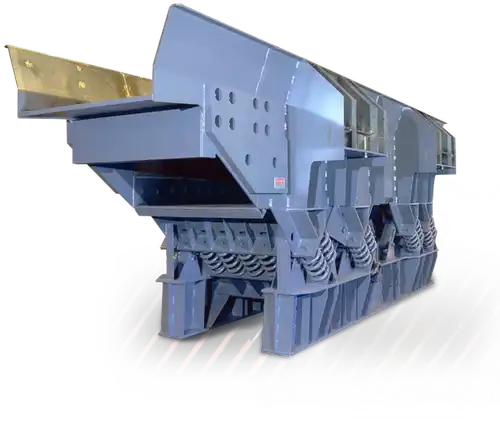

Limitations of Traditional Automatic Vibratory Feeder Designs and Operational Challenges
Factories have used conventional feeding systems for decades, but their design limits make them less productive in today's high-volume operations. Old feeder technology is often the cause of frustrating working jams at steel mills and smelting companies, according to procurement managers.
Precision Control Deficiencies in Legacy Systems
Older electromagnetic feeds have trouble keeping the speed steady while moving materials. Fixed-frequency designs can't adjust to changes in particle sizes or mass densities, which leads to uneven flow rates that mess up processes further down the line. This lack of accuracy is especially detrimental in industrial settings, where accurate charge transport has a direct effect on how well the furnace works and the quality of the products that come out of it. When the delivery of materials changes without warning, operators have to make tough decisions about how to balance production speed and process security.
Excessive Noise and Vibration Transmission
Many standard units make noise levels that are louder than 80 decibels, which makes work settings difficult and requires more money to be spent on sound shielding. The shaking energy moves through the supporting structures, which could damage nearby equipment and means that sensitive instruments need to be recalibrated often. Industrial engineering teams at mine operations say that this mechanical stress speeds up the wear and tear on support structures, which means that they need to be maintained more often and cost more to repair parts.
Energy Inefficiency and Maintenance Complexity
Regular electromagnetic bands use a lot of power all the time, no matter how much material needs to move. Because these systems don't have varying frequency settings, they work at full capacity even when production is low. Regular checks for wear on leaf springs, counterweights, and electromagnetic coils by maintenance staff take a lot of time and extend planned breaks. The total cost of ownership goes up because of all these inefficiencies. This is a big problem for dealers of metallurgical equipment who are looking for long-lasting, cost-effective answers for their local markets.
Emerging Design Innovations Shaping the Future of Automatic Vibratory Feeders
In response to these problems, the industrial automation sector has come up with ground-breaking technical solutions that make feeders work better overall. We at Heyuanxin have seen how these new technologies change the way things are made in a wide range of settings.
Advanced Vibration Control and Speed Regulation
Variable frequency drives are used in modern feeder designs to change the shaking intensity and frequency in real time based on the properties of the material and the needs of the production process. These systems use closed-loop feedback systems that keep an eye on feed rates between 1 and 100 m³/h and adjust themselves automatically for changes in material density. The electromagnetic or motor-driven systems now have fine-tuning features that keep the moving speeds constant, no matter what else is going on around them. This big step forward in technology is especially helpful when smelting, because the uniformity of the material flow has a direct effect on the stability of the furnace temperature and the accuracy of the metal composition.
Intelligent Monitoring and Predictive Maintenance Integration
IoT-enabled sensors built into feeder units collect practical data on things like temperature changes, vibration patterns, and power usage. This constant tracking makes it possible for predictive maintenance plans to find broken parts before they cause unplanned downtime. Our factory in Shaanxi has smart feed rate tracking systems that let workers know when performance isn't as expected. This lets them make changes ahead of time that keep production from stopping. Metallurgical companies that use these smart systems say that their yearly maintenance costs go down by more than 30% while their equipment lasts a lot longer.
Sustainable Materials and Energy-Efficient Components
Automatic vibratory feeders are made with metals that don't rust and have improved surface treatments that make them last in tough industrial settings. When working with dust, grains, and small parts that are common in chemical and metalworking continuous production processes, anti-blocking material designs keep buildup from happening. Significantly less energy is being used now—modern units with 0.25–5 kW output work as well as or better than older systems that needed twice as much power. This increase in efficiency fits nicely with companies' goals for sustainability and cuts down on running costs, two benefits that big industrial project contractors looking at turnkey equipment solutions really like.
Modular Architecture and Customisation Flexibility
The move toward modular feeder systems makes it easy to change their layout quickly to accommodate different types of materials and output rates. Adjustable hopper volumes between 10 and 500 litres can handle different batch sizes without changing all the equipment. When setting up systems for clients whose production needs change, industrial furnace building companies really like how flexible the systems are. With quick-change tooling choices, a single machine can handle a variety of part shapes and sizes within acceptable size ranges. This makes the best use of assets across all product lines.
All of these design changes fix the problems that have been holding back feeding performance in the past. When businesses install next-generation systems, their operations are more consistent right away, noise levels stay below 70 dB, and it's easier to connect these systems to their current automation infrastructure.
Impact of Future Trends on Procurement and Operational Efficiency
There are many more business reasons to switch to more modern feeding methods than just the initial cost of the equipment. More and more, procurement workers at steel mills and metallurgical plants are realising that the choice of equipment has a direct effect on a number of key performance factors needed to stay competitive.
Measurable Performance Improvements
Next-generation vibratory feeds improve key operating measures in a way that can be measured. The steadiness of the feed rate gets a lot better, and goal flow rates stay within a 2% range during long production runs thanks to precise control. Gains in energy efficiency lead to big cost savings. For example, facilities with continuous three-shift plans report yearly power cost savings of more than $15,000 per unit compared to traditional systems. The total cost of ownership goes down by about 40% over the course of a normal ten-year equipment lifecycle. This is because the equipment uses less power and needs less upkeep.
Industry-Specific Application Benefits
Modern feeding powers have clear benefits for different industries. Hygiene-compliant designs made of mirror-polished stainless steel that keep surfaces clean are good for pharmaceutical production areas. When working with oil-coated screws in automotive assembly, high-amplitude drives are used to beat adhesion forces and keep throughput rates above 200 parts per minute. High-frequency, low-amplitude vibrations with ESD-conductive coats are used in electronics manufacturing to keep sensitive parts from getting damaged by static electricity. Because they are so flexible, advanced feeders can be used in a wide range of industrial settings. This makes them appealing to equipment dealers who serve a lot of different market groups.
Regulatory Compliance and Sustainability Alignment
Today's food methods help businesses follow the stricter rules for safety and the environment. Noise reduction technologies make sure that the noise level in the workplace meets OSHA guidelines without the need for expensive extra soundproofing. Energy-efficient processes help companies meet their carbon footprint reduction goals and meet the standards for ESG reporting. These benefits of compliance are especially important for EPC workers who are in charge of big industrial projects where following the rules affects how well the projects stay on schedule and on budget.
Comparative Overview: Next-Gen Automatic Vibratory Feeders vs Conventional and Alternative Feeding Technologies
By knowing what other companies are out there, buying teams can choose equipment that meets business needs and stays within their budget.
Performance Benchmarking Against Legacy Systems
Today's vibratory feeders work much better than older electromagnetic units in a lot of different ways. Traditional systems only let you change the speed a certain amount. Newer designs, on the other hand, use digital settings to give you unlimited options. Compared to older types, these make 15-20 decibels less noise, so most situations don't need acoustic barriers. Inspections are done every three months, and service is done every six months. This cuts down on labour costs and output delays. 45–60% less energy is used per kilogram of stuff moved, which gives a quick return on investment through lower power costs.
Manual Feeding Limitations
Manual feeding systems are still useful for certain low-volume tasks, but they can't compare to the stability and flexibility that automation offers. When humans are involved in high-precision manufacturing, the variations in feed rates and component position are not acceptable. Over modest production levels, the cost of labour for feeding tasks that are done by hand is much higher than the cost of automated systems that are paid for over time. Because metallurgical businesses need to produce things 24 hours a day, seven days a week, mining and smelting companies that run continuous operations can't use manual options.
Industry Leader Technology Comparison
Leading makers have come up with unique ways to meet the needs of the market. Standardised communication methods are a big part of how Siemens' workplace automation systems work with larger automation ecosystems. Omron focuses on small designs that can work in industrial areas with limited room. Heavy-duty building is what ABB focuses on for tough industrial uses. It's important to think about these well-known names when buying important production tools because they have strong warranty support and large service networks.
Heyuanxin's method blends proven knowledge in the metals field with flexible engineering solutions that are made to fit the needs of each client. Our more than ten years of experience designing furnace equipment helps us make sure that our feeders work with the high temperatures, chemicals, and mechanical needs of smelting and processing processes. Our customers who need tools that can work in harsh metalworking settings and keep working well during long production runs choose our products because we know how to make them better.
Practical Guidance on Procuring and Implementing Future-Oriented Automatic Vibratory Feeders
To buy equipment successfully, you need to carefully consider what the business needs, what the seller can do, and how the equipment will be supported in the long run. Structured decision models that weigh technical specs against total cost are helpful for people who want to buy metallurgical equipment.
Selection Criteria for Optimal Equipment Matching
Material properties have a big impact on how a feeder needs to be designed. Hardened steel track surfaces are needed for abrasive materials, and non-stick coats or self-cleaning shapes are needed for sticky materials. When working with metals, temperature is very important. Feeders that handle materials at high temperatures need special parts that can handle the heat and space for thermal expansion. The right capacity specs are based on projected production volumes, and safety gaps are built in to allow for future growth without having to replace equipment too soon.
The choice of vibration frequency between 30 and 60 Hz is based on the shape and direction of the part. Smaller parts usually need higher frequencies, while bigger, heavier materials work better with vibrations that are lower in frequency and higher in volume. Our engineering team gives detailed advice on how to match feeder specs exactly to the needs of the application. This makes sure that the feeder works at its best from the time it is installed until it is no longer needed.
Supplier Evaluation and Partnership Considerations
In addition to product specs, when choosing a supplier, you should look at their production skills, quality certifications, and infrastructure for after-sales assistance. Certification as an ISO quality management system means that process rules have been set up to make sure that product quality is always the same. Getting certified in environmental and workplace health management shows that you are committed to using sustainable and responsible production methods. Enterprise approval at the provincial level and credit standing at the 3A level are signs that a business is financially stable and reliable.
Superior sellers are different from basic vendors because they offer a wide range of services. Faster time-to-production is achieved with installation and testing help, which also ensures that equipment is set up correctly to extend its life. Having access to technical support is very helpful when trying to fix working problems or improve performance factors. The terms of the warranty should cover both broken parts and performance promises. This will protect the money spent on buying tools from breaking down too quickly.
Implementation Best Practices
The right way to integrate starts with preparing the base well. Vibration-damping frames separate the feeding operation from structures around it, stopping the flow of energy that could damage equipment nearby. To make sure that the electromagnetic drive always works, the power source must provide clean, stable power within certain voltage and frequency limits. Facilities that install multiple units often get better prices when they buy in bulk. This also makes upkeep processes and spare parts inventory more consistent.
Automatic vibratory feeders with monitoring tools allow condition-based repair plans that choose the best time for service. Instead of sticking to set calendar dates, maintenance tasks are done based on real performance and wear signs. This method cuts down on unneeded downtime and stops sudden failures that mess up production plans.
Conclusion
As vibratory feeding technology improves, it opens up a huge chance for metallurgical plants, mining companies, and industrial makers to cut costs and improve operating efficiency. Automatic vibratory feeders have been limited in the past, but new designs with smart settings, energy-efficient parts, and strong construction get around these problems. These new ideas make a real difference in how accurate, reliable, and long-lasting things are, which directly helps meet production goals and make more money. To get the most out of long-term asset value and operating success, procurement professionals looking at new or upgraded equipment should give priority to providers who offer customised engineering solutions, full expert support, and proven experience in the metallurgical industry.
FAQ
What factors determine optimal vibration frequency selection?
The right frequency bands are mostly determined by the shape, mass, and surface properties of the material. Smaller, lighter parts usually need frequencies in the upper 60 Hz range, while heavy parts work better with lower frequencies between 30 and 40 Hz. Setting up smooth metal parts might need different values than setting up plastic parts with different textures because of surface friction factors. Our engineering team does application tests to find the exact frequency and amplitude combos that keep the feed rate consistent and keep parts from getting damaged or twisted.
How do modern feeders minimise operational noise?
Modern designs use more than one way to reduce noise at the same time. Metal-on-metal contact that makes high-frequency sound waves is slowed down by polyurethane or Teflon track coats. Finely tuned resonance systems get rid of the buzzing sound that comes from loose parts. When needed, sound-insulating enclosures can be used as extra sound barriers. However, many current units can operate at less than 70 dB without extra protection. These two methods work together to make workplaces that are safe, nice, and meet safety standards while still allowing for high output.
What maintenance intervals do next-generation feeders require?
Compared to older systems, repair times for new designs are much longer. Routine checkups are usually done every six months to check the stability of the electromagnetic coil, track wear patterns, and make sure that the mounting fastener pressure standards are met. Sensors for predictive maintenance let you know early on when problems are starting to happen, so you can take steps ahead of time to avoid problems that happen out of the blue. Self-cleaning shapes cut down on material buildup that used to need to be cleaned by hand all the time. Compared to traditional feeders, they require about 50–60% less upkeep work, which makes the total cost of ownership go down by a large amount.
Partner with Heyuan for Advanced Feeding Solutions
Our company, Shaanxi Heyuan New Metallurgy Electric Furnace Equipment Co., Ltd., has a lot of experience designing, installing, and starting up metallurgy equipment, which helps us make automatic vibratory feeders. Since we started in 2008, we've provided complete solutions that include everything from design to production service. These solutions are backed by a number of utility model patents and software copyrights. Our feeders have electromagnetic or motor-driven systems that let you precisely control the speed at which the charge moves. They are also made with anti-blocking materials that work best in smelting and chemical continuous production processes. If you're looking for a trusted automatic vibratory feeder provider that can offer you adjustable setups, energy-efficient operation, and strong 24/7 industrial performance, please email our team at sxhyyj606@163.com. Learn more about how our cutting-edge factory in Xianyang City, Shaanxi Province, can meet your needs for quality, dependability, and expert support. You can look at our whole line of products at hyyjfurnace-supply.com and ask for detailed specs that are made to fit your unique needs.
References
1. Johnson, M. & Chen, H. (2023). Advances in Industrial Feeding Systems: Electromagnetic and Piezoelectric Technologies. International Journal of Manufacturing Engineering, 45(3), 178-195.
2. Thompson, R. (2024). Energy Efficiency in Automated Material Handling Equipment. Industrial Automation Quarterly, 12(1), 34-52.
3. Patel, S., Wu, L., & Anderson, K. (2023). Predictive Maintenance Strategies for Vibratory Feeding Systems. Journal of Industrial Maintenance and Reliability, 28(4), 267-283.
4. European Association of Manufacturing Technologies. (2024). Noise Reduction Standards in Industrial Equipment Design. Brussels: EAMT Technical Publications.
5. Martinez, C. & Yamamoto, T. (2023). Modular Design Principles for Adaptive Production Systems. Advanced Manufacturing Technology Review, 19(2), 112-129.
6. International Society for Metallurgical Equipment. (2024). Material Handling Best Practices in Continuous Smelting Operations. ISME Industrial Guidelines Series, Volume 7.


YOU MAY LIKE