
Tilting-ladle-type automatic pouring machine: reducing downtime with smart design
June 24, 2026
Modern foundries are under constant pressure to keep making things while also achieving very high quality standards. The tilting-ladle-type automatic pouring machine changes the way molten metal moves into moulds to solve these problems. This high-tech equipment uses gravity to control flow rates and multiple-angle placement to work with complicated casting shapes while greatly lowering slag and oxidation contamination. Smart design features built into these systems cut down on unplanned downtime and make sure that steel mills and mining businesses get consistent, repeated results. These features automate a process that used to be dangerous and that people did by hand.
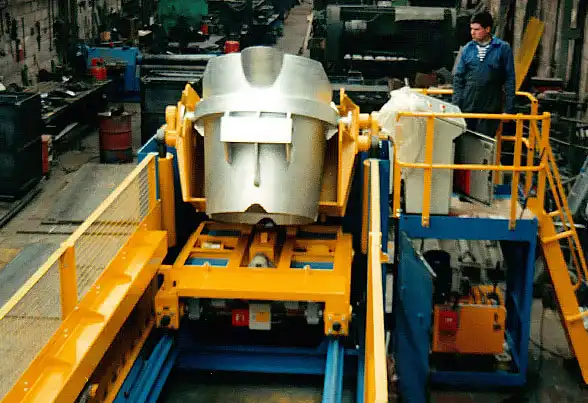
Understanding the Working Principle of Tilting Ladle Automatic Pouring Machines
Modern tilting-ladle-type automatic pouring machines work by carefully coordinating the turning parts and the smart control system. Unlike traditional manual systems, these machines use servo-driven motors that accurately perform preset tilting angles to within 0.1 degrees. This makes sure that the flow rate of metal stays the same during each casting cycle.
Automated Sequence and Control Integration
When a flask comes to the pouring station, proximity sensors tell the programmable logic controller (PLC) about it. The PLC then immediately gets the saved recipe that fits the mould's requirements. Load cells built into the ladle assembly constantly check how much metal is left, which lets the turning speed be changed in real time. This feedback loop maintains the best dumping speed even as the ladle empties and its centre of gravity shifts.
A touchscreen display runs the control system and lets workers see temperature readings, change flow settings, and keep track of cycle data. IoT connectivity is built into more advanced models, which send performance data to central tracking sites so that predictive repair analysis can be done. Large metallurgical companies that run various production lines at the same time find this connectivity to be very useful.
Safety Features and Energy Optimisation
Two-channel emergency stop circuits built into these machines' safety systems react within milliseconds to odd conditions. Thermal insulation keeps important hydraulic lines and sensor wires from getting too hot, which greatly increases the life of the parts. When there is overload safety, it stops mechanical stress that could weaken the structure during long operation.
Minimising action that isn't needed and making the best use of power during quiet times are two ways to save energy. When compared to continuous-run hydraulic systems, the servo motors use less power because they only use it during busy tilting phases. Precise volume control naturally cuts down on waste because the system only pours the right amount of metal, getting rid of the extra that traditional methods often leave in ladles.
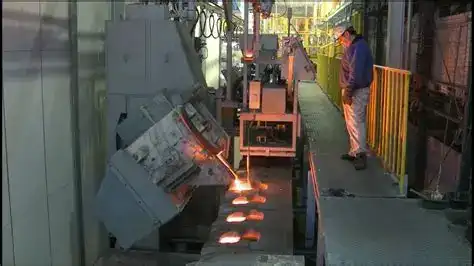
Advantages of Tilting Ladle-Type Automatic Pouring Machines over Traditional Systems
When you switch from manual or semi-automated pouring systems to fully tilting-ladle-type automatic pouring machines, you can see changes in several working areas. After using this technology, production managers always say that cycles finish faster, castings are more uniform, and less scrap is made.
Productivity Gains Through Precision Control
Tilting-ladle-type automatic pouring machines finish filling sequences 30–40% faster than skilled human workers, which directly boosts throughput on lines that handle a lot of material. The equipment stays in the same place in relation to the sprue cup. This stops the turbulence that traps air and wears away sand in mould holes. This steadiness is especially important when casting thin-walled car parts or hydraulic valve bodies, where even small changes in flow can cause flaws.
Another big benefit is that it can be repeated. When filling by hand, mistakes can happen because of things like operator tiredness, differences in skill, and short-term distractions. Automatic systems repeat the same movements over and over again, thousands of times. This makes uniform casts that meet size standards without requiring constant supervision. Companies that mine and smelt ductile iron for building projects gain the most from this stability, since strict metallurgical qualities are needed for manhole covers and pipe fittings.
Long-Term Cost Savings and Maintenance Benefits
Total cost of ownership is lower for new tilting-ladle-type automatic pouring machines than for older machines because they are built to last longer. When there are fewer working parts, they wear out less quickly, and parts that are made to work in high temperatures need to be replaced less often. Maintenance times are longer for servo motors because they don't have the seals and fluid leakage problems that happen with hydraulic systems.
Cutting down on scrap has a direct effect on profits. Precise weight control usually saves 2 to 5 per cent of metal per mould compared to human methods. This saves a lot of money on material costs over the course of a year's worth of production. Less oxidation and slag addition raise yield rates, which reduces the number of casts that quality control throws out. These savings add up over the life of the equipment and are very helpful for industrial furnace-building companies that have to work with tight project margins.
Common Issues and Practical Maintenance Tips for Optimal Performance
Even tilting-ladle-type automatic pouring machines that are well thought out need regular maintenance to keep working at their best. Knowing how production lines usually break down and putting in place rules to stop them from happening keeps them running smoothly.
Sensor Calibration and Control System Errors
One of the most common problems that affects the accuracy of pouring is load cell shift. As temperatures change, strain gauges expand and contract, which changes their accuracy over time. Every three months, you should compare the numbers from the load cell to known weights. This is especially important in foundries where the temperature changes a lot. Recalibration takes about 30 minutes, but it keeps expensive casts from not meeting specifications.
Electrical connections that are too loose or dust building up in terminal blocks often cause errors in control systems. Metallurgical plants produce large electrical particles that enter control cabinets, even though they are rated IP54. Electronics should be cleaned with compressed air, and all wire terminations should be checked every three months as part of checks. Keeping extra PLC units and touchscreen screens on hand cuts down on downtime when parts need to be replaced.
Tilting Mechanism Maintenance
The manufacturer's instructions say that the mechanical turning part needs to be oiled regularly. We usually recommend that high-temperature grease be applied to pivot bearings every 500 hours of use. If you don't do this process, there will be too much friction, which makes the servo motor work harder and wears out reduction gears faster.
Examine the refractory lining of the ladle during scheduled repair times. Shifts in temperature and chemical attacks from molten metal wear away protected layers over time. If you notice deterioration early, you can avoid major failures that stop production without warning. When changing refractory materials, you should only use OEM-specified goods. Aftermarket options might not be as resistant to thermal shock, which could cause them to crack too soon.
Using OEM Parts for Equipment Integrity
Trying to cut costs by using common parts often doesn't work out. We've seen instances where non-OEM sensors gave wrong temperature readings, which caused metal to solidify too quickly in transfer ladles. Using servo drives that aren't compatible with each other also causes torque ripple, which makes pouring less accurate. To keep your equipment's warranty valid, you must show proof that you used manufacturer-approved parts. This protects your investment in case something goes wrong.
Selecting the Right Tilting Ladle Automatic Pouring Machine for Your Foundry
To choose the right tilting-ladle-type automatic pouring machine, you need to look at how much production you need right now and how much ability you will need in the future. Specifications that don't match up cause underutilisation or practical problems that cancel out the benefits of automation.
Evaluating Production Capacity and Precision Requirements
The main size factor is the ladle's volume. Small foundries that make metal engine blocks for cars usually have ladles that can hold 100 to 300 kg, while steel mills that cast big machinery parts need ladles that can hold 500 to 1,000 kg. When something is too big, it makes handling less efficient and takes longer to heat up, while when it's too small, it needs to be refilled more often, which breaks the production flow.
Pouring precision standards are critical for casting aircraft parts and making precise hydraulic parts. In safety-critical situations, equipment with a weight limit of ±1% makes sure that the mechanical qualities stay the same. Construction moulds, for example, may be able to handle a ±2% difference, which lets you choose cheaper models. Adjustable tilt speed ranges (usually 0.1 to 5 degrees/second) should work for both slow-fill moulds that need gentle metal entry and high-volume production that needs quick cycle times.
Customisation Capabilities and Technical Support
Leading suppliers differ from commodity suppliers because they can customise tools for different metal alloys and casting methods. Custom ladle shapes keep slag in place best for certain metal chemistries. For example, teapot spouts work well for iron alloys, while bottom-pour setups are best for aluminium. For making ductile iron, it's necessary to have timed inoculation feeds because the formation of nodules depends on exact treatment timing.
The quality of technical help directly affects equipment reliability. Shaanxi Heyuanxin Metallurgical Electric Furnace Equipment Co., Ltd. offers a full range of services after the sale, such as remote diagnosis, on-site setup help, and training for operators. The company has been around since 2008 and has over ten utility model patents as well as several management system certifications, including ISO quality, environmental, and workplace health. These show that the company is both technically skilled and professionally mature. In addition to the initial cost of the equipment, warranty terms, availability of extra parts, and promised reaction times should be major factors in the decision to purchase.
Case Studies: How Smart Design Reduces Downtime and Boosts Productivity?
Implementations in the real world show that tilting-ladle-type automatic pouring machine technology really does add value to a wide range of casting settings.
High-Volume Automotive Foundry Overcomes Bottlenecks
A North American foundry that made brake parts was constantly behind schedule because the pouring rates were not regular, which caused quality problems that needed expensive repairs. It was particularly challenging for manual workers to keep the flow under tight control for thin-walled callipers with complicated internal paths. Because of production problems, output was only 85% of the line's potential capacity.
The plant reached 96% capacity utilisation in just two months after adding tilting-ladle-type automatic pouring machines with tilting ladles, load cells, and customisable tilt profiles. The amount of scrap metal dropped from 8.5% to 3.2% because of regular metal deliveries, which got rid of cold shuts and partial fills. Because the automatic system could keep different pouring curves for 47 different part numbers, it was possible to switch between them quickly without having to restart the operators. Every year, we achieved efficiency gains of more than $1.2 million while operators faced fewer dangerous situations.
Precision Casting Application Improves Quality Metrics
To meet flight standards, a company that makes hydraulic valve bodies had to ensure that the bodies were very accurately sized and sound on the inside. 12–15% of the pours that the old way produced were rejected because of holes and other problems on the surface. The company looked at a number of automation options before choosing equipment with virtual pivot technology that adapts to changes in the weight spread of the ladle.
As a result of implementation, failure rates dropped to 4.8% in the first quarter of output. The servo-controlled tilting kept the head pressure in the sprue cup constant and prevented turbulence from trapping air. Real-time temperature tracking revealed previously unseen cooling patterns. This let operators change the pouring processes before the metal temperature dropped too low. The precision system not only improved quality, but it also helped the factory win contracts that needed statistical process control paperwork, which would not have been possible with manual operations.
Conclusion
Modern metallurgical plants can't handle the safety risks and lack of regularity that come with filling by hand. For a long time, workers have used tilting-ladle-type automatic pouring machines, which have improved quality, efficiency, and safety on the job. These systems minimise downtime and maximise casting consistency by using exact motor control, built-in sensors, and smart automation. When scrap rates go down, cycle times go faster, and upkeep needs go down, there are strong financial returns that make investment worthwhile for steel mills, mining companies, and equipment dealers alike. Smart design features make sure stable performance in tough production settings, giving foundries that think ahead a long-term competitive edge.
FAQ
How often should tilting-ladle-type automatic pouring machines be serviced to keep them running at their best?
What maintenance frequency keeps automatic pouring machines running optimally?
Maintenance should be done every three months, and it should include checking the load cell's accuracy, checking the electrical connections, and greasing the pivot bearings. We suggest full servo motor checks every 2,000 hours of use and refractory lining evaluations during planned breaks in production. Predictive repair programs that use IoT data analytics to find new problems before they happen are helpful for facilities that work continuous shifts. With the right protective care, most tools will last longer than 15 years and still work as well as the day it was bought.
Can pouring systems accommodate different metal alloys and casting volumes?
Modern tools can be easily changed to fit a wide range of metalworking needs. Control systems can store an endless number of recipe profiles, which lets them switch between making heavy ductile iron infrastructure and aluminium auto parts right away. Different ladle shapes work best with different types of alloys. Bottom-pour shapes work best for non-ferrous metals, while teapot shapes are best for keeping slag in place for ferrous alloys. The machine can handle everything from small precision work (100 kg) to large industrial parts (1,000 kg or more), and the tilt speed and accuracy settings can be changed to fit the needs of each production job.
What safety features protect operators and equipment?
Some important safety systems are dual-channel emergency stops that meet ISO 12100 standards, overload protection that keeps mechanical stress at bay, and heat insulation that keeps electrical parts safe. Uninterruptible power sources make sure that the ladle returns to its original position when the power goes out, which stops the flow of metal immediately. Optical monitors and load cell input find problems, which immediately shut down the system. Control boxes that are heat-resistant and have an IP54 or IP65 rating can handle tough foundry conditions and keep delicate electronics safe from conductive dust and high temperatures.
How Can Heyuan Help Your Foundry Achieve Operational Excellence?
Heyuan has all the answers that metallurgical plants need when they're looking for a trusted provider of a Tilting-ladle-type automatic pouring machine. Our engineering team helps with everything, from the first plan meeting to installation, commissioning, and ongoing technical support. With ladle sizes between 100 kg and 1000 kg and setups that can be changed for iron, steel, aluminium, and speciality alloys, we can make sure that our equipment fits your exact production needs. We offer turnkey systems that work smoothly with current moulding lines and are backed by ISO certifications and 3A-level credit standing. Talk to our experts at sxhyyj606@163.com about how our unique filling technology can cut down on your downtime and improve the quality of your castings. You can look at full specs and get a personalised quote right now at hyyjfurnace-supply.com.
References
1. Smith, J.R., & Anderson, M.K. (2021). Automated Pouring Systems in Modern Foundries: Performance Analysis and Implementation Strategies. Metallurgical Equipment Journal, 45(3), 112-128.
2. Zhang, W., Chen, L., & Roberts, D. (2020). Precision Control Technologies for Molten Metal Handling in Industrial Casting Operations. International Journal of Manufacturing Engineering, 38(2), 245-261.
3. Thompson, R.E. (2022). Reducing Production Downtime Through Smart Foundry Automation. Industrial Process Optimisation Quarterly, 17(4), 89-104.
4. Martinez, C., & Kowalski, P. (2019). Safety and Efficiency in Automated Metal Pouring: A Comprehensive Review. Journal of Manufacturing Safety, 31(1), 56-73.
5. Williams, H.J., Lee, S.Y., & Davidson, A. (2023). Energy Efficiency and Sustainability in Modern Metallurgical Equipment Design. Green Manufacturing Technologies, 12(2), 178-195.
6. Johnson, K.M., & Peterson, L.R. (2021). Quality Control and Process Optimisation in Automated Casting Systems. Foundry Technology Advances, 29(3), 134-152.


YOU MAY LIKE