
Copper Contact Shoes: Future Trends in Electrical Contact Technology
June 30, 2026
Powering America's steel mills, metro systems, and other industries is always a conversation that ends up with parts that work quietly but are critical behind the scenes. Copper contact shoes are an important part of electrical infrastructure because they make it easier for high-voltage current to flow through tough surroundings. Four to five times better wear resistance than regular goods, these precision-engineered gadgets are often made from a special copper alloy that includes graphite. As electrical contact technology changes, procurement managers, plant engineers, and EPC contractors who want to make sure their processes will be effective in the future need to know where these parts are going.
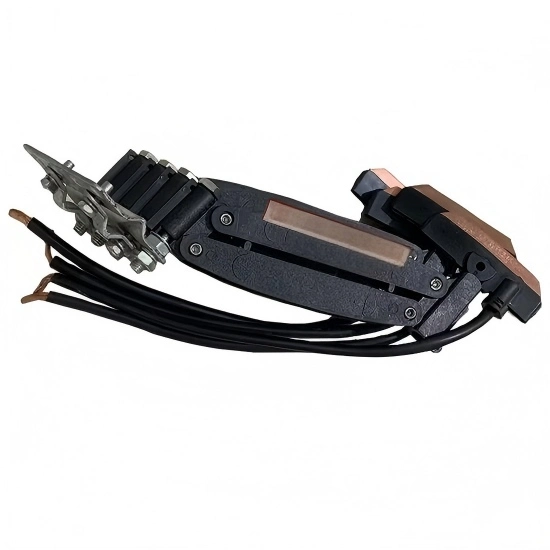
Understanding Copper Contact Shoes: Materials, Function, and Applications
What Makes These Components Essential?
At their core, these electrical contact devices connect wires that stay in one place to equipment that moves. Unlike simple connections, they have to keep the flow of electricity steady while dealing with heat, friction, and mechanical stress. The basic idea behind it is to create a path for current with low resistance while also preventing material degradation as much as possible by using the right metal mixtures.
Material Science Behind Superior Performance
High-purity copper contact shoes metals used in modern designs have conductivities of ≥58 MS/m, which means that they lose very little power during transfer. We at Shaanxi Heyuan New Metallurgical Electric Furnace Equipment Co., Ltd. have come up with formulas that can work in temperatures up to 300°C and still have a tensile strength above 250 MPa. The graphite part of the metal matrix acts like a self-lubricant, stopping friction-induced wear and extending the service life to one to two years under normal use. When purchasing parts for ongoing industrial production, procurement professionals have to choose components that are both electrically efficient and mechanically durable. This mixture solves both of those problems.
Where Do These Components Drive Industrial Operations?
The range of applications includes many high-demand areas. In mining companies, they make it possible for power to be reliably sent through electric arc furnaces and ladle furnace systems, which are exposed to harsh conditions like dust and rapid temperature changes. Railway electrification projects need these parts for pantograph systems and third-rail current collection. When the power supply is interrupted, it directly affects operating safety. They are used in sliding contact assemblies in industrial robots and automated manufacturing lines. In the green energy industry, they are built into slip ring systems for wind turbines. Each application has different needs when it comes to current capacity, resistance to environmental factors, and repair intervals, all of which affect the choice of material and design specs.
Current Challenges and Limitations of Traditional Copper Contact Shoes
Durability Concerns in Harsh Environments
When heavy industrial settings use traditional designs, they run into big problems. When contact surfaces aren't lined up right or don't have enough spring pressure, they wear out faster. This causes uneven material loss and higher contact resistance. Environmental factors make these problems worse. For example, smelting operations with corrosive atmospheres, outdoor train uses with moisture entry, and mine facilities with particulate pollution all speed up the breakdown process. As a result, there is more unplanned downtime and repair, which throws off production schedules and raises operations costs.
Material Trade-offs and Performance Limitations
When looking at different electrical contact materials, each one has its pros and cons. Silver is a better conductor than gold, but it costs more, which changes the economy of the project. Carbon-based alternatives are better at stopping arcs and reducing wear on conductor rails, but they can't hold as much power. Even though aluminium is cheaper, it has problems with rusting and mechanical power when used in high-stress situations. Pure copper is the best conductor, but it needs to be alloyed to get the right strength for wear protection. When procurement teams understand these trade-offs, they can choose materials that are best for each application, whether they're focusing on starting cost, working lifespan, or total cost of ownership over the duration of the equipment.
Future Trends Shaping Copper Contact Shoe Technology
Advanced Alloy Development and Manufacturing Innovation
The next generation of electrical contact technology uses copper-chromium-zirconium (CuCrZr) alloys. These metals stay hard at temperatures above 200°C and still have excellent electrical qualities. With today's advanced production methods, tolerances can be as small as a few micrometres. This makes sure that the contact shape stays the same, which reduces arcing and hot spots. New developments in surface engineering include nano-structured layers that make surfaces more conductive and resistant to rust without making the materials more expensive. When choosing parts for mission-critical power systems, steel mill owners and mining companies worry about how reliable the systems will be. These new ideas directly address those worries.
Integration with Smart Monitoring Systems
Condition tracking made possible by the Internet of Things (IoT) is a big change in how industrial sites handle their electrical systems. Sensors built into contact parts now keep an eye on things like contact temperature, current density, and shaking patterns in real time. Cloud-based analytics tools receive this information, figure out how parts will wear, and schedule repairs in the best way. Through data-driven replacement strategies, the technology cuts down on unexpected outages and increases the time between service gaps for parts. As industry standards evolve to encompass these features, procurement requirements increasingly demand suppliers capable of providing hardware and assisting with digital integration.
Sustainability and Environmental Compliance
Environmental laws are having a bigger effect on choosing materials and making things. Getting copper contact shoes from recycled sources and using closed-loop production methods lower the carbon footprint of making parts. Lead-free and low-VOC surface solutions meet safety standards in the workplace while keeping the performance qualities. Designs that consume less energy reduce resistance losses, which directly leads to lower operating costs and better power system efficiency. These things fit with the sustainability goals of big EPC companies and forward-thinking plant owners who know that following environmental rules is both the law and a way to get ahead in the market.

Choosing the Right Copper Contact Shoes — A Decision Support Guide
Critical Evaluation Criteria for Procurement
To choose the right parts, you need to do a systematic review across many aspects. To keep voltage drops from affecting equipment performance, electrical conductivity specs must meet or go beyond what the system needs. Hardness levels between 70 and 110 HB are important for mechanical durability because they combine wear resistance with brittleness. In continuous-duty situations, where poor heat dissipation speeds up wear and tear, thermal management skills become critical. To get the real lifetime costs, cost-effectiveness analysis shouldn't just look at the original purchase price. It should also consider the expected service life and upkeep needs.
When considering providers, checking their quality licenses helps ensure their work is consistent. Certification in the ISO quality management system shows that the process is being controlled, and certifications in workplace health and the environment show that the company is committed to using responsible production methods. Our plant has been recognised at the regional level and is a 3A credit business, which shows that it has been doing metallurgical research and development for over 11 years. These badges are important because they show that quality isn't just tested once but is managed in a planned way.
Application-Specific Recommendations
For industrial voltage systems above 600V, parts must be able to withstand arcs and stay stable at high temperatures. Even though they cost more, high-purity copper metals with silver added work well in these tough situations because they need less upkeep. Standard copper-graphite formulations that find the best cost-performance mix are excellent for medium-voltage uses between 200V and 600V. Our engineering team works with clients to create custom solutions that fit in with their current infrastructure and meet specific practical requirements. Customisation choices can be used to meet specific geometric needs or weather exposures.
Ensuring Long-Term Performance: Maintenance and After-Sales Considerations
Proactive Maintenance Protocols
The frequency of routine inspections should match the level of operation and the factors in the surroundings. Early signs of wear can be seen visually, such as darkening from burning, surface pitting from arcing, and uneven touch patterns that point to a problem with alignment. Dimensional measurement checks the thickness of the leftover material against the manufacturer's replacement standards. Usually, our parts need to be replaced when they are worn down to 40–50% of their original size. Cleaning procedures get rid of buildups of dirt and rust that make contact resistance higher. Lubricating the mechanical parts that make up the contact ensures that it stays at the same level throughout the service time.
Supplier Partnership and Support Infrastructure
Effective after-sales help is what sets capable sellers apart from transactional ones. In addition to replacing broken parts, warranties should cover programme help and troubleshooting. Lead time promises become crucial when production plans depend on the timely arrival of parts. Our global transportation skills ensure prompt delivery to keep operations running while minimising the costs of keeping supplies on hand. Volume prices and the ability to make flexible bulk orders help distributors and OEM clients who are handling multiple projects. Technical paperwork in more than one language makes installation and upkeep easier for activities that take place across borders. This cuts down on mistakes and raises safety standards.
Strategic relationships with suppliers help operations run more smoothly by allowing for standardisation and working together to solve problems. When problems happen, suppliers who only use specification sheets take longer to find answers than those who have responsive expert teams that know both the product's powers and how it will be used. This way of working together is especially helpful for EPC workers who are in charge of complicated turnkey projects in which parts need to be integrated from many different systems and fields.
Conclusion
The progress made in electrical contact technology is changing how factories send power in a way that is reliable and efficient. Modern copper contact shoes that are made with advanced copper metals, are precisely crafted, and can be monitored wirelessly are much better than older styles. Total lifetime value, not just original cost, is becoming more important in buying strategies. This makes it clear how important it is for suppliers to have the right skills, quality certifications, and a wide range of support services. The future goes to solutions that balance technical success with caring for the environment, backed by companies that are dedicated to innovation and working with customers throughout the lifecycle of their equipment.
FAQ
How do copper and silver contact shoes compare in cost and performance?
Silver contacts have a conductivity that is about 5–8 per cent better than copper contacts. This means that they have slightly lower resistive losses in ultra-high-current uses. The cost of materials, on the other hand, is usually 40–60% higher. In high-frequency and accurate electronics, the performance edge is the most important thing. High-purity copper alloys are the most cost-effective way to carry electricity in industrial power systems that work below 2000A. This makes them the best choice for most metallurgical and transit uses.
What maintenance practices extend component lifespan?
Inspections every three to six months can find problems before they break down. Keeping touch areas clean gets rid of oxidation and contamination that make them more resistant. Checking the spring pressure keeps the contact force steady, which stops the arcing. Using thermal imaging to keep an eye on the working temperature finds hot spots that show distortion or too much wear. Compared to run-to-failure methods, these methods usually increase service life by 30–40%, which lowers the cost of parts and unplanned downtime.
How can I verify supplier quality and certifications?
Ask for copies of the ISO 9001 quality management certification and any other approvals that are needed for your business. Check to see if the company has any patents that show it can do research. For example, we have over ten application model patents for metallurgical tools. Ask for test results on the material that prove the required levels of conductivity, tensile strength, and hardness. Checking references with past customers who have used similar products can give you useful information that goes beyond reading the literature.
Partner with Shaanxi Heyuan for Superior Electrical Contact Solutions
Shaanxi Heyuan combines advanced manufacturing skills with knowledge of steel engineering to make parts that can be used in the toughest industrial settings. Our copper contact shoes, which are made from special graphite metal mixtures, are up to five times more resistant to wear than other options on the market. They also have a conductivity of at least 58 MS/m and can work at temperatures up to 300°C. We offer custom solutions made to fit your needs, from electric arc furnace systems to train electrification projects. We are a qualified supplier with strict quality control measures and more than ten years of research and development experience. We offer reasonable prices, a global transportation network, and full technical support to procurement experts looking for a trusted maker for large orders. Get in touch with our team at sxhyyj606@163.com to talk about your application needs and get full specs. You can look at our full line of products at hyyjfurnace-supply.com and learn how our new way of using electrical contact technology can improve the efficiency of your operations.
References
1. Chen, W., & Martinez, R. (2022). Advanced Copper Alloys for Electrical Applications: Metallurgy and Performance Characteristics. Journal of Materials Engineering and Performance, 31(4), 2847-2861.
2. Thompson, J. L. (2021). Electrical Contact Theory and Applications in Industrial Systems (3rd ed.). McGraw-Hill Professional Engineering.
3. International Copper Association. (2023). Copper in Electrical Engineering: Properties, Applications, and Future Trends. ICA Technical Report Series, No. 47.
4. Patel, S. K., & Zhao, Y. (2023). Wear Mechanisms and Lifetime Prediction of Current Collector Systems in Heavy Industry. Tribology International, 178, 108-124.
5. European Committee for Electrotechnical Standardisation. (2022). Railway Applications—Current Collection Systems—Technical Criteria for the Interaction Between Pantograph and Overhead Line (EN 50367:2022).
6. Rodriguez-Fernandez, M., & Kumar, A. (2023). Smart Monitoring Technologies for Electrical Infrastructure: IoT Integration and Predictive Maintenance. IEEE Industrial Electronics Magazine, 17(1), 23-35.


YOU MAY LIKE