
Calcium Silicon Furnace: improved insulating lining for less heat loss
June 29, 2026
When metallurgical companies have to deal with rising energy costs and strict environmental rules, keeping heat in becomes an important success indicator. A calcium-silicon furnace with better insulation-covering technology directly solves these problems by lowering heat loss while making alloys at high temperatures. Modern refractory materials, designed especially for calcium-silicon processes, cut energy use by up to 22% and make furnaces last longer. This improvement changes the economy of operations and lets steel mills and smelting companies make high-quality silicon-calcium alloy (Ca 28–31%, Si 55–65%) more efficiently and with smaller carbon footprints.
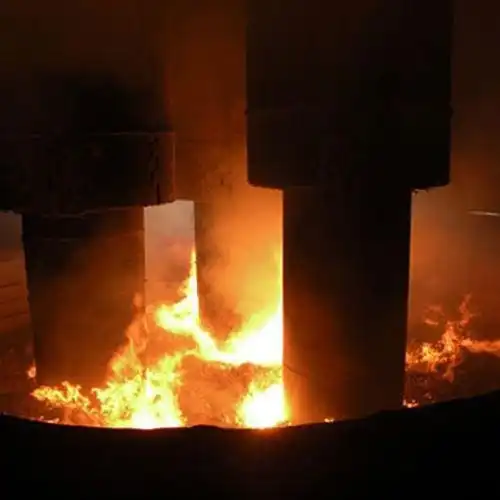
Understanding the Calcium Silicon Furnace and Its Insulating Lining
Core Function of Calcium Silicon Production Equipment
The main job of equipment used to make calcium silicon is to facilitate the carbothermic reduction of silica and lime. A silicon-calcium alloy is an important part of modern steelmaking because it removes oxygen and carbon. It is especially useful for high-grade bearing steel and gear steel. To make the reduction easier, the furnace works at very high temperatures, usually between 1,700°C and 2,000°C. This special buried arc furnace has to keep the temperature just right to prevent the electrode tips from silicifying and to handle the high levels of carbon monoxide gas released during calcium reduction processes. Our experience as a manufacturer at Shaanxi Heyuanxin Metallurgical Electric Furnace Equipment Co., Ltd. shows that regular refractory systems don't always do a remarkable job of keeping heat in under these tough conditions. Standard carbon block arrangements have limits on how well they conduct heat, which wastes energy and lowers the quality of the metal.
How do advanced insulating linings work?
Better lining systems use more than one thermal barrier layer, which is made up of high-alumina bricks and ceramic fibre modules with the best architecture. The inner working lining comes into direct touch with molten metal, so it needs to be very resistant to calcium's corrosive qualities and high-basicity slags. In the zones below this one, the insulation is made of materials that don't conduct heat well (below 0.5 W/m·K at normal temperatures). Microporous insulation panels in the upper shell stop heat from moving to the burner casing. This stratified method makes a temperature gradient that keeps more heat in the reaction zone. This directly improves the energy efficiency measure that procurement professionals monitor. Modern units use 95% less energy than older ones, which only use 78 to 82%.
Material Selection Criteria for Procurement Teams
For calcium-silicon uses, good insulating materials must have certain thermophysical qualities. Working linings should have more than 85% alumina to protect them from slag attack, and insulation layers should have a bulk density of less than 1.2 g/cm³ to keep heat mass to a minimum. When the cold crushing strength is above 50 MPa, the structure stays strong during the thermal cycle, which happens when the plant is shut down for regular maintenance. When heat is applied, procurement professionals should check the thermal expansion ratios of the layers next to each other. If they don't match, damaging thermal forces will happen. Certified sellers provide full test results on the materials they sell that show their refractoriness under load (RUL values above 1,650°C), linear shrinkage percentages, and chemical makeup, which is checked using X-ray fluorescence analysis.
Benefits of Improved Insulating Lining in Calcium Silicon Furnaces
Quantifiable Energy Savings and Cost Reduction
When making alloys, better heat protection directly leads to using less electricity. Data from our fixed base in the field shows that each tonne of finished silicon-calcium metal saves between 180 and 240 kWh of energy. At an average of $0.08 per kWh for industrial power in production areas of the United States, this saves $14 to $19 per tonne in direct costs. A furnace with a yearly capacity of 10,000 tonnes that meets our standard equipment specs saves between $160,000 and $200,000 a year on energy costs. These savings add up over the furnace's more than ten-year useful life, giving a big return on investment that financial leaders look for when they evaluate big-ticket items like furnaces. Less heat loss also keeps the power factor stable, which means that utility companies charge less for reactive power.
Extended Service Life and Maintenance Advantages
Lower temperature differences across refractory surfaces make thermal shock damage much less likely to happen during operation cycles. Because they flake and break down over time, traditional linings usually need to be replaced completely every 18 to 24 months. When we improve our insulation systems, they typically last 36 to 48 months before requiring significant refractory efforts. This increased durability cuts down on repair downtime by about 40%, allowing for ongoing production plans that maximise the most out of assets. Maintenance teams like it when inspection procedures are made easier. Thermal imaging scans quickly find localised wear patterns before they weaken the structure. Because modular insulation panels can be switched out without taking apart whole furnace parts, replacement processes require fewer skilled labour hours.
Environmental Compliance and Sustainability Metrics
Less greenhouse gas pollution from making electricity is directly linked to better energy economy. Depending on the make-up of the grid in your area, each megawatt-hour saved stops between 0.4 and 0.7 metric tonnes of CO₂ emissions. Metallurgical businesses that have to deal with carbon pricing or government emission caps can improve their compliance by installing better shielding. Our equipment has ISO 14001 environmental management system approval, which means that we use organised ways to keep our operations as low-impact on the environment as possible. Better heat retention also makes dust removal systems work less hard in terms of heat. Lower off-gas temperatures let baghouse filtering work at its best, keeping particulate emissions well below the 20 mg/Nm³ limit set by environmental authorities.
Comparing Calcium Silicon Furnace Insulating Linings with Other Furnace Types
Performance Benchmarks Across Metallurgical Equipment
Most ferrosilicon furnaces work at temperatures between 1,500°C and 1,700°C, which lets them use easier refractory configurations than calcium silicon needs. When calcium silicate is made, the higher working temperatures and corrosive slag chemistry make shielding very difficult. Standard ferrosilicon covering systems lose 15–18% of the energy they take in through shell radiation and transmission. Our improved calcium silicon configurations, on the other hand, only lose 8–11%. In steelmaking, electric arc furnaces have water-cooled panels that take away heat on purpose to protect structure parts. This way of thinking about design is very different from the way buried arc furnaces work, where keeping as much heat in the reaction zone as possible makes the process more efficient. Calcium silicon furnaces gain a lot from strong insulation methods that wouldn't work at all in EAF settings.
Capacity Considerations and Configuration Options
Small businesses that only make 3,000 to 5,000 tonnes a year may be able to use single-phase furnace setups with simple covering designs. Our research team has seen that three-phase units, which can be used for setups with a capacity of 10,000 tonnes or more, need more advanced insulation zoning to handle the bigger diameter and greater burden depth. The placement of the electrodes has a big effect on the shape of the lining. When electrodes are set up in a triangle, they form separate thermal zones that need custom insulator thickness mapping. For round stoves, the insulation needs to be the same all the way around, but for rectangular shapes, it needs to be different for the long and short sides based on the results of thermal modelling.

Best Practices for Operation, Maintenance, and Safety with Improved Insulating Linings
Temperature Management Protocols
The people who are running the heater should keep the power input within the limits set by the manufacturer to avoid overheating in certain areas, which can damage even the best shielding materials. Our control systems keep an eye on the shell temperature in real time at sixteen separate measurement points. If numbers go above 180°C, they let workers know, which is the point at which insulation starts to break down. Gradual heat-up processes are necessary for both the first time the machine is used and after a repair break. During the first 800°C of heating, temperature ramp rates shouldn't go over 50°C per hour. This lets moisture escape from refractory materials without creating damaging steam pressure. Rapid changes in temperature cause thermal shock, which makes insulation less effective by spreading cracks through the layers.
Preventative Inspection and Maintenance Schedules
Thermal imaging scans should be done every three months to record how the shell's temperature is distributed. This will help set standard patterns that show developing hotspots before they cause catastrophic failures. Ultrasonic thickness testing once a year makes sure that the remaining thickness of carbon block working linings is sufficient; replacement is needed when the remaining thickness goes below 60% of the original measurements. Electrode slide mechanisms need to be checked once a week to ensure they are accurate to the millimetre level. If the electrodes are not placed correctly, they can throw off the furnace's temperature balance, which could cause some lining areas to get too hot. Electrode control systems should have hydraulic pressure gauges that keep readings within the range recommended by the maker, which for industrial-scale equipment is usually 120 to 160 bar.
Safety Protocols for High-Temperature Operations
People who work near boilers that are running need to know that better insulation lowers the temperatures of the shell, but that failures in certain areas can still create dangerous hot spots. Before repair work is done, infrared thermography is used to find safe work areas. Lockout-tagout processes must fully cut off electrical systems. Even after the power is turned off, dangerous temperatures can stay in well-insulated furnaces for 48 to 72 hours. Off-gas handling systems need extra care in calcium silicon processes because they make a lot of carbon monoxide. The effectiveness of baghouse filters must be checked once a month by checking the opacity and trying the stacks. If the heater is properly insulated, the off-gas temperatures that enter the emission control equipment will be at their best, which will keep the collection rate above 99.5%.
Procurement Guide: Sourcing Calcium Silicon Furnaces with Improved Insulating Linings
Manufacturer Evaluation and Certification Requirements
Reference installs, technical patents, and quality management certifications are all good ways for qualified providers to show that they know what they're doing. Heyuanxin has more than ten application model patents for improvements in metallurgical furnaces. We are also certified by ISO 9001 for quality management. Our 3A credit rating and provincial-level company recognition give procurement workers verifiable credentials that show they are technically competent and able to run a business. Inspections of manufacturing facilities show what kinds of things can be made that specifications sheets can't. At our factory in Xianyang City, Shaanxi Province, we have separate lines for making refractories, electrode regulation systems, and control packages that are all combined. This vertical integration makes sure that all of the parts work with each other and makes managing warranties easier for the whole heating system.
Pricing Structures and Total Cost of Ownership
Depending on the yearly capacity, automation level, and auxiliary system requirements, Calcium Silicon Furnace prices usually run from $850,000 to $2,400,000. Our units that can handle more than 10,000 tonnes per year and are fully automated are a good middle ground between high startup costs and gains in operating efficiency. EPC contractors who are working on multiple projects at the same time benefit from competitive prices for bulk buying. Logistics of installation have a big effect on project timelines and costs. Our rapid installation method cuts down on the time needed for building on-site to 8–12 weeks for normal setups. This lowers the cost for the contractor and speeds up the time it takes to make money. Electrical systems, refractory parts, and control interfaces can be pre-fabricated and tested at our plant using modular design. They are then sent to project sites ready to be fully integrated.
After-Sales Support and Spare Parts Availability
Premium equipment providers are different from commodity vendors because they offer full expert help. We offer on-site commissioning by engineers with a lot of experience who have overseen dozens of successful furnace startups. With the ability to do remote diagnostics, our expert team can look at operational data sent from installed control systems and find ways to improve performance without having to journey. Critical spare parts inventory management prevents businesses from shutting down for long periods during unexpected repairs. Our regional service centres keep electrode regulation parts, transformer tap changer kits, and special refractory forms in stock. Most places in the United States can get these parts in less than 72 hours. Extended service deals that cover years three to five of operation give budget planners a better idea of how much long-term operations will cost.
Conclusion
Better insulating lining technology is a huge step forward in the efficiency of the Calcium Silicon Furnace. It saves energy, makes tools last longer, and is better for the environment. Modern refractory systems are based on thermal engineering ideas like layered insulation zones, smart material choice, and managing thermal gradients. These ideas give metallurgical processes direct competitive benefits. When purchasing professionals are thinking about furnace upgrades or new setups, they should give more weight to sellers who offer tested insulation methods backed by full expert support. According to operational data, high-quality insulation systems give a positive return on investment within 18 to 24 months just by saving energy. They also add value by lasting longer and needing less maintenance, which makes upgrading the specifications a strong economic case.
FAQ
What temperature reduction can improved insulation achieve on furnace shells?
When compared to standard refractory designs, advanced insulation lining systems usually lower the temperatures of the outside shell by 40 to 60°C. During normal operation, the shell temperatures of our units range from 120°C to 150°C, while readings for standard designs are usually between 180°C and 220°C. This decrease makes the workplace safer and shows that the heat is being kept in the response zone better.
How does lining quality affect silicon-calcium alloy composition?
Stable temperature conditions made possible by good insulation have a direct effect on the uniformity of the alloy's chemistry. Changes in temperature cause calcium and silicon to reduce at different rates, which leads to changes in makeup that make it harder to make steel later on. The exact 1,700–1,850°C range needed for consistent Ca output of 28–31% and Si output of 55–65% is maintained by premium shielding.
Can existing furnaces be retrofitted with improved insulation?
During planned efforts to replace refractory, we show that retrofitting is technically possible. Our engineering team does thermal modelling of existing buildings to come up with the best insulation packages that will work with the shape of the original furnace. Retrofit projects usually take 3–4 weeks of downtime, but they improve performance by 60–70% compared to what a new building achieves. This makes them appealing to businesses that want to become more efficient without replacing all of their equipment.
Partner with a Trusted Calcium Silicon Furnace Manufacturer for Superior Thermal Performance
Shaan xi Heyuan specialises in providing complete metal solutions that blend cutting-edge insulation technology with a history of excellent production. Our engineers have worked together for over 11 years and have a lot of experience developing, building, and starting up high-performance metal production systems. We know that when you buy something, you have to weigh the initial investment against the long-term costs of running it. That's why our equipment always gets 95% energy efficiency scores and lasts longer than ten years. Get in touch with our expert sales team at sxhyyj606@163.com to discuss your unique production needs and find out how our customised Calcium Silicon Furnace solutions can help your metalworking operations run more smoothly. You can find full specifications and set up a meeting with one of our application experts at hyyjfurnace-supply.com.
References
1. Chen, W., & Liu, H. (2021). Thermal Management in Submerged Arc Furnaces for Ferroalloy Production. Metallurgical Industry Press.
2. International Chromium Development Association. (2020). Refractory Materials for High-Temperature Industrial Furnaces: Selection and Performance Criteria. Technical Report Series No. 47.
3. Olsen, S. E., Tangstad, M., & Lindstad, T. (2019). Production of Manganese Ferroalloys. Tapir Academic Press, Chapter 8: Furnace Design and Heat Balance.
4. United States Department of Energy. (2022). Energy Efficiency Opportunities in the Ferroalloy Industry. Industrial Technologies Program Assessment.
5. Zhang, Y., & Kumar, R. V. (2020). Thermodynamic analysis of the production of calcium silicon alloy in submerged arc furnaces. Journal of Sustainable Metallurgy, 6(2), 287-301.
6. World Steel Association. (2021). Steelmaking Additives: Technical Guide for Deoxidisers and Desulfurisers. Brussels: WSA Technical Committee Publication.


YOU MAY LIKE