
What Are the Benefits of a Steel ladle refining furnace?
October 13, 2026
A steel ladle refining furnace delivers measurable gains in molten steel quality by placing a dedicated secondary refining step between the primary melting unit and the continuous caster. It adjusts temperature with ±3°C accuracy, homogenizes alloy composition, removes dissolved gases, and floats out non-metallic inclusions — all inside the same ladle. The result is cleaner, more consistent steel that meets tight grade specifications. For any operation producing high-value steel products, a ladle refining furnace is one of the most cost-effective process investments available today.
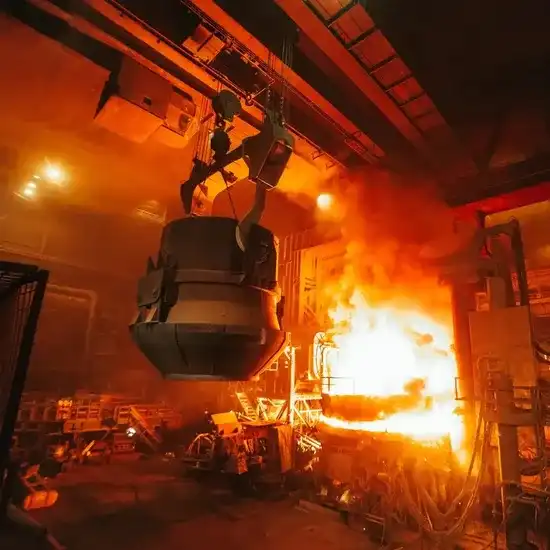
Understanding the Steel Ladle Refining Furnace and Its Core Benefits
What the Equipment Actually Does
There is an electric arc furnace or a basic oxygen furnace, and a ladle refining furnace in the middle. To do its precise job, it must heat the molten steel to the right temperature for casting, adjust the alloy's chemistry, and remove any sulfur, oxygen, or oxides that may be present. Heyuanxin's system works at temperatures between 1550°C and 1700°C, and it heats up at a rate of 3°C to 5°C per minute with 300 mm to 600 mm graphite electrodes in a three-phase AC arc system.
Key Technical Parameters
The Shaanxi Heyuan ladle refining furnace can handle ladles that weigh between 10 and 150 tons, and it can handle transformers that can handle 10 to 100 megavolts of electricity. Composition deviation is kept at ≤±0.03%, and inclusion content is kept at ≤10 μm. ≥8,500 hours of annual working time—this is a real-life production reliability number, not a guess from the specs. These numbers come from more than 400 sites around the world, which were built over 20 years of experience in steel engineering.
Three Core Process Functions
The system has an electric arc heater, an argon bottom stirrer, and a slag washing refiner all in one unit. Here are the main steps in the process that lead to better steel quality:
- Electric arc heating maintains a stable temperature window and compensates for heat loss during alloying additions, preventing the thermal stratification that clogs casting nozzles.
- Argon stirring with closed-loop flow control produces uniform composition throughout the ladle, eliminates hot spots, and promotes inclusion flotation into the slag layer.
- Slag washing and basic slag practice (basicity >2.0) drive desulfurization efficiency above 90%, achieving ultra-low sulfur content below 0.005% — a requirement in API line pipe and bearing steel grades.
All of these functions work together to make the steel cleaner and more consistent in its chemistry. This lowers the number of rejects in the casting process and raises the yield of the finished product.
Comparing Ladle Refining Furnaces with Alternative Technologies
Ladle Refining Furnace vs. Vacuum Degassing
For very low gas grades, vacuum degassing is the best way to get rid of hydrogen and nitrogen. However, it has a higher initial cost, takes longer to turn, and can't add big amounts of alloy. A steel ladle refining furnace can quickly and cheaply change the composition, recover the temperature, and remove sulfur. This makes it the best tool for primary and secondary refining of most carbon, alloy, and stainless steel types.
Ladle Refining Furnace vs. Induction Holding Furnace
Induction furnaces keep the temperature steady, but they can't add a lot of heat or refine slag. They do not have the ability to remove sulfur. An induction holder can't do the three things that the ladle refining furnace does: heat, refine, and buffer production schedules all at the same time.
Return on Investment Perspective
When steel companies use a ladle refining furnace, they usually see less scrap, fewer breaks in the casting process, and less alloy consumption because they can better control the composition. These savings add up over every heat, which means that the capital payback time is shorter than many plant managers first think.
Practical Benefits for B2B Procurement and Operations
Consistency That OEM Clients Demand
OEM buyers in the oil and gas, industrial bearing, and car industries have strict standards for chemicals and inclusions. Instead of adding things all at once in an arc furnace, a ladle furnace lets your quality team change the chemistry over a controlled period of time after the primary melting. If the process is set up correctly, every heat can have a composition deviation of ±0.03% and an inclusion size of 10 μm.
Maintenance Practices That Protect Uptime
Regular maintenance has a direct effect on how long your refining unit works. This is the order of maintenance that every operations team should follow:
- Slag line refractory inspection via laser profiling after every campaign — the slag line typically lasts 50–80 heats depending on arc flare control and slag basicity.
- Argon porous plug inspection before each heat to confirm consistent flow and prevent ladle-eye exposure that causes re-oxidation.
- Electrode regulation hydraulic system check to verify response times stay below 100 ms, protecting electrodes from mechanical stress and breakage.
Laser profiling is used to check the refractory properties of the slag line after every campaign. The slag line usually lasts between 50 and 80 heats, based on how well the arc flare is controlled and how basic the slag is.
Customization for Different Production Scales
Shaanxi Heyuan plans each ladle refining furnace based on the client's production rate, mix of steel grades, and the way the plant is currently set up. It can hold anywhere from 10 t for small specialty makers to 150 t for big integrated mills. The design of the water-cooled roof, the hydraulic lifting cover for the furnace, and the electrode regulation system are all set up to work with the power supply and process needs in the area.
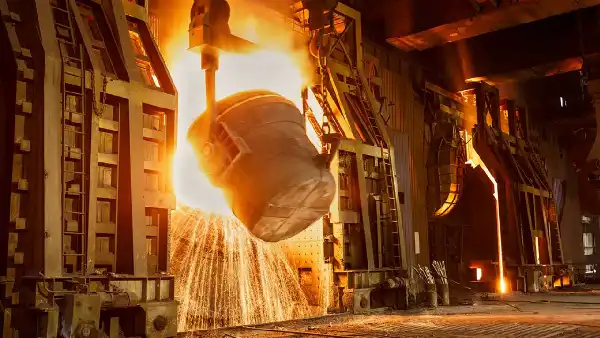
Key Considerations When Purchasing a Steel Ladle Refining Furnace
Technical Specifications to Verify
Before you buy a steel ladle refining furnace, make sure that the working temperature range (1550°C–1700°C), transformer capacity (MVA rating), ladle capacity (tons), and heating rate (°C/min) all meet your needs. Also, make sure that the system that controls the electrodes has hydraulic response times of less than 100 ms. Systems that are slower than that make the arc less stable and shorten the life of the electrodes.
Supplier Credentials and Quality Systems
Work with a ladle refining furnace maker that has certifications that are recognized around the world. Heyuanxin has over ten usage model patents and is certified by the ISO quality management system, the environmental management system, and the workplace health management system. These certificates show that the design and production methods follow established quality standards.
After-Sales Support and Commissioning
The success of equipment rests a lot on how well it was installed and commissioned. Heyuanxin offers professional installation, user training, and quick after-sales service, so your team will be able to use the heater as intended right away. As usual, all water-cooled roof sections must be pressure tested, and Optical Emission Spectroscopy checks are done during commissioning.
Future Trends in Ladle Refining Furnace Technology
Automated Process Control
Automated arc regulation and real-time slag chemistry monitoring are becoming more common in modern steel ladle refining furnace. These systems make it less likely for operators to make mistakes, make it more consistent from heat to heat, and use less energy per ton.
Energy Efficiency and Emissions Reduction
New transformer designs and better refractory insulation make it so that less electricity is used per heat. As environmental rules get stricter in the US and around the world, steel producers have to deal with lower energy intensity per ton of refined steel. This helps them meet their compliance reporting and carbon reduction goals.
Integration with Digital Production Systems
By linking data from ladle furnaces (like temperature, makeup, and argon flow) to manufacturing execution systems at the plant level, production planners can perfectly time polishing cycles with the needs of the casters. This cuts down on idle holding time, wastes less energy, and raises the overall throughput of the plant.
Conclusion
A steel ladle refining furnace makes the steel cleaner, lets you control the makeup better, and provides a stable transition zone between primary melting and continuous casting. When procurement managers, engineers, and EPC contractors look at secondary processing equipment, the business case is based on results that can be measured, such as less trash, more stable chemistry, fewer casting delays, and less alloy use. Heyuanxin's ladle refining furnace meets these needs directly with its 1550°C–1700°C working range, 10 t–150 t capacity, and 20-year track record. Choosing the right supplier and tools from the start saves both the long-term success of the business and its capital investment.
FAQ
How does the ladle refining furnace prevent nitrogen pickup?
Positive pressure inside the ladle, maintained through a tight-sealing roof and submerged arc operation under foamy slag, prevents air aspiration. Argon replaces nitrogen for stirring in final treatment stages to keep dissolved nitrogen levels low.
Can a ladle furnace remove phosphorus?
No. Phosphorus removal requires oxidizing conditions and must be completed in the primary furnace — either the EAF or BOF — before the heat transfers to the ladle. The ladle refining furnace operates under reducing conditions designed for sulfur and oxygen removal.
What causes electrode breakage in a ladle furnace?
Non-conductive material obstructing electrode descent and poorly tuned regulation systems are the primary causes. Hydraulic response times above 100 ms allow arc instability that creates mechanical stress. Heyuanxin's system maintains response times below 100 ms to protect electrode integrity.
What is the typical lining life of a ladle refining unit?
The slag line zone typically lasts 50–80 heats, depending on slag basicity and arc flare management. Regular gunning maintenance and zonal lining designs extend campaign life and reduce refractory cost per heat.
How is re-oxidation prevented during treatment?
Argon stirring intensity is controlled to keep the slag cover intact over the ladle eye. Excessive stirring exposes liquid steel to air. Automated soft-stirring protocols maintain the correct flow rate to float inclusions without breaking the slag blanket.
Partner with Shaanxi Heyuan — A Trusted Steel Ladle Refining Furnace Manufacturer
Since 2008, Shaanxi Heyuan has sold ladle refining furnace units to more than 400 sites around the world. Our team takes care of the whole project, from engineering design to production, installation, testing, and service after the sale. To get a detailed quote, email sxhyyj606@163.com with the details of your project. Our engineers will be happy to help you choose the best furnace for your needs.
References
1. Zhang, L., & Thomas, B. G. (2003). State of the Art in Evaluation and Control of Steel Cleanliness. ISIJ International.
2. Fruehan, R. J. (Ed.). (1998). The Making, Shaping and Treating of Steel: Steelmaking and Refining Volume (11th ed.). AISE Steel Foundation.
3. Turkdogan, E. T. (1996). Fundamentals of Steelmaking. The Institute of Materials, London.
4. Pretorius, E. B., & Carlisle, R. C. (1999). Foamy slag fundamentals and their practical application to electric furnace steelmaking. Electric Furnace Conference Proceedings, Iron & Steel Society.
5. World Steel Association. (2022). Steel Statistical Yearbook 2022. World Steel Association, Brussels.
6. Dutta, S. K., & Chokshi, Y. (2020). Basic Concepts of Iron and Steel Making. Springer Nature.


YOU MAY LIKE