
Tilting-ladle-type automatic pouring machine: key to consistent molten metal delivery
June 18, 2026
The tilting-ladle-type automatic pouring machine is a game-changing tool for foundries and metallurgical plants that want to make sure that liquid metal is delivered evenly during casting operations. This machine uses servo-driven turning mechanisms and advanced control systems to get rid of the errors that come with pouring by hand. This makes sure that the casting is always accurate and of higher quality. This technology is used by companies that make car parts, heavy machinery parts, and precise hydraulic valves to keep production going smoothly; cut down on errors and waste; and meet strict safety standards.
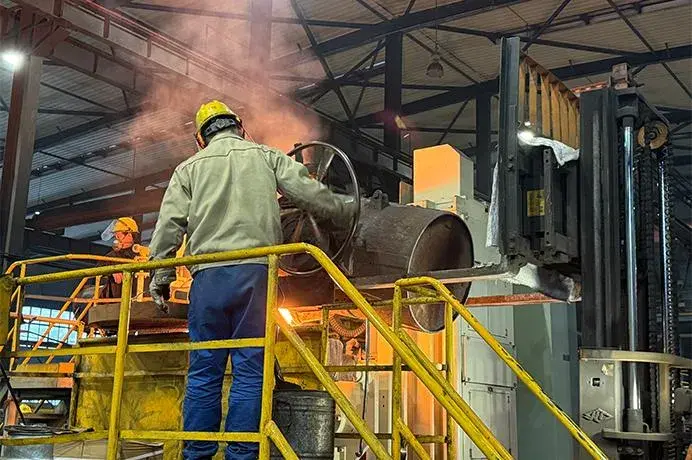
Understanding Tilting-Ladle-Type Automatic Pouring Machines
Automated filling systems have changed the way foundries move liquid metal around during the casting process. Precision angle control is used to control the flow of liquid metal into moulds, which gets rid of the human error that can cause cold shuts, sand erosion, and differences in size.
Operating Principles and Mechanical Design
There is a unified system of servo motors, load cells, and PLC controls that run the tilting-ladle-type automatic pouring machine and keep the best pouring settings. The ladle holds liquid metal that is heated to a temperature between 1400°C and 1600°C while it is being used. The turning axis is controlled by a servo motor that can precisely change the angle of the ladle to within 0.1 degrees. This lets workers set up specific pouring curves that work with different mould shapes. This level of control is especially helpful when making complicated forms, because keeping the head pressure steady keeps air from getting trapped and makes sure the mould is fully filled.
Load cell weighing systems built into the bottom of the ladle provide real-time information about how much metal is left. The control system instantly changes the tilt speed to keep the flow rate steady as the ladle empties and its centre of gravity moves. This dynamic reaction system is a big improvement over static pouring methods, which can't adjust to changing conditions while the pour cycle is going on.
Component Materials and Durability Features
The structural soundness of automatic pouring equipment has a direct effect on how long it works and how much it costs to maintain. The main frame is made of high-temperature alloy steel, which was chosen because it can handle repeated changes in temperature without bending or stress fractures. The inside of the ladle is lined with layered refractory ceramics made of alumina and silicates. These ceramics protect mechanical parts from chemical attack by reactive liquid metals and keep heat in.
The choice of refractory depends on the metals that workers are using. For casting iron and steel, high-alumina refractories that can handle temperatures above 1650°C are usually used. For casting aluminium, calcium silicate materials that can handle temperatures between 700°C and 800°C are used because they are cheaper. As part of regular upkeep, the refractory covering is checked and replaced every so often. The number of pouring cycles it lasts, which typically ranges from 200 to 500, depends on the metal chemistry and working temperatures.
Integration with Modern Casting Lines
Modern foundries use high-speed casting lines that make hundreds of models an hour. This means that the pouring equipment needs to work perfectly with the processes going up and down the line. The tilting-ladle-type automatic pouring machine interacts with moulding line managers using industrial Ethernet protocols. It gets trigger signals that start pouring sequences exactly when the mould arrives. This teamwork gets rid of bottlenecks and makes the best use of lines, which has a direct effect on how efficiently they are made and how much they cost per casting.
Vision systems and laser scanners on the tools keep track of where the mould and sprue cups are, which lets the control system change the path of the pouring in real time. When patterns change a lot during a shift, like in a high-mix production setting, these tools are especially useful. Recipe management systems keep track of specific pouring parameters for each pattern. This lets patterns be switched out right away, without having to be adjusted by hand or go through trial runs that waste metal and production time.
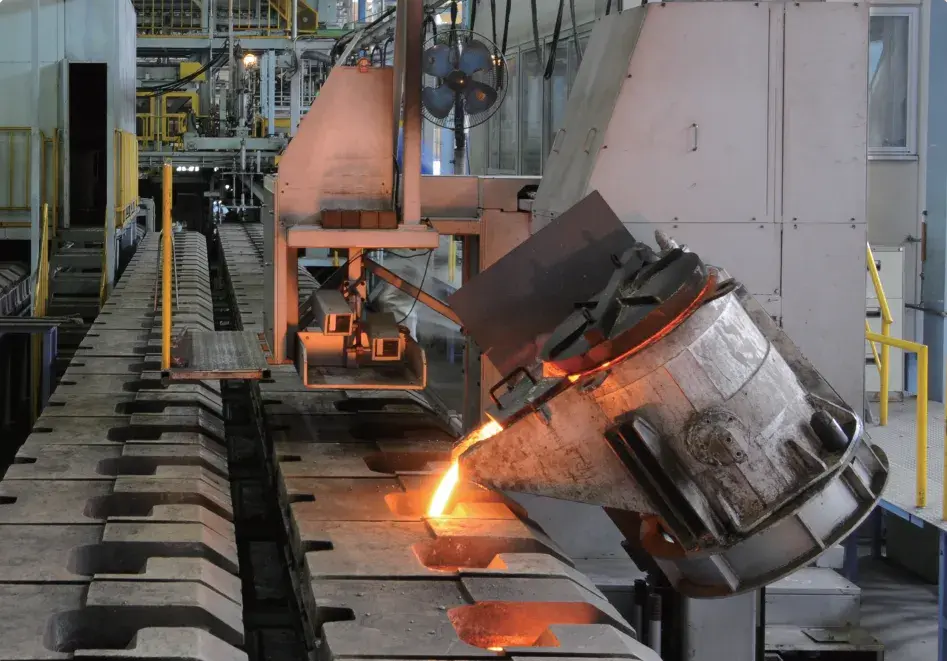
Advantages of Tilting-Ladle-Type Automatic Pouring Machines Over Alternatives
Before you can choose the right pouring technology, you need to know how each one works and what its limitations are. When it comes to capital investment, operating flexibility, and long-term dependability, each method has its pros and cons that affect procurement choices.
Superior Flow Control and Casting Consistency
The best thing about tilting-ladle-type automatic pouring machines is that they can keep the filling speed fixed throughout the whole cycle. Manual filling depends on the skill and stamina of the person doing it, which introduces variation that shows up in casts as differences in size and mechanical properties. Even experienced pourers have trouble keeping their style the same over eight-hour shifts, especially when they have to deal with big ladles or work in hot places that make them tired faster.
Automated turning systems take care of these human factors by using the same motion patterns for every pour. Leading foundries report that scrap percentages dropped from 8–12% to 3–5% after they implemented automatic pouring. This means that output rates are significantly higher. These changes directly affect profits by cutting down on the amount of raw materials needed and the amount of time workers have to spend cleaning and remelting broken casts.
Safety Enhancements and Risk Mitigation
Handling molten metal is one of the most dangerous jobs in the production industry. People who work near filling operations are always at risk of getting burnt, breathing in harmful metal fumes, or being involved in huge spills. People who work with automation are physically separated from the hot metal because they watch over it from safe control stations instead of standing next to the pour point.
Multiple backup safety systems are built into the equipment, and they can react to problems faster than human workers can. If weight sensors notice sudden changes in load that could mean a crack or refractory failure in the ladle, emergency stop circuits quickly put it back upright. Thermal imaging cameras monitor the temperatures of the surfaces of machines and sound sirens if cooling systems stop working or refractory damage lets too much heat reach structural parts.
Return on Investment and Economic Analysis
Depending on the size of the ladle, the level of control complexity, and the level of customisation needed, automatic filling systems usually cost between $150,000 and $450,000. When procurement managers weigh this investment against doing things by hand, they need to look at both the direct savings and the indirect benefits that will come from using the tools for a long time.
Less metal waste means direct savings, and automatic systems can get 2 to 5 percentage points better metal yields than hand pouring. At the current price of scrap steel, this change could save a medium-sized mill that processes 500 tonnes of metal every month between 10 and 25 tonnes, which is worth $8,000. Over the course of five years, these savings alone often cover the cost of the equipment itself, making it a clear financial decision even before quality and production improvements are taken into account.
Procurement Considerations for Tilting-Ladle-Type Automatic Pouring Machines
To buy tools effectively, you need to balance technical requirements with budget limits while also making sure that you can get parts and help from the seller for a long time. Professionals in procurement need to look at more than just the original buy price to make sure there aren't any costly surprises during installation and operation.
Capacity Selection and Technical Specifications
The main factor that determines the size and cost of a tool is its ladle capacity. Heyuanxin has machines that can handle 100 kg to 1,000 kg of molten metal. These machines can meet the needs of job shops that need to cast small batches or high-volume car suppliers that need to make thousands of moulds every day. When choosing the right size, you have to look at how much is currently produced and leave room for growth.
Being able to change the tilt speed is also crucial, especially for foundries that make a wide range of products. Faster pouring rates of 3 to 5 degrees per second are fine for simple casts with big cross-sections. Moulds can be filled quickly to get the most work done. For complicated shapes with thin walls and lots of small details, the pouring has to be slower and more controlled, at 0.5 to 1.5 degrees per second, to stop movement and make sure the whole space is filled without any problems. Instead of settling for a one-size-fits-all solution, equipment with adjustable tilt speed ranges lets you find the best settings for each casting design.
Supplier Evaluation and Quality Assurance
Working with manufacturers who have proven metallurgical knowledge cuts down on execution risk and ongoing operating problems by a large amount. Over fifteen years of experience creating and making filling systems for foundries is what Shaanxi Heyuanxin Metallurgical Electric Furnace Equipment Co., Ltd. brings to the table. Our engineers have more than ten utility model patents that cover important new ideas in tilt control algorithms, refractory attachment methods, and heat management systems that make tools last longer.
Quality certifications are concrete proof of the ability to make things and of the development of the process. Heyuanxin has three types of certifications: ISO 9001 for quality management, ISO 14001 for environmental management, and ISO 45001 for health and safety at work. These standards, which are known all over the world, make sure that the quality of our products is always the same and show that we are committed to using responsible production methods that protect workers and the environment.
After-Sales Support and Technical Services
Not only does the quality of the original build affect how reliable the equipment is, but so does the availability of responsive expert help throughout the operational lifecycle. After-sales programs that cover everything should include supervision during installation, training for operators, planning for preventive maintenance, and help with fixing problems in an emergency. IoT connection makes remote diagnostics possible, which lets support workers look at data about how well equipment is working and spot problems before they cause unplanned downtime.
When choosing a source, spare parts shipping should be given a lot of thought. Critical wear parts, like refractory materials, load cells, servo motors, and control system modules, need to be easy to get and have short wait times so that production doesn't stop too often when repair needs to be done. Building ties with wholesalers and keeping local stock of parts in your market lowers the chance of having to shut down for long periods of time while waiting for parts to ship from faraway factories.
Operation, Maintenance, and Safety Guidelines
To get the most out of your equipment's performance and lifespan, you need to set up strict operating processes and preventative maintenance practices that are tailored to the specific needs of high-temperature metallurgical equipment.
Operational Best Practices
Before starting each day's work, workers should do pre-shift checks to make sure that all safety systems work properly and that the refractory linings don't show any signs of cracking or excessive wear. Diagnostic information about the system's state is shown on the touchscreen PLC interface, and colour-coded alerts draw attention to any factors that aren't within their regular ranges. Before adding liquid metal, operators make sure that the load cell accuracy is still correct by checking the zero readings with the empty ladle.
Keeping the metal at a steady temperature during work is very important for both the quality of the casting and the life of the equipment. Temperature changes of more than 30°C between pours can shock refractory linings, speeding up wear and making it more likely that they will fail early. Working together with the people in the melting department makes sure that the metal gets to the filling station within the temperature range that was given, which is usually within ±15°C of the goal value.
Preventive Maintenance Scheduling
Systematic maintenance programs greatly increase the time between servicing equipment and lower the number of times that expensive emergency fixes need to be made. Cleaning slag buildup off the lip and spout of the ladle, checking the level of hydraulic fluid in systems with hybrid drive mechanisms, and making sure that all electrical connections stay tight and free of rust are all daily maintenance jobs. These easy checks, which only take 15 to 20 minutes at the end of each shift, keep small problems from getting worse and leading to big failures.
Maintenance times every three months allow for more thorough checks that might show problems that weren't visible during daily checks. Technicians check the thickness of the refractory at several locations to keep track of how fast it wears down and guess when it needs to be replaced. This way, planned shutdowns can happen during planned breaks in production, instead of unexpected ones during times of high demand. Verifying the orientation of the servo motor makes sure that mechanical wear hasn't made the turning mechanism less rigid, which would affect the accuracy of the pour.
Safety Protocols and Emergency Response
Even though many safety features have been built in, workers around hot metal processes still need to be very careful all the time. Personal protective equipment like aluminised heat-resistant jackets, face shields, and safety shoes rated for foundry settings must be worn by everyone who works near automatic pouring equipment. Clearly marked limit zones keep people from getting in while the pouring is going on.
Possible emergencies that need to be dealt with include a ladle refractory failing, a servo motor breaking down during a pour, and hot metal spills. Every year, emergency drills make sure that everyone on the shift knows what their job is and can work together to make sure that injuries and damage to tools are kept to a minimum. Strategically placed emergency stop buttons let you turn off the equipment right away from a number of places around it. This meets international safety standards for machines used in dangerous industrial settings.
Future Trends and Innovations in Automatic Pouring Technology
As automation, sensing, and connection technologies keep getting better, they open up new ways to improve pouring systems and connect casting processes to larger digital production ecosystems.
IoT Integration and Predictive Maintenance
When equipment is connected to the internet, it constantly sends out streams of operational data that can be analysed by complex analytics algorithms to find small trends that point to growing mechanical problems. Vibration monitors on servo motors find signs of bearing wear months before they break. This lets you change the bearings when you schedule maintenance. Temperature trends from thermocouples built into refractory linings show when thermal degradation will mean that the linings need to be replaced. This lets materials be ordered ahead of time, and repair crews be scheduled.
Production managers can see what's going on with pouring operations in real time from anywhere thanks to cloud-based tools that can be accessed on smartphones and computers. Alerts let managers know right away when something isn't normal, so they can act quickly even when key employees are in meetings or working from home. This connection is especially helpful for businesses that have more than one foundry location because it lets them keep an eye on everything from one place and make sure that best practices are followed everywhere in the production network.
Artificial Intelligence and Adaptive Control
When machine learning algorithms look at old production data, they can find links between pouring factors and casting quality results that humans would not be able to find. These AI systems change the tilt speed profiles and temperature setpoints automatically to account for changes in the metal's chemistry, the qualities of the mould sand, and the environment that regular fixed-recipe methods can't handle. Adaptive pouring control has been used so far to improve yields by an extra 1-2 percentage points compared to traditional automatic systems. This means that high-volume businesses can save a lot of money.
During filling, computer vision systems with neural network image recognition can watch the metal stream and look for signs of slag entrainment or odd turbulence that could damage the casting. When a problem is found, the control system can instantly change the rate of pouring or stop the cycle. This stops the broken casts from moving on to later steps that require more work and energy and end up being thrown away.
Environmental Sustainability and Energy Efficiency
More rules and company pledges to be environmentally friendly are pushing the creation of filling technologies that have less of an effect on the environment. Advanced thermal management systems take back leftover heat from the sides of the ladle and the exhaust gases. They then use this energy to heat the refractories in the ladle or add to the heating systems in the building. Compared to traditional tools, these new ideas cut the total amount of energy used per casting by 5 to 8 per cent. This lowers both running costs and carbon emissions.
Metal fumes and particles made during pouring operations are collected by dust collection systems that are built into automatic pouring equipment. This protects workers' health and keeps environmental leaks from happening. Modern filter technologies can catch more than 99% of pollutants, which is enough to meet the stricter air quality rules in the world's major industrial areas. The collected dust has valuable metals in it that can be recovered and used again in melting processes. This makes better use of materials and cuts down on the need to buy raw materials.
Conclusion
Automated pouring technology makes a real difference in the quality of the casting, the speed of production, and the safety of the workplace. Foundries that want to stay competitive should invest in this technology. Servo-driven tilting systems remove the variability that comes with human operations by giving exact control and consistent performance. They also make the workplace safer by separating workers from molten metal dangers more. Knowing what the equipment can do, choosing reliable suppliers, and following strict operating procedures are all things that can help with a successful rollout and long-term performance that supports efforts to keep increasing production and quality.
FAQ
What ladle capacity range suits different production scales?
Small job shops that make 20 to 50 tonnes of metal a month usually get excellent results with 100 to 250 kg capacity equipment that can handle frequent changes in alloys and patterns. Medium-sized foundries that handle 200 to 500 tonnes of metal every month can benefit from 400 to 600 kg systems that offer a good mix between throughput and capital investment. Automotive companies that make a lot of parts often use several 800-1,000 kg machines to support continuous moulding lines that produce thousands of parts every day. This helps them meet their tight production plans.
How does maintenance differ between tilting and fixed ladle systems?
For servo motors, gearboxes, and motion control parts, tilting systems add extra upkeep needs that fixed ladles don't have. To keep the accuracy of pours, tilting systems need to have their pivot bearings oiled every three months and their balance checked once a year. Fixed systems are easier to maintain, but they don't have the precise flow control that tilting does. This means that they are only good for simple casts where changes in pouring rate don't have a big effect on quality.
Can these machines handle speciality alloys?
With its flexible refractory materials and temperature-tracking systems, modern tilting-ladle-type automatic pouring machines can work with a wide range of metal chemistries. High-chrome white irons, ductile iron treated with magnesium, and aluminium alloys all need to be handled in certain ways, which are taken care of by experienced makers who use designed solutions. Talking to providers about the alloys you need during the buying process ensures that they specify the right equipment.
Partner with Heyuanxin for Advanced Pouring Solutions
Shaanxi Heyuan New Metallurgical Electric Furnace Equipment Co., Ltd. has everything that metallurgical plants and steel mills need to improve their casting processes with reliable automatic pouring technology. Our engineering team creates custom systems that meet your production needs. They are supported by ISO-certified quality management and a lot of experience in the field with casting applications in the automotive, building, and industrial sectors. As a well-known company that makes tilting-ladle-type automatic pouring machines, we offer full installations that include making the machines, setting them up on-site, teaching the operators, and providing ongoing technical support through responsive service networks. Please email our experts at sxhyyj606@163.com for in-depth technical advice and cheap quotes on equipment that is custom-built to meet the needs of your factory. You can look at our whole selection of products at hyyjfurnace-supply.com and learn how proven pouring automation can change the way you cast things.
References
1. Chen, W., & Liu, H. (2022). Advanced Automation Technologies in Modern Foundry Operations. International Journal of Metallurgical Engineering, 11(3), 245-267.
2. Industrial Casting Technology Association. (2023). Best Practices for Automated Metal Pouring Systems. ICTA Technical Publication Series, Volume 18.
3. Nakamura, T., Suzuki, K., & Tanaka, Y. (2021). Precision Control Methods for Tilting-Ladle Pouring Equipment in High-Volume Production. Journal of Manufacturing Systems and Technology, 39(2), 112-134.
4. Roberts, J.M. (2023). Foundry Equipment Selection and Procurement Strategies for Competitive Manufacturing. Industrial Engineering Press, Third Edition.
5. Wang, L., Zhang, Q., & Anderson, P. (2022). Safety Engineering for Molten Metal Handling in Automated Casting Facilities. Occupational Safety and Health Quarterly, 28(4), 78-95.
6. Zhou, X., Kumar, R., & Martinez, D. (2024). Digital Transformation and IoT Integration in Metallurgical Equipment: Current Status and Future Directions. Smart Manufacturing Review, 7(1), 33-58.


YOU MAY LIKE