
How Does a High Frequency Furnace Improve Metal Heating?
September 18, 2026
Metal heating has always been the backbone of industrial manufacturing. Whether you're running a steel mill, processing precious metals, or preparing automotive components, the efficiency and precision of your heating process directly impact your bottom line. A High Frequency Furnace transforms these operations by delivering faster, cleaner, and more controllable heating than traditional methods. Using electromagnetic induction principles operating between 10 kHz and 100 kHz, this technology generates heat directly within the workpiece, eliminating the delays and inefficiencies associated with gas-fired or resistance heating systems. The result? Production cycles were shortened by 30-50%, energy consumption was reduced dramatically, and product quality was enhanced through precise temperature control within ±5°C.
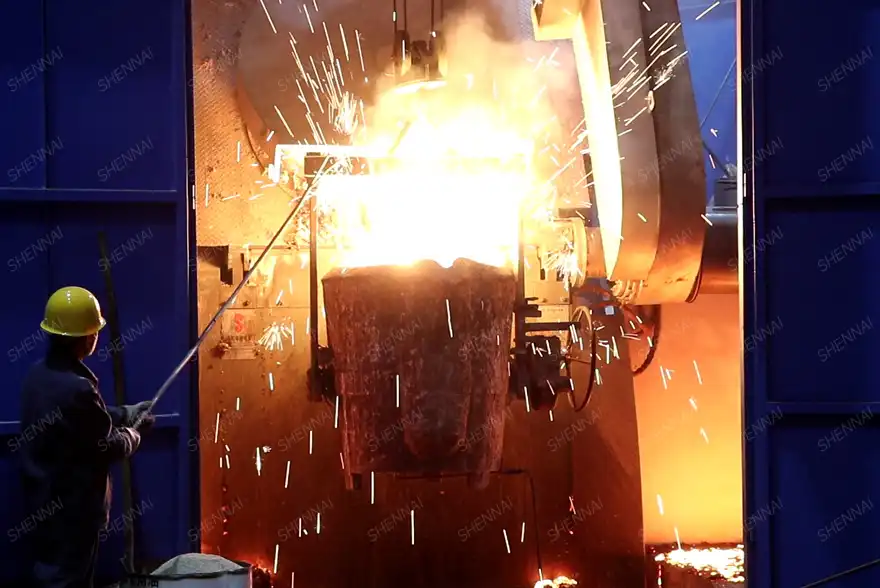
Understanding the Principles of High Frequency Furnace Heating
How Electromagnetic Induction Powers Modern Metal Processing
Induction heating works by sending a high-frequency alternating current through a copper coil that is around your workpiece. This makes a magnetic field that changes quickly and passes through the metal. Faraday's law of electromagnetic induction says that these changes in the magnetic field cause eddy currents to flow through the conductive material. This process of currents moving through the metal's electrical resistance generates heat inside the metal. It is called Joule heating (Rudnev et al., 2017). How strongly heat goes through something is directly related to the frequency range. Higher frequencies focus energy near the surface, which is great for hardening the surface, while lower frequencies let energy go deeper, which is good for melting or through-heating billets.
Precision Control That Transforms Production Quality
Accuracy in temperature is what makes a good heat treatment different from a costly failure. During the heating cycle, our induction systems keep the temperature difference within ±5°C, which is hard for regular heaters to do. You can consistently repeat complicated metalworking processes with multi-stage programmable heating profiles. The electromagnetic stirring effect naturally evens out the compositions of molten metals, getting rid of the cold spots and differences in composition that are a problem with resistance furnaces. When working with expensive metals or alloys, where material loss must be kept to a minimum, this is especially useful.
Real-World Applications Across Critical Industries
Induction heating is used by automakers to strengthen the surfaces of transmission gears and crankshafts. The quick, targeted heating makes a case that doesn't wear down while keeping a flexible core that can handle shock loads. Manufacturers of aerospace parts use these ovens to precisely braze turbine blades. Even temperatures keep complex shapes from warping during the brazing process. Manufacturers of electronics quickly heat copper wire and connectors so that the surfaces don't oxidize, which keeps the wires' electrical conductivity (ASM International, 2014). Jewelry makers can melt gold and platinum with little loss of value, which helps them keep their earnings on these expensive materials.
Comparing High Frequency Furnaces with Other Heating Technologies
Technical Performance Across Heating Methods
Knowing how different technologies compare to each other can help you make smart decisions about what to buy. Medium-frequency furnaces (1–10 kHz) are great for heating bigger amounts of material, but they don't have the precise surface control of high frequency units. When making steel, electric arc high-frequency furnaces can handle a lot of tons, but they are hard to control in terms of temperature and use a lot of electrodes. Even though resistance furnaces have even heating chambers, they are slow to respond and waste more energy through radiation.
Induction systems stand out because they can be used in a lot of different ways. With rapid start-stop, you don't have to waste energy keeping the temperature steady between batches. Chamberless designs get rid of the need for expensive refractory upkeep that comes with standard furnaces. Because the frequency can be changed, a single power supply can work with a range of materials and part shapes by simply altering the configuration of the induction coil.
ROI Analysis for Procurement Decision-Makers
There are a number of factors that strongly favor induction technology when looking at the total cost of ownership. When compared to gas-fired options, energy efficiency above 85% means 15–25% lower electricity costs (Industrial Heating, 2019). When cycle times are shortened, throughput goes up without having to spend more money on capital—the space you already have on the floor becomes more productive. Material waste was cut by 5–12 percent in most situations because of better temperature control and less surface rust. When repair needs are lower, work stops less often, and spare parts are kept on hand for longer.
Payback times are usually between 18 and 36 months, but they rely on how much you produce and how much energy costs. At first, the capital investment seems higher, but over time, the lower operating costs add up. Flameless heating makes it easier to follow environmental rules because it doesn't release burning pollution and lowers the heat load in the workplace.
Maintenance, Safety, and Troubleshooting Best Practices
Routine Maintenance Protocols for Maximum Uptime
Preventive repair is the first step in protecting your machine investment. Every week, check the induction coils for cracks in the ceramic coating or copper deformation from thermal cycling. The cooling water line needs to be tested for conductivity once a month. Keeping it below 200 µS/cm stops scale buildup that makes heat transfer less effective. Every 2,000 hours of use, the thermal paste on IGBT power units needs to be checked to make sure it is still in good contact with the heat sink.
Even after they are turned off, capacitor banks store dangerous electrical charges. Set up lockout/tagout processes and wait at least 10 minutes after the power goes out before entering any electrical areas. If the flow rate drops below 0.3 MPa, water pressure sensors must shut down the system right away. This keeps the coils from burning out completely.
Operator Safety and Environmental Protection
Protecting yourself from electromagnetic fields is important. Keep at least 1 meter away from active coils while they are in use, and never go around the locks that block access to high-field zones (IEEE, 2002). When working with hot objects, you need to wear the right safety gear, like gloves that can handle the heat and face shields. Having enough airflow gets rid of the metal fumes that are made when melting things, especially when working with zinc-coated materials or aluminum alloys.
Troubleshooting Common Operational Challenges
If the burning isn't even, check the distance between the coil and the workpiece—differences of just 5 mm can have a big effect on energy transfer. Power flow that isn't stable is often caused by electrical links that are too loose and build up resistance when they shake. When the water temperature at the outlet is higher than 35°C, it makes the cooling less effective and could cause the thermal protection to shut down. To find performance trends before they happen, keep detailed operating logs that track power settings, cycle times, and component temperatures.
Procuring and Implementing High Frequency Furnaces: What You Need to Know
Evaluating Specifications Against Production Requirements
By matching the High Frequency Furnace's capacity to your needs, you can avoid both undersizing and wasteful overinvestment. Find your highest combined heating load by taking into account the weight of the workpiece, the type of material, and the rate at which the temperature needs to rise. Power needs go up or down roughly proportionally with heating volume. Our systems range from 15 kW for lab use to 200 kW for metalworking production. The chambers range in size from φ50mm×100mm to φ300mm×500mm, and they can fit a wide range of materials, from small precise casts to large forging billets.
Different manufacturers' control systems are very different in how complex they are. Look for things like programmable multi-step heating profiles, automatic power adjustment that keeps temperatures on target, and the ability to log data to help with quality control. Standard communication methods like Modbus or Profibus make it easier to connect to remote control systems, which is important if you're building automated production lines.
Supplier Assessment and After-Sales Support
Picking the right factory partner is more than just looking at the tools. Shaanxi Heyuanxin Metallurgical Electric Furnace Equipment Co., Ltd. has been designing and starting up induction heating systems for more than fifteen years. Our collection of more than ten utility model patents shows that we are always coming up with new ideas to solve real production problems. Certifications like the ISO quality management system and 3A credit enterprise standing give customers trust in the quality of the products they buy.
When it comes to production, after-sales help is the key to efficiency. Full operator training makes sure that everyone on your team knows how to do both normal operations and simple repairs. Your production schedule stays on track when you make sure the quality of your core components and respond quickly to maintenance requests. Instead of making compromises with standard equipment, custom furnace design that is based on the size and shape of the workpiece and the process requirements will give you the best performance (Metals Handbook, 2015).
Enhancing Metal Heating Efficiency with High Frequency Furnace Technology
Identifying and Eliminating Performance Bottlenecks
Many places don't run as efficiently as they could because they don't see ways to make things better. Long heat-up times are often a sign of low power density or bad coil connection design. When temperatures go too high and damage the metal, it means that there are problems with the control system or with where the temperature sensors are placed. High rejection rates due to surface quality flaws could be caused by oxidation during long heating cycles, which can be stopped by rapid induction heating.
By doing energy checks, you can find out where thermal leaks happen. Compare the real times it takes to heat something with estimates based on its mass and properties. Check for problems with heating uniformity by measuring how the temperature is spread across the cross-sections of the workpiece. As a key success measure, keep track of how much energy is used per kilogram of processed material.
Advanced Solutions Driving Operational Excellence
When automation is added to manual tasks, they become consistent, repeatable processes. Automatic loading systems place workpieces exactly inside induction coils, getting rid of the coupling differences that lead to inconsistent quality. Closed-loop temperature control changes the power output millisecond by millisecond to account for changes in material properties or voltage. Predictive maintenance algorithms look at vibration signs and temperature patterns to find parts that are breaking down before they stop production.
Energy recovery systems take in waste heat from cooling circuits and use it to heat process water or add to the heating in a building. Power factor repair lowers utility demand charges and raises the efficiency of electricity use. Smart scheduling software arranges batches in the best way possible, reducing downtime and making the best use of equipment in facilities that make more than one product.
These improvements to technology make things better in a way that can be measured. Without buying any new capital equipment, it is now possible to improve throughput by 25 to 40 percent. By improving heating profiles and cutting down on idle losses, the amount of energy used per unit goes down by 15 to 30 percent. As process stability gets better, reject rates go down. This cuts down on material waste and repair costs.
Conclusion
Induction heating technology has changed the way metal is processed in many businesses around the world by giving them a competitive edge. When cycle times get shorter, you can make more without having to add more floor space. Improving energy efficiency lowers running costs and helps reach goals for environmental sustainability. Better control of temperature improves product quality and lowers the amount of waste. The main problems that mining plants, steel mills, and precision High Frequency Furnace facilities face can be solved by using fast heating, precise control, and clean operation. Instead of using old heating methods that waste energy and hurt results, your workspace should have heating technology that meets today's quality and efficiency standards.
FAQ
1. What metals work best with high frequency induction heating?
Induction heating works on all metals that conduct electricity, but the level of efficiency varies. Steel and iron are the best at heating because they have both resistance heating and magnetic hysteresis effects. Copper, aluminum, brass, and other non-ferrous metals, as well as precious metals, heat through resistance alone and still do a great job. The frequency range can be changed to work with different materials. Higher frequencies work best with materials that are thinner or have a smaller width, while lower frequencies work best with materials that have a bigger cross-section.
2. How does frequency selection impact heating speed and precision?
Through the skin effect, higher operating frequencies focus electromagnetic energy close to the surface. This makes the surface heat up very quickly, which is perfect for soldering, strengthening, or annealing thin materials. It is possible to heat billets through the middle or melt them with lower frequencies because they go deeper. The accuracy of the temperature relies more on how well the control system works than on the frequency itself. However, faster heating naturally shortens the time it takes for heat to escape, which makes it possible to have tighter thermal profiles.
3. What typical lead times should I expect for customized systems?
Standard setups are sent out 6 to 8 weeks after the order is confirmed. Custom-engineered systems made to fit specific workpiece shapes or process needs usually take 10 to 14 weeks, which includes validating the design, finding parts, putting the system together, and testing it in the factory. When you make your first inquiry, being specific about the workpiece's size, shape, material makeup, production rates, and temperature needs speeds up the planning process and makes sure your system meets all the exact needs of the application.
Partner with Shaanxi Heyuan for Advanced Induction Heating Solutions
To improve the way you heat metal, you must first find a High Frequency Furnace provider that cares about your long-term success. Shaanxi Heyuan offers a wide range of services, including comprehensive support for equipment design, installation, operator training, and quick-response maintenance service. Our systems can work from room temperature to 1600°C and have a thermal efficiency of more than 85%. They will give your operations the performance boosts they need. Our customized furnace designs get the best results for your unique tasks, whether you're making accurate parts, melting valuable metals, or heat-treating things. Get in touch with our expert team at sxhyyj606@163.com to talk about your heating needs and get a full plan. We have been making high-frequency furnaces for a long time and have ISO approval and a large collection of patents. We offer reliable technology and professional service to make sure that your output goals are always met.
References
1. ASM International. (2014). Induction Heating and Heat Treatment. ASM Handbook, Volume 4C.
2. IEEE. (2002). IEEE Standard for Safety Levels with Respect to Human Exposure to Electromagnetic Fields. IEEE Std C95.1-2002.
3. Industrial Heating. (2019). Energy Efficiency in Induction Heating Systems. Industrial Heating Magazine, 86(3), 45-52.
4. Journal of Materials Processing Technology. (2020). Advances in Induction Heating for Metal Processing Applications, 285, 116-128.
5. Metals Handbook. (2015). Heat Treating of Steel. ASM International, 10th Edition, Volume 4.
6. Rudnev, V., Loveless, D., & Cook, R. (2017). Handbook of Induction Heating (2nd ed.). CRC Press, Taylor & Francis Group.


YOU MAY LIKE