
How Can an Industrial Furnace hood Improve Workplace Safety?
September 17, 2026
An Industrial Furnace Hood significantly improves workplace safety by capturing toxic fumes, hazardous particulates, and extreme heat directly at the source, preventing worker exposure to respiratory hazards and thermal injuries. By achieving collection efficiencies exceeding 95%, these specialized containment systems maintain breathable air quality, reduce fire risks from fugitive emissions, and ensure compliance with occupational health regulations such as OSHA standards, protecting both personnel and production continuity in demanding metallurgical environments.
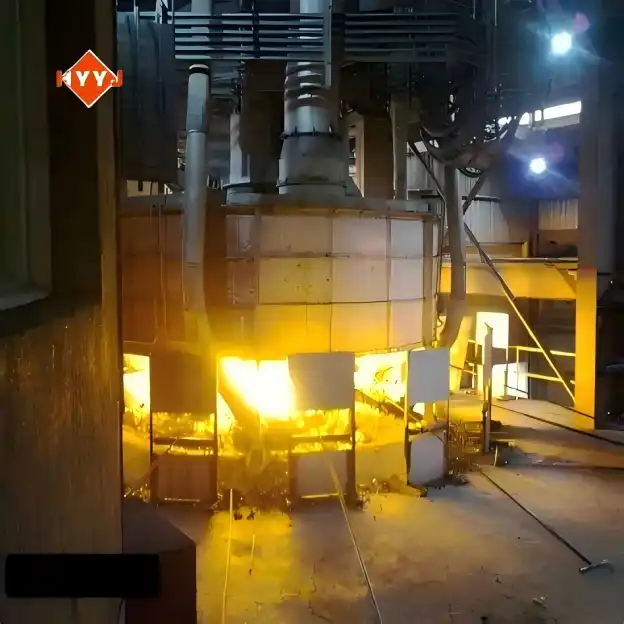
How Industrial Furnace Hoods Function to Enhance Safety
A well-designed fume extraction device can turn dangerous work areas into better, more controlled ones. The basic idea is to catch contaminants where they come from before they can spread into the area where workers breathe. This containment-first approach works much better than general ventilation strategies that try to dilute pollutants after they've been released.
Advanced Capture Mechanisms
Airflow engineering is very important for designing high-performance exhaust systems. The speed at which the air moves toward the hole of the hood must be faster than the rising hot gases and the turbulence caused by the process. Face speeds in systems designed for electric arc industrial furnace hoods are usually kept between 1.5 and 2.5 meters per second. This makes the suction strong enough to stop violent smoke bursts during scrap charging and oxygen lancing operations.
The aerodynamic profile is very important. Smooth changes and carefully placed baffles keep pressure losses to a minimum while increasing the efficiency of capture. Computational fluid dynamics modeling lets engineers find the best hood shape for each type of furnace, whether it's a set tilting furnace or a mobile ladle processing station.
Materials Engineered for Extreme Conditions
Normal air equipment can't handle the harsh conditions near kilns for metalworking. Normal materials break down quickly in temperatures above 800°C, gas mixtures that are acidic, and abrasive particulate matter. High-quality stainless steel alloys, refractory linings, and water-cooled membrane wall construction give these uses the durability they need.
Water-cooled designs move pressurized coolant through tubular panels, which keep the structure strong even when it's under a lot of heat. The cooling lines work at 3-6 bar pressure, which gets rid of the heat flow that would otherwise bend or melt steel that isn't covered. This ability to control temperature greatly extends the service life; water-cooled installations that are properly maintained can usually run nonstop for 5 to 10 years in steel production environments that are open 24 hours a day, seven days a week.
Energy Efficiency Through Intelligent Insulation
Modern extraction systems know how to balance how well they collect things with how much energy they use. High-quality insulation layers—which often keep more than 85% of the heat inside—keep the furnace body from losing heat that isn't needed and keep the outside from getting too hot. This two-fold benefit lowers the amount of energy your building uses and makes the area around the equipment safer to work in.
Using lightweight building methods in modern designs keeps the structural load on old furnace frames to a minimum. When retrofitting older buildings, where equipment changes are limited by overhead crane clearances and floor loading capacities, this is a very important thing to keep in mind.
Comparing Industrial Furnace Hoods with Other Ventilation Solutions
Procurement professionals need to be able to tell the difference between general ventilation strategies and furnace exhaust systems when they are looking at emission control options. The differences go beyond the specs of the tools and include very different ways of controlling hazards.
Performance Under Extreme Conditions
General dilution ventilation moves large amounts of air through a space to try to lower the concentration of contaminants by mixing and exchanging air. When used in high-temperature metallurgy settings, this method fails horribly. Dilution systems can't handle the sheer amount of pollution that is made when tapping or blowing oxygen. Even though it costs a lot to move huge amounts of air, workers are still put in dangerous situations.
Local exhaust air is better than mixing because it gets rid of contaminants close to where they come from. This group includes things like lab fume hoods and welding exhaust arms. These systems work well for lower-intensity processes, but they aren't strong enough or able to handle high temperatures to make primary metals.
Purpose-engineered Industrial Furnace Hood filtration systems are different because of how they were designed. Because they work directly with process equipment, they offer full coverage during all phases of operation. The collection efficiency numbers tell the story. Normal ventilation might only be able to catch 60–70% of the pollutants, but specialty hoods regularly take over 95% of them, lowering fugitive emissions to almost nothing.
Maintenance Requirements and Operational Reliability
With older ventilation equipment, you have to change the filters, clean the ducts, and fix the fans all the time. In metallurgical uses, the high dust load and thermal cycles speed up wear. Plants often schedule maintenance on the ventilation system during times when they can't make anything. This creates scheduling problems and lost opportunities.
Well-designed extraction infrastructure makes upkeep easier by being built to last and having repair points that are easy to get to. Descaling water-cooled screens on a regular basis is needed to keep the heat transfer working well, but this maintenance is planned to happen at regular times. By getting rid of wearable parts like fabric filters at the hood level, operating costs go down, and system uptime goes up.
Noise and Operator Comfort Factors
High-velocity air systems make a lot of noise, which can be annoying at work and raise the risk of long-term hearing damage. The American Conference of Governmental Industrial Hygienists (ACGIH, 2018) says that personal protective equipment alone is not enough to control noise at its source. Modern hood designs include features that reduce noise, combining the ability to record with reasonable noise levels that help with conversation and keep operators from getting too tired.
Installation, Maintenance, and Compliance for Safe Operations
Buying high-tech equipment to control emissions is only worth it if it is installed correctly and maintained regularly. The installation part sets the stage for years of reliable use, and regular upkeep keeps the safety features and compliance status up to date.
Critical Installation Considerations
Exhaust fans need to be placed and built with a lot of accuracy. Even small misalignments leave holes in the system that let fugitive emissions escape, making the whole thing less effective. To make sure the measurements are correct, professional installation teams use lasers to measure and check the 3D coordinates. Pay close attention to the points where the hood connects to the pipes further downstream. If the joints aren't good, air can get in and slow down the capture speed, which loses energy.
Before they are put into service, water-cooled systems are checked for integrity using hydrostatic pressure testing. Every cooling circuit is tested at 1.5 times the original pressure, which means that it has to hold between 6 and 10 bar for at least four hours. This thorough method finds possible leaks before the system is put to use. This stops disastrous water leaks into molten metal that could cause violent steam explosions.
Routine Inspection and Preventive Care
Setting up a regular check plan will protect your investment and keep the workplace safe. Before each shift, visual checks find problems that are easy to see, like broken refractory, rust that can be seen, or strange water leaks. Once a month, more thorough checks are done to look deeper, checking the cooling passages inside for mineral buildup that makes heat transfer worse. Thermal image cameras help find hot spots that mean the insulation isn't working right or the flow of water is being slowed down.
The inspection plan should include structural welds, especially in areas that are under a lot of stress and are heated and cooled many times. Non-destructive testing methods, such as ultrasonic testing or dye penetrant inspection, find cracks below the surface before they get bigger and cause failures. If you find these problems early, you can avoid having to pay for expensive repairs or having dangerous equipment break down during production.
Meeting Regulatory Standards
Compliance is more than just putting in equipment that has been approved. OSHA recordkeeping rules and ISO 14001 environmental management standards both require that repair tasks, performance testing results, and emissions monitoring data be kept in a structured way. When systems are well maintained, they easily pass regulatory audits without getting any tickets, which can stop activities and hurt your facility's image.
Every year, tests are done to make sure that the catch rate stays within the standards. Over time, changes in how the boiler works, how the building is laid out, or how much is being made can affect how well the system works. Testing on a regular basis lets you know when changes or upgrades are needed to address compliance gaps.
Why Choosing the Right Industrial Furnace Hood Supplier Matters
For years, the partner you choose for emission control infrastructure will affect how safe your facility is, how well it follows the rules, and how efficiently it runs. Different manufacturers have very different engineering skills, levels of quality control, and customer service after the product has been installed. To make an informed supplier choice, you need to look at more than just the cost of the initial equipment.
Engineering Expertise and Customization Capability
Metallurgical processes have their own problems that can't be solved with regular tools. The way an electric arc furnace works is very different from how an induction heating or ladle refining machine works. Each process has its own heat loads, fume makeup, and steps that need to be taken in a certain order.
The Shaanxi Heyuan New Metallurgical Electric Furnace Equipment Co., Ltd. has a lot of experience creating extraction systems that work well in tough metallurgical situations. Our engineering team has over ten utility model patents and many software copyrights, which shows that they are always coming up with new ways to manage heat and make vehicles more aerodynamic. With this level of technical knowledge, we can make sure that the hood plans, cooling circuit layouts, and strategies for strengthening the structure are exactly what you need for your furnace design and production needs.
The customization process starts with thorough site surveys that record the limitations on size, the process parameters, and the needs for integrating with current equipment. Our design process strikes a balance between performance goals and practical issues like the ability to move overhead cranes, get to maintenance areas, and plan for future growth. As a result, you get equipment that works well with your business without making you change the layout or the way you do things.
Quality Assurance and Certification Standards
The standard of manufacturing has a direct effect on how reliable and long-lasting technology is. Suppliers with a good reputation use ISO 9001 quality control systems that cover all stages of production, from getting the materials to testing the end product. Occupational health management systems (ISO 45001) and environmental management approval (ISO 14001) show that a company is committed to using responsible manufacturing practices.
Our Xianyang facility follows strict quality standards that have been checked by a 3A-level credit business approval. Dimensional checks are done on every part to make sure they meet engineering standards. Critical welds get non-destructive testing paperwork sent with the tools. This makes it possible to track the work and makes sure it meets foreign standards like AWS D1.1 and ASME Section VIII.
Before the equipment ships, flow simulation verification makes sure that the cooling performance matches what was calculated to be needed. This testing finds problems before they become too hard to fix, instead of finding them during field activation, when fixing them is much harder and costs a lot more.
Comprehensive Service and Long-Term Support
Your relationship with the company that delivers your tools goes far beyond the initial delivery. Commissioning support makes sure that the system starts up correctly and that it works as it should in real-world circumstances. Our technical team helps with installation on-site, keeping an eye on important connections and making sure all safety systems work properly before production starts.
The 24-hour after-sales help system takes care of problems quickly, which reduces the effect of downtime. Our service network has a lot of field experience troubleshooting operating problems thanks to its more than 400 sites in 15 or more countries. Having access to replacement parts through regional service centers cuts down on lead times, so when a part needs to be replaced, your equipment can quickly get back to full capacity.
Out of our 400 employees, 11 are senior technical experts who help with complicated applications and make suggestions for ongoing improvement as your production needs change. With this level of knowledge, the connection between you and the provider goes from buying tools to a strategic partnership that helps your facility reach its goals for ongoing growth.
Conclusion
When working with metals at high temperatures, the safety of the workers depends on having good infrastructure for controlling emissions. The Industrial Furnace hood is an important purchase that will protect your workers, help you stay in compliance with regulations, and keep your business running. Today's systems, which are made to handle tough jobs, have capture rates of over 95% and can handle high temperatures while requiring little upkeep. Your facility will have the best chance of long-term success if you choose a supplier with proven engineering knowledge, strict quality standards, and a wide range of support services. This is because worker safety and environmental responsibility have a direct effect on your facility's ability to compete and make money.
FAQ
1. How often should we inspect our emission control equipment?
Visual inspections done every day find clear problems before they get worse and become safety risks or machine failures. Every month, thorough checks are done to check the performance of the cooling system, the structure's strength, and signs of wear. Annual thorough testing, which includes checking the efficiency of capture, makes sure that environmental rules are still being followed and that safety performance stays within the parameters set by the manufacturer throughout the lifecycle of the equipment.
2. Can we integrate new extraction systems with our existing ventilation infrastructure?
The ability to integrate rests on the capacity of your current pipes, the size of your fans, and the grades of your filtration equipment. A professional evaluation checks to see if the current parts further down the line can handle the extra airflow and dust load that comes from better main capture systems. When existing ductwork paths are still usable, retrofitting is often a good option. However, fan upgrades or filtration improvements may improve overall system performance and energy efficiency.
3. What certifications should we verify when selecting equipment?
Give more weight to providers who have ISO 9001 certification for quality management, ISO 14001 certification for environmental management systems, and ISO 45001 certification for workplace health. The paperwork for the equipment should show that it meets the AWS welding standards and ASME pressure vessel codes for water-cooled designs. Product testing reports that confirm the performance of capture efficiency and thermal management provide objective evidence to back up what the manufacturer says about safety.
Partner with Shaanxi Heyuan for Superior Industrial Furnace Hood Solutions
Shaanxi Heyuan New Metallurgical Electric Furnace Equipment Co., Ltd. has been a leader in emission control since 2008. With over 400 successful installations, they have protected workers in more than 15 countries. Our Industrial Furnace hood systems are backed by more than ten utility model patents and have achieved ≥95% collection efficiency while working reliably at temperatures up to 800°C. As a reliable manufacturer of Industrial Furnace hoods, we offer solutions that can be tailored to your needs and come with a 5-year warranty. We also offer expert help 24 hours a day, 7 days a week, and full installation and commissioning.
Email our engineering team at sxhyyj606@163.com to talk about your unique safety issues and get thorough technical proposals that are made to fit your metalworking processes. Our 11 top technical experts are ready to look over your needs and suggest the best solutions to keep your people safe, who are your most important asset.
References
1. American Conference of Governmental Industrial Hygienists. (2018). Industrial Ventilation: A Manual of Recommended Practice for Design (29th ed.).
2. Environmental Protection Agency. (2020). National Emission Standards for Hazardous Air Pollutants: Secondary Aluminum Production. Federal Register, 85(89). https://www.epa.gov/stationary-sources-air-pollution/iron-and-steel-manufacturing-national-emission-standards
3. National Institute for Occupational Safety and Health. (2021). Occupational Health Hazards in the Steel Industry. NIOSH Publication No. 2021-114.
4. Occupational Safety and Health Administration. (2019). Heat Illness Prevention in Indoor and Outdoor Work Environments. OSHA Technical Manual, Section III.
5. American Welding Society. (2020). Structural Welding Code—Steel (AWS D1.1/D1.1M:2020). AWS Publications.
6. American Society of Mechanical Engineers. (2021). ASME Boiler and Pressure Vessel Code, Section VIII: Rules for Construction of Pressure Vessels.


YOU MAY LIKE