
Why Upgrade to a High-Efficiency Industrial Hydraulic Station?
October 27, 2026
If your facility runs arc furnaces, metallurgical cranes, or pouring machines, you already know how much your output depends on consistent hydraulic power. An industrial hydraulic station is the central power source that converts electrical energy into the hydraulic force needed to drive lifting, clamping, and tilting actions across heavy equipment. When that system underperforms, production slows, maintenance costs climb, and safety risks increase. Upgrading to a high-efficiency hydraulic power unit is one of the most direct ways to protect uptime, control operating costs, and meet modern environmental standards.
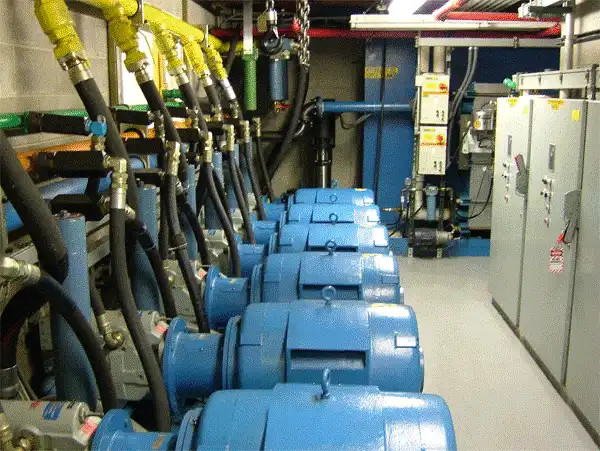
Understanding Industrial Hydraulic Stations and Efficiency
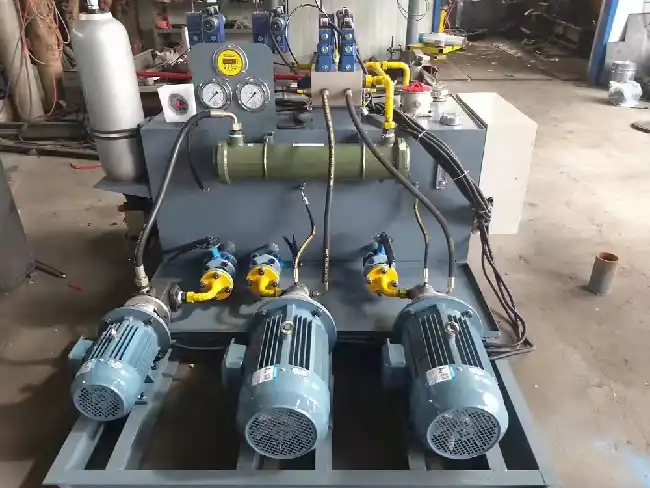
One part of a hydraulic power unit is the motor-pump group. Other parts are the oil tank, the valve manifold, the filter system, and the cooling circuit. Every part does something to turn the energy from the machine into controlled flowing pressure. The whole system is messed up if one part doesn't work right.
How Traditional Systems Fall Short
Fixed-displacement pump systems from the past always work at full speed, even when they don't need to. So much energy is being lost, too much heat is being made, and parts are wearing out faster. In metallurgy, where tools are used all the time, these small wastes add up quickly.
What Makes a High-Efficiency Design Different
These days, hydraulic stations have load-sensing systems and variable displacement pumps that change output in real time based on demand. It is said by the U.S. Department of Energy that variable-speed hydraulic pump drives can make motors 30% to 50% more energy efficient than fixed-speed systems. That makes a big difference in a heavy-duty business setting.
The Role of Fluid Cleanliness
The National Fluid Power Association says that dirty hydraulic oil is the cause of more than 70% of hydraulic system breakdowns. The high-beta filtration systems in industrial hydraulic station units try to meet or beat the ISO 4406 cleanliness codes of 18/16/13. With this, parts will last longer and there will be fewer unexpected shutdowns.
Key Benefits of Upgrading to a High-Efficiency Industrial Hydraulic Station
If you want to improve a hydraulic system, you should think about what will happen. When it comes to big mining and manufacturing jobs, a high-performance hydraulic machine is best for:
Because they use up to 40–50% less energy during partial-load cycles, variable-speed drives save energy and are better for the earth. This lowers both the cost of running the business and its carbon footprint, which is in line with ISO 14001 standards for environmental management.Advanced diagnostics and long-lasting valve systems keep the pressure output steady between 10 and 31.5 MPa, even when shock loads are present, which are typical in steelmaking settings.
Lowering the total cost of ownership means: In 5–10 years, you will save a lot of money because the parts will need less maintenance, the oil will last longer because of the built-in cooling, and you will not have to fix as many of them.
- Energy savings with environmental benefits: Variable-speed drives cut energy draw during partial-load cycles by up to 40–50%, reducing both operating costs and carbon output in line with ISO 14001 environmental management standards.
- Improved operational reliability: Advanced diagnostics and durable valve assemblies maintain steady pressure output between 10 and 31.5 MPa, even under shock loads typical in steelmaking environments.
- Lower total cost of ownership: Reduced maintenance frequency, longer oil life through integrated cooling, and fewer component replacements translate to meaningful savings over a 5–10 year equipment cycle.
These perks are real. Facilities that update their hydraulic power units, including an industrial hydraulic station, often say that they have less downtime and more stable production schedules. This dependability is very important for metallurgical companies and EPC contractors who need to keep projects on time.
Comparing High-Efficiency Hydraulic Stations with Traditional or Alternative Systems
You can get different types of hydraulic systems. The best one for you will depend on what you need.
Variable Displacement vs. Fixed Displacement Pumps
This type of pump always keeps the flow steady, no matter how much the system needs it. On the other hand, variable displacement pumps always change how much they pump. Since the variable choice arc burner goes back and forth between high-demand and idle modes, it is much more efficient and makes a lot less heat.
Integrated Oil Cooling vs. No Cooling
If thermal management is not turned on, hydraulic fluid breaks down faster and seals fail before they should. Built-in water- or air-cooled heat exchangers keep the oil's viscosity in the best range, which is 15–100 cSt. This keeps the pump and the actuators further downstream safe.
Electro-Hydraulic Systems vs. Standard Hydraulic Power Units
Servo valves let you handle electro-hydraulic systems with great accuracy, which is great for jobs that need to be placed within millimeters, like putting electrodes in electric arc furnaces. Most hydraulic power tools work well for simple tasks like clamping and lifting. Speed goals can be met without over-engineering if the right system type is used for the right application.
Practical Guide to Procuring a High-Efficiency Industrial Hydraulic Station
When procurement teams are looking for hydraulic equipment, they do better when they follow a plan. Specifications that are rushed don't always work well with each other, which can cause costly fixes.
Define Your Operational Parameters First
Take note of the working pressure, motor power, and temperature of the area before calling an industrial hydraulic station provider. Write down the range of flow rates you need. Power of the motor can be between 5.5 kW and 200 kW, flow rate between 10 L/min and 500 L/min, and temperature between -10°C and 80°C. All of these ranges are good for most mechanical uses.
Evaluate Customization and Lead Time
Standard units may ship more quickly, but they may not work with non-standard furnaces. A good company that makes industrial hydraulic stations should be able to give you clear information about wait times and let you choose your own pressure, flow, and system setup. Shaanxi Heyuan helps engineering and EPC companies that need turnkey solutions by taking care of design, integration, installation, and testing all in one place.
Check After-Sales Support Capacity
It's just as important how quickly and easily you can get replacement parts as the tools themselves. They should offer after-sales service 24 hours a day, seven days a week, and have new parts and hydraulic oil on hand. A steel company can lose tens of thousands of dollars an hour for every hour it is down. This means that what happens after the sale is just as important as the price.
Maintenance, Troubleshooting, and Long-Term Optimization
A well-kept hydraulic system will always work better than one that isn't, no matter how good the first one was. Setting up a repair plan right away will help keep your investment safe.
Routine Maintenance Intervals
Every day, you should check the machine's temperature and the amount of fluid it has. Everyone should check the difference pressure signs on the filters once a week, and the filters should be changed before they reach the bypass level. At least once a month, you should check for external leaks, the condition of the hoses, and the charge levels in the accumulator.
Diagnosing Common Issues
If a hydraulic power unit shakes or makes weird noises, it's likely because the suction lines aren't working right or air is going in through the intake ports. The name for this is cavitation. If the pressure in the system drops, it could mean that valves are only partly closed or that parts of the pump are worn out. For actuators and control valves to stay in good shape, these issues must be fixed right away.
Planning for Predictive Maintenance
Every three to six months, you should have your oil analyzed. This way, you can find out about rust, additive wear, or water pollution early on, before they cause the engine to break down. A flexible system makes it easier to change parts, which is especially useful in metalworking settings where work is always being done.
Conclusion
It would be smart for any company that uses arc furnaces, ladle furnaces, or heavy metalworking tools to switch to an industrial hydraulic station that works more efficiently. It's a well-known fact that making sure the system works reliably over time, saving energy, and keeping prices low are all good things that modern steelmaking and casting businesses need. He Yuanxin has finished more than 400 jobs around the world to make heating equipment. The company has been working with metal for more than 20 years, and every hydraulic system it designs shows that. Guys at Heyuanxin make industrial hydraulic stations that plants and contractors in the US and around the world trust. They have multiple utility model patents and are ISO-certified for their methods. They also offer full lifecycle support from concept to commissioning.
FAQ
How much energy can I save by upgrading my hydraulic station?
Implementing Variable Speed Drives on your hydraulic station motor can reduce energy consumption by 40–50% during partial-load or idle cycles. Results vary depending on your existing system and duty cycle, but savings are consistent in high-cycle industrial applications.
How often should hydraulic fluid be changed?
We recommend oil analysis every 3–6 months rather than relying solely on a fixed calendar schedule. Change the fluid when total acid number increases, additives are depleted, or water content exceeds safe limits.
What ISO standards apply to hydraulic station procurement?
ISO 4413 covers general rules for hydraulic fluid power systems. ISO 4406 defines fluid cleanliness codes. ISO 9001 applies to quality management in manufacturing. These are the primary standards to confirm with any industrial hydraulic station supplier.
Can a hydraulic power unit be customized for non-standard furnace configurations?
Yes. Shaanxi Heyuan designs hydraulic systems with adjustable pressure, flow, and circuit configurations to match specific equipment requirements, including non-standard metallurgical machinery and custom EAF or LF setups.
What causes cavitation in a hydraulic station?
Cavitation results from restricted suction lines, clogged inlet strainers, or air entering through loose intake fittings. Checking suction head pressure and inspecting intake connections resolves most cavitation problems.
Get a Custom Hydraulic Station Quote from Shaanxi Heyuan
It is made by Shaanxi Heyuan and their industrial hydraulic station solutions work well with arc furnaces, metallurgical cranes, and large smelting machines. We have finished more than 400 jobs as a qualified industrial hydraulic station builder. You can get help 24 hours a day, seven days a week after the sale, and we offer full customization. Chat with our tech team right away at sxhyyj606@163.com or go to hyyjfurnace-supply.com to explain what you need for your project and get a personalized quote.
References
1. U.S. Department of Energy, Office of Industrial Technologies — Improving Pumping System Performance: A Sourcebook for Industry, 2nd Edition, 2006.
2. National Fluid Power Association — Hydraulic System Contamination Control, 2015.
3. International Organization for Standardization — ISO 4413: Hydraulic Fluid Power — General Rules and Safety Requirements for Systems and Their Components, 2010.
4. International Organization for Standardization — ISO 4406: Hydraulic Fluid Power — Method for Coding the Level of Contamination by Solid Particles, 2021.
5. Esposito, Anthony — Fluid Power with Applications, 7th Edition, Pearson Education, 2009.
6. Vickers Industrial — Industrial Hydraulics Manual, 5th Edition, Eaton Corporation, 2001.


YOU MAY LIKE