
Which Automatic Furnace Feeding System Fits Your Needs?
August 28, 2026
Selecting the right Automatic Furnace Feeding System depends on your furnace type, production capacity, and operational environment. Systems for electric arc furnaces, induction furnaces, and converters provide fully automated, unattended operation with positioning accuracy of ±50mm. When charging capacities are between 1 and 50 tonnes per cycle and operational temperatures are from -10°C to 200°C, you need equipment that can handle different material types—from scrap metal to limestone—and work well with your existing PLC-driven controls. Evaluating power requirements (15–150 kW), compatibility with your workshop layout, and the supplier's customization capabilities ensures you invest in a solution that maximizes efficiency, safety, and long-term ROI.
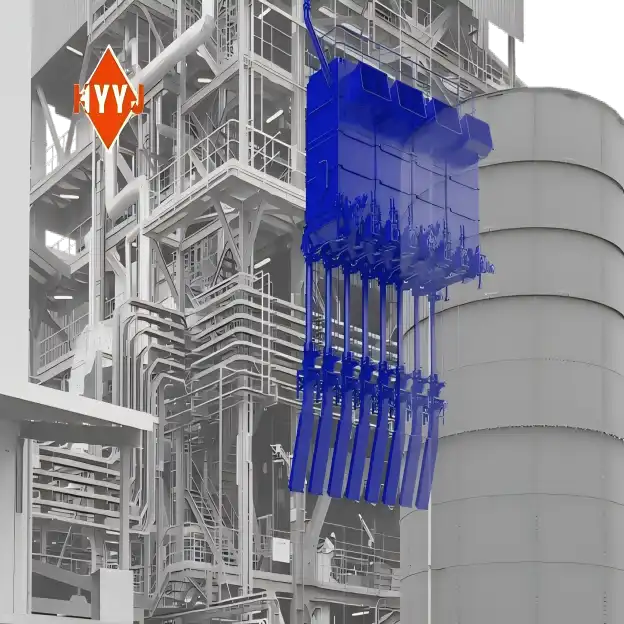

Understanding Automatic Furnace Feeding Systems: Core Principles and Components
Modern metalworking operations need precision and safety, which charging by hand cannot provide. An Automatic Furnace Feeding System changes how raw materials get into your melting equipment. It replaces dangerous manual labour with smart machines that work seamlessly with furnace cycles.
How Does Automated Material Handling Work?
These systems use programmable logic controllers, motorised conveyors, and vibratory feeders to move, dose, and place materials very precisely. The main idea is that the melt bath stays at a constant temperature while protecting the furnace linings from thermal shock through continuous or batch feeding. The technology keeps heat from escaping and makes the best use of energy by sending materials in controlled chunks instead of big dump loads. In real time, sensors measure the flow rates of materials, their weights, and their positions. This lets the PLC change the speeds and paths of the conveyors automatically. This closed-loop control makes sure that the bars, scrap metal, coke and fluxes get to the mouth of the furnace at the exact right time during the melting cycle.
Automatic Furnace Feeding Systems can achieve deviation tolerances as small as ±50mm. This stops material from spilling and makes sure it is spread evenly across the melt bath. Water-cooled jackets and heat guards keep nearby parts safe from radiant temperatures above 1200°C, which greatly increases the equipment's useful life. When you combine loss-in-weight technology with load cells, you can achieve dosing accuracy of ±0.5% to ±1%, which is very important for maintaining stoichiometric ratios in alloying operations.
Key Technologies in Feeding Systems
There are three main Automatic Furnace Feeding System technologies on the market, and each one is best for a different type of job. Mechanical systems use belt conveyors, bucket elevators, and screw feeders to move large materials quickly. In steel mills that process heavy scrap baskets and DRI, these configurations work well because the strong construction can handle the electromagnetic interference and mechanical shock that are common in EAF settings.
Using compressed air to move things through tight pipes is called pneumatic conveying, and it works well for fine powders and solid materials. This method cuts down on dust pollution and works well for jobs that need to be very careful with the environment, such as when they are working with pulverised coke or lime additives. When it comes to biomass and waste-to-energy, hydraulic ram feeders work really well because they can handle solid fuels with different densities and levels of wetness. These units have anti-jamming logic that automatically reverses motion when high-torque loads are detected. This clears any obstructions.
Maintenance Essentials for Longevity
Proper upkeep directly affects how often you can use your tools and how much it costs to own them. Regular checks look at grease points in bearings, the condition of wear liners in hoppers and chutes, and the reliability of optical sensors used for automation. Motors and gearboxes with an IP65 rating or higher can keep out conductive dust that is common in metallurgical environments. This procedure keeps unplanned downtime to a minimum.
At least once every three months, you should check the amounts of hydraulic fluid, the alignment of the conveyor belts, and the calibration of the weighing systems using approved test weights. Replacing wear parts, such as Hardox 450 linings in chutes exposed to rough scrap, before they fail prevents major breaks that halt production. A well-kept Automatic Furnace Feeding System works regularly for more than 8,500 hours a year, giving you the uptime your ongoing production needs while keeping long-term costs down by using planned maintenance instead of emergency repairs.

Automatic vs Manual Furnace Feeding Systems: Making the Right Choice
Some plants still use manual charging methods, but their flaws make them less competitive in today's market. Knowing these trade-offs helps you make smart decisions about whether to invest in an Automatic Furnace Feeding System.
Limitations of Manual Operations
When people feed the machines by hand, they are exposed to very dangerous things, like hot metal splashes, radiant heat above 1000°C, and toxic fumes that come out when the machines are charged. Over time, the cost of labour rises, especially when skilled workers demand high pay and safety events lead to increased scrutiny from the government. Changes in charging times and where materials are placed can slow down production. This is because they make the chemistry of the melt bath less stable and use more electrodes.
It's difficult to keep the exact material amounts needed for complicated steel grades or aluminium alloys when using manual methods. When people work long hours, they get fatigued and make mistakes, which can cause heats that don't meet specifications and need expensive reprocessing. The physical requirements also make it hard to expand—bigger crews are needed to make more products, which is difficult in places with too few skilled workers.
Advantages of Driving Automation Adoption
When it comes to safety, speed, and cost, Automatic Furnace Feeding Systems make a real difference. By keeping workers away from furnaces, you protect them from the most dangerous parts of their job, which will improve your safety culture and lower your workers' compensation claims. Precision feeding keeps bath temperatures fixed, which protects refractory linings and extends the life of furnace campaigns by lowering the stress of thermal cycles.
Continuous trickle feeding or optimised batch sequences that shorten the time the furnace doors are open can make the process more energy efficient. It takes 15–30% less time to charge at facilities, and as a result, they use 15–30% less electricity per ton of steel they make. When slag foaming is done in EAF, consistent material placement cuts electrode use by 8–12% while improving power-on time ratios. It's now possible to move workers from dangerous charging jobs to quality control or repair jobs that add value and make the plant more productive overall.
When Manual Feeding Remains Viable
When production rates are too low to support the cost of automation, small foundries that only make small batches or specialised research facilities may find that manual methods are more cost-effective. Sorting by hand is useful when the scrap is very different or contaminated and needs to be visually inspected before charging. Startups that are tight on funds sometimes put off investments in Automatic Furnace Feeding Systems during the initial commissioning phases. However, this usually leads to higher total ownership costs over the equipment's lifetime.
Real-world data from U.S. steel mini-mills shows that automation quickly breaks even when yearly production goes over 50,000 tons. After installing an Automatic Furnace Feeding System, a Midwest facility saw a 28% faster heat-to-heat turnaround. The system paid for itself in 18 months, thanks to reduced refractory maintenance, labour savings, and better energy efficiency.
Comparing the Best Automatic Furnace Feeding Systems
When comparing different Automatic Furnace Feeding Systems, it's important to look at more than just the buying price. You should also consider their performance, integration, and total cost of ownership.
Performance and Integration Capabilities
Automatic Furnace Feeding Systems made just for electric arc furnaces, ladle furnaces, and induction melting tools are available from top makers. Top-level options offer smooth SCADA/HMI integration that works with both Profibus and Modbus protocols, letting you log data in real time and do troubleshooting from afar. More advanced models have adaptive algorithms that change the feeding settings automatically based on feedback from the furnace temperature and signs of melt progress.
Specifications for charging capacities range from 500 kg/h for small foundries to over 100 t/h for large-scale steel production. The most advanced systems have special "Fifth Hole" roof feeding features that let lime and carbon be injected continuously. This improves the chemistry of the slag without stopping the melting process. Positioning precision is still crucial—premium units keep their ±50mm accuracy even when working with heavy scrap bins or long pieces of structural steel.
Cost-Versus-Value Analysis
Initial system costs vary significantly depending on capacity and the level of customisation required. They usually range from $150,000 for simple conveyor configurations to $800,000 or more for full installations with advanced automation. When procurement managers look at lifecycle economics, they need to think about things like upkeep costs, energy use, and efficiency gains over the course of 15 to 20 years.
When compared to fixed-speed motors, energy-efficient drive systems that use variable-frequency drives cut costs by 20 to 25 percent. For medium-capacity EAFs, the savings often go over $100,000 a year because the electrodes use less energy and the refractory lasts longer. To figure out the return on investment (ROI), you need to compare these practical benefits with your facility's production levels, labour rates, and energy costs. Facilities that make more than 80,000 tons of goods a year usually get their money back within two years. For smaller operations, it may take three to four years to get a refund.
Reliability and Support Quality
User comments from metallurgical companies in North America stress how important it is to have quick expert help and spare parts on hand. Automatic Furnace Feeding Systems made with standard industrial parts instead of custom designs are easier to maintain and cost less to keep in stock. Manufacturers that offer full commissioning services, including operator training and process optimisation, can get their factories running faster.
It's important to look for equipment with a mean time between failures (MTBF) of more than 2,000 hours and suppliers with regional service centers that can respond to emergencies within 48 hours. There are a lot of different warranty terms. The best companies cover mechanical parts for 24 months and protect computer systems for longer. The most reliable performance indicators come from verified case studies of similar operations. These show how systems work in real production conditions rather than idealised test scenarios.
How to Choose the Right Automatic Furnace Feeding System for Your Plant?
When you match the Automatic Furnace Feeding System specs to your operational needs, you get the best performance and value over the life of the equipment.
Defining Your Operational Requirements
Start by writing down the details of your furnace, such as its melt capacity, typical heat sizes, and the types of materials it can handle. When working with mixed scrap, electric arc furnaces need strong systems that are more resistant to wear. On the other hand, when melting clean bars, induction furnaces put precision filling ahead of mechanical durability. Production output goals directly affect the throughput capacity that is needed—systems need to be able to handle times of high demand without blocking activities further down the line.
The properties of the material also affect the choice of system. For rough materials like mill returns, contact surfaces need to be lined with Hardox or manganese steel. For sticky materials like petroleum coke, steep-walled hoppers lined with UHMWPE are needed to keep them from crossing. Environmental laws require enclosed designs with built-in dust collection systems that meet EPA emission standards. This makes things more complicated and costs more, which must be taken into account when buying something.
Evaluation Criteria for System Selection
To account for changes in material flow and repair windows, your throughput capacity should be 15-20% higher than your average production rate. It is necessary to have safety features like emergency stop interlocks, overload protection, and guarding that meet OSHA standards. Energy efficiency measures, especially ratings for motor efficiency and standby power use, have a direct effect on long-term running costs.
How hard and expensive integration is depends on how well it works with current plant control systems. Automatic Furnace Feeding Systems with open protocol interactions and well-documented interfaces make connecting to your supervisory systems easier and make updates possible in the future. When there are plans to grow, scalability issues become important. Modular designs that let you increase capacity by adding parts instead of replacing the whole system protect the long-term value of your investment.
Customization and Future-Proofing
Standardised systems don't always work perfectly with the way a building is set up. Reliable providers do thorough site studies and use 3D laser scanning to create custom support structures and conveyor paths that work with tight spaces, uneven floor plans, and equipment that is already there. This customisation includes the control logic, which lets it work with your own automation sequences for the furnace and production management systems.
Future-proofing means choosing providers that promise to keep parts available for a long time and keep Automatic Furnace Feeding System control systems up to date so they work with new industrial transmission standards. Modular construction makes it easy to replace worn-out parts without having to shut down for long periods of time. Facilities that are planning to add more space in the future can use structural elements that are too big and control screens that have extra I/O capacity. This lets changes be made without having to rebuild the whole system.
Procurement and After-Sales Considerations for B2B Buyers
A successful application includes more than just choosing the right Automatic Furnace Feeding System. It also includes working with suppliers, making sure the job is done right, and getting ongoing help.
Supplier Selection and Quality Assurance
When you work with well-known makers, you can get ideas that have been tried and tested by people with a lot of experience in the field. Companies with the ISO 9001 quality management certification and the ISO 14001 environmental certification show that they plan, make, and provide services in an orderly way. Make sure that the Automatic Furnace Feeding System suppliers you're considering have complete patent portfolios and software copyrights. This will show that they have real engineering skills and not just copied designs.
Ask for specific Factory Acceptance Testing methods that include checking the gravimetric calibration, running the machine continuously under load for 48 hours or more, and making sure the material flows correctly using your own feedstocks. Following ISO 5817 guidelines for non-destructive testing of important structure welds ensures that they are safe when subjected to shaking and mechanical shock. When testing PLC logic, emergency situations should be simulated to make sure that safe default states are used to stop the release of materials without being controlled.
Installation and Commissioning Best Practices
Professional repair that follows the manufacturer's instructions stops problems before they happen and keeps people safe. Turnkey providers who offer design, fabrication, installation, and commissioning services all in one cut down on the work that needs to be coordinated and make it clear who is responsible for what. As part of commissioning, all safety interlocks should be tested in a planned way, weighing systems should be calibrated across their full operational ranges, and operators should be trained in both normal operation and emergency procedures.
Long-term asset management is helped by thorough paperwork such as as-built drawings, spare parts lists with maker part numbers, and repair schedules. Video training tools go along with hands-on lessons and can be used as a reference when staff members leave. Initial production runs, which are overseen by the supplier, find out what operational changes need to be made to get the best performance in your production environment.
Warranty Terms and Support Services
Standard guarantees usually last between 12 and 24 months after the Automatic Furnace Feeding System is put into service, but you may be able to get longer coverage for control systems and important wear parts. Make it clear what the warranty covers. Travel costs, the availability of parts, and reaction times vary a lot from one provider to the next. Facilities that run continuous production must have documented emergency support services, such as technical phone support after hours and fast shipping of parts.
When negotiating prices, the overall cost of the job should be made clear. This includes the cost of installation, commissioning, training, and the first set of extra parts. Capital expenditure effects can be managed with financing options like leasing equipment or setting up payment schedules that are tied to performance goals. Long-term service deals that include predictive maintenance, regular checks, and priority access to parts keep your budget stable and increase the amount of time your equipment is up and running throughout its useful life.
Conclusion
To find the best charging solution for your metalworking operations, you need to carefully look at the furnace's specs, the amount of work that needs to be done, and the total cost of ownership. Modern Automatic Furnace Feeding Systems have proved benefits over manual methods in terms of worker safety, consistency in production, energy efficiency, and operational flexibility. Partnerships with experienced suppliers that offer customised engineering, full commissioning support, and long-term service commitments lead to the most successful implementations. By focusing on lifecycle value instead of just starting cost, you can give your building a long-term competitive edge in markets that are becoming more demanding and where profitability depends on how well it works for both people and the environment.
FAQ
What charging capacity should I specify for my electric arc furnace?
Your Automatic Furnace Feeding System capacity should be 15-20% higher than its average production throughput so that it can handle changes in material flow and maintenance windows without slowing down production. To find out how much capacity you need, divide your goal annual tonnage by the number of hours you plan to operate, then increase by 1.2 to account for working headroom. Systems that serve EAFs usually handle between 10 and 50 tons per hour, but this depends on the size of the boiler and how long it stays hot.
Can automated systems handle mixed scrap with variable piece sizes?
Modern Automatic Furnace Feeding Systems handle different kinds of materials well with intelligent logic for detecting jams, adjustable vibration frequencies, and variable-speed conveyors. Designing hoppers with steep walls keeps them from bridging, and reverse screw feeders clear out blockages automatically when high force signals that material is jamming. Talk to potential suppliers about the specifics of your scrap during engineering reviews to make sure you get the right size.
How long does installation typically require?
Installation times depend on how complicated the Automatic Furnace Feeding System is and how ready the building is, but it usually takes 4 to 8 weeks to finish setup. Schedules are sped up by modular designs and careful site preparation before installation. Carefully plan when to shut down with your source, because hot tie-ins to existing furnace systems may need longer outages that make it hard to plan production.
Partner With Shaanxi Heyuan for Reliable Automated Charging Solutions
Shaanxi Heyuan New Metallurgical Electric Furnace Equipment Co., Ltd. offers Automatic Furnace Feeding System technology that has been used in over 400 installations around the world and is backed by 11 years of experience in the field of metallurgical equipment. The 400 people on our engineering team come up with custom solutions that work with your furnace's configuration, production capacity, and workshop layout. We offer full package services that include system design, manufacturing, installation, testing, and training for operators. These services make sure that everything works together smoothly and that production can start up quickly. With positioning accuracy of ±50mm, charging capacities from 1 to 50 tons, and power options ranging from 15 to 150 kW, our systems cut charging time by 30% and provide over 8,500 working hours per year. We are ready to be your trusted Automatic Furnace Feeding System manufacturer because we have multiple utility model patents and ISO certifications for quality, environmental, and occupational health management. Visit hyyjfurnace-supply.com or email our expert team at sxhyyj606@163.com to talk about your needs and get a personalised estimate.
References
1. Zhang, L., & Morrison, R. (2022). Automated Material Handling Systems in Modern Steel Production: Engineering and Performance Analysis. Metallurgical Industry Press.
2. Industrial Furnace Association. (2023). Best Practices for Electric Arc Furnace Charging Systems: Safety, Efficiency, and Environmental Compliance. IFA Technical Manual Series.
3. Peterson, J. K. (2021). "Comparative Analysis of Feeding Technologies for High-Temperature Metallurgical Processes." Journal of Manufacturing Systems Engineering, 45(3), 112-128.
4. American Iron and Steel Institute. (2023). Technology Roadmap for North American Steel Manufacturing: Automation and Digitalisation Strategies. AISI Research Report.
5. Wang, H., & Schmidt, T. (2022). PLC-Controlled Material Handling: Design Principles and Industrial Applications. Industrial Automation Publishing.
6. Canadian Steel Producers Association. (2024). "Lifecycle Cost Analysis of Automated versus Manual Furnace Charging in Mini-Mill Operations." Steel Technology Quarterly, 18(1), 34-49.


YOU MAY LIKE