Choosing the right Movable Ladle Transfer Car for your capacity needs
June 23, 2026
Choosing the right ladle transport method has a direct effect on the safety record, efficiency, and running costs of your metallurgical plant. A movable ladle transfer car moves loads of molten metal from 5 to 300 tonnes across production floors and is an important link between your melting operations and processes that come after them. When capacity isn't aligned properly, either because of equipment that is too small or too big, companies have lower output, a higher risk of accidents, and equipment that breaks down too soon. Knowing your specific load needs, production rhythm, and weather conditions lets you match equipment specs with how things actually work, making sure that the new equipment fits in seamlessly with your current process while still meeting safety standards.

Understanding Movable Ladle Transfer Cars: Features and Benefits
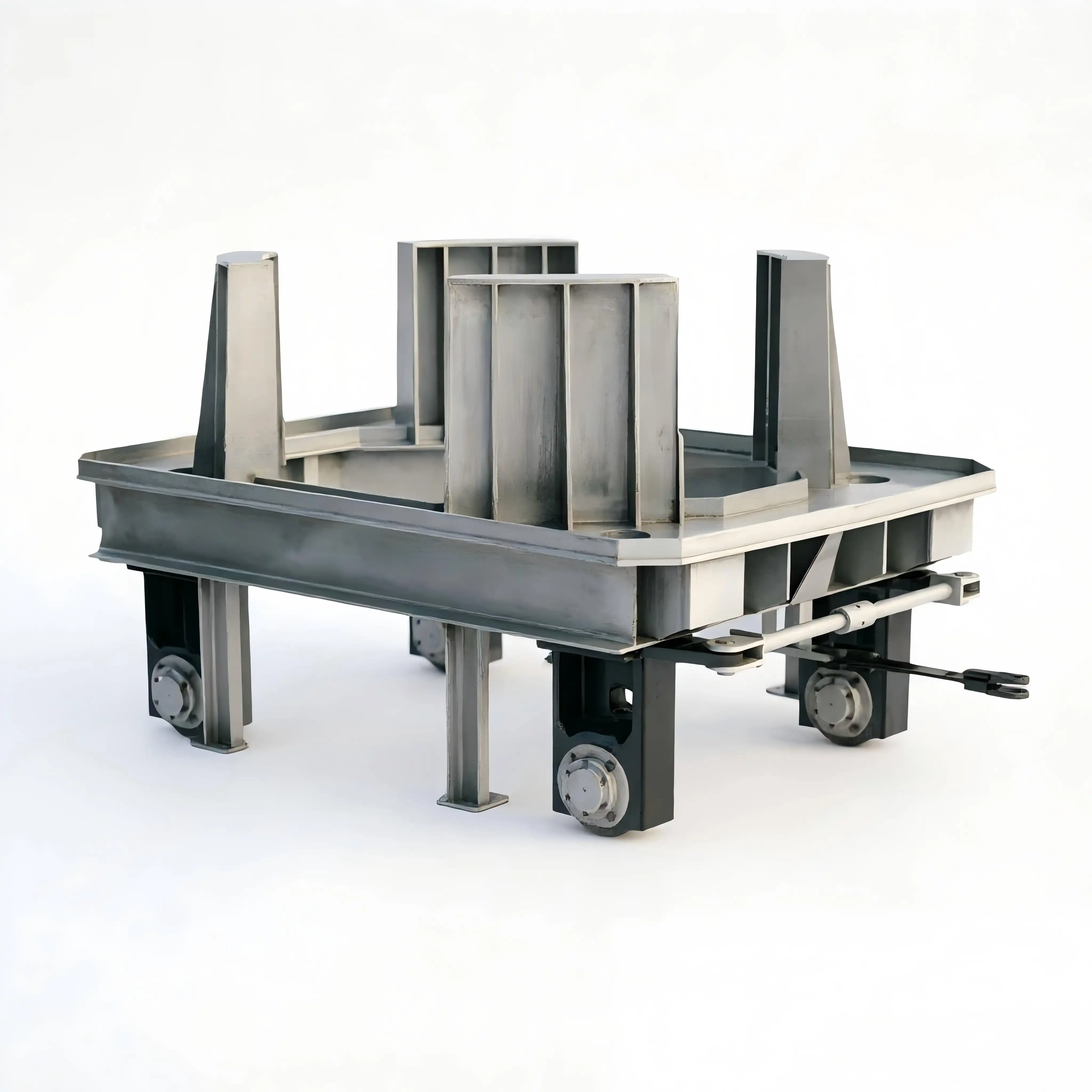
In metallurgical settings, these specialised industrial trucks move ladles with molten steel, iron, or copper from one working station to another. Overhead cranes are difficult to schedule and take up a lot of vertical space. Floor-level transfer systems, on the other hand, have specific paths for material to flow continuously.
Core Functional Components
Movable ladle transfer cars have three important systems that work together. The frame of the building is made of high-strength steel like Q345B and has a box-girder design with safety factors higher than 1.25 to withstand heavy loads and temperature changes. Nano-aerogel pads used in multi-layer insulation systems keep electrical parts safe from heat that gets as hot as 1600°C. The drive system uses dual-motor configurations with metallurgy-grade electric motors rated at IP54 or IP65 protection levels. This redundancy keeps production going even if one motor breaks.
The practical gains cover a wide range of performance areas. Thanks to variable frequency drive technology, which uses 30–40% less power than fixed-speed systems, energy economy has gone up. Safety improvements include soft-start acceleration curves that are controlled by PLC code and stop hot metal from splashing when the movement starts. For automatic pouring processes, positioning accuracy within ±5 mm is possible thanks to automation interaction with plant MES and SCADA systems.
Propulsion Methods and Power Solutions
There are different power supply setups that work best for various tasks. Low-voltage train systems can work 24 hours a day, seven days a week, without having to stop to recharge. This makes them perfect for high-frequency transfer lines between electric arc furnaces and ladle furnaces. Cable reel types give you options for medium-distance uses where installing tracks wouldn't work. Battery-powered versions are the most manoeuvrable in places where they need to move from one bay to another or get around set objects.
Choosing one of these power sources affects operational flexibility, repair timing, and long-term costs. Rail-powered units don't need to have batteries replaced, but they do need to have investments made in the track system. Battery systems need to have cells replaced every so often, but they let you change the route without having to do any civil engineering work.
Identifying Your Capacity and Application Requirements
An accurate estimate of capacity keeps operations from being limited and stops capital spending that isn't needed. The first step in the decision process is to look at your current production data and goals for future growth.
Load Capacity Analysis
To find the right load rates, you need to look at three things: the ladle's tare weight, its highest molten metal volume, and its safety margin. A ladle that's meant to hold 80 tonnes of liquid steel usually weighs between 15 and 20 tonnes when it's empty, so it needs a transfer car that can hold at least 100 tonnes when dynamic loading, acceleration, and temperature expansion are taken into account. For plants with ongoing casting lines, equipment rated 20–30% above normal loads is helpful because it can handle production spikes without putting safety at risk.
Application Environment Considerations
Different metalworking methods have different needs when it comes to operations. High levels of electromagnetic interference occur in electric arc furnace shops, so we need to protect control systems and provide special protection for motors. Forges with more than one melting station need tools that can work with a range of ladle sizes. This situation means that adaptable deck designs with flexible support structures are recommended. Corrosive atmospheres mean that aluminium smelters need better closing systems to keep bearing sets from breaking down due to chemicals.
Patterns of temperature exposure also affect the specifications of the equipment. Standard insulation kits can be used because continuous casting processes keep thermal loads steady. For batch processes that occasionally expose parts to high temperatures, better cooling systems and parts that can handle heat are needed to handle the thermal cycling stresses that make materials wear out faster.
Comparing Electric and Automated Variants
Electric models that workers control by hand are a cost-effective option for places with experienced workers and known transportation paths. Position sensing and customisable routing are added to semi-automated systems, which make them more consistent while lowering the level of skill needed by the user. Fully automatic versions work with software for planning production, coordinating the movements of the ladle with the tapping plans upstream and the casting rhythms downstream without any help from a person.
When sites run multiple movable ladle transfer cars at the same time, the productivity gains from technology become big. Coordinated control systems keep traffic from getting in the way and make the best use of the fleet, which means that fewer units are needed to meet flow goals.
Comparing Movable Ladle Transfer Cars: Making an Informed Decision
When choosing equipment, you have to think about a lot of performance factors, as well as your budget and practical objectives. Knowing the pros and cons of each design method can help you make purchases that support your long-term goals.
Movable Versus Fixed Transfer Systems
Fixed train systems work best in fixed point-to-point situations with steady traffic patterns. They have lower per-cycle running costs because they deliver power more efficiently and require less steering knowledge. Moving configurations allow for routing freedom, which is important for sites whose layouts change often or that have more than one location choice. The choice depends on whether your production process needs to be flexible or would be more efficient if it followed well-known paths.
The times needed for installation are unique between these methods. Fixed systems need track installation, power infrastructure, and base work, which adds 4–8 weeks to the project timeline. Trackless systems, on the other hand, can start running as soon as they are delivered. Fixed systems, on the other hand, usually have 15-20% lower upkeep costs over their useful life because the control parts wear out less quickly.
Electric Drive Advantages
The performance of electric propulsion systems is better than that of human options. Frequency converters allow for precise speed control, which keeps the acceleration smooth and stops the ladle contents from moving. This feature is especially important when moving molten metal that is over 1500°C. Regenerative brakes can recover energy when the vehicle slows down, which can save 25–35% of energy in buildings that start and stop a lot.
With electric drive, safety is improved by emergency brakes that work in less than two seconds and fail-safe holding brakes that turn on immediately when the power goes out. These features reduce the chance of an accident in places where broken equipment could cause huge hot metal spills.
Manufacturer Evaluation Criteria
Reputable makers demonstrate their capabilities in several verifiable ways. Certifications like ISO 9001 show that a quality management system is mature, and certifications specific to a product's industry, like the CE mark, show that it meets international safety standards. Patent portfolios show how innovative an engineer is; companies with multiple utility model patents usually offer better solutions that include changes that have been tried in the field.
Reliable partners set themselves apart from equipment sellers through their after-sales assistance infrastructure. When manufacturers keep extra parts in stock in your area, they minimise downtime during repair events. Technical support teams that have worked in the mining business can help with problems more effectively than general industrial equipment sellers.
Procurement Guide: How to Buy the Right Movable Ladle Transfer Car
When making strategic purchases, it's important to think about both the short-term and long-term wants for tools. Using a structured review method will help you choose options that meet both technical needs and budget limits.
Budget and Customisation Assessment
The price of equipment is based on its capacity rates, level of automation, and the level of customisation that is needed. Standard types with load capacities of 50 to 100 tonnes are usually the best mix of price and performance for medium-sized businesses. When standard designs can't meet specific needs, like limited floor space, odd ladle geometries, or interaction with proprietary control systems, custom engineering becomes a cost-effective option.
Warranty terms show that the company that made the product is confident in its longevity. Full guarantees that cover structural parts for 3 to 5 years and electricity systems for 1 to 2 years are a sign of strong design and good construction. Even though extended warranty choices cost more up front, they protect against unexpected repair costs during the important early operational period, which is when hidden problems usually show up.
Supplier Qualification Process
Buying from well-known companies that keep clear records of their quality cuts down on the risk of the purchase. Companies that are ISO 9001 certified follow written steps for validating designs, tracking materials, and testing products during production. Occupational health certification and environmental management certification (ISO 14001) show that a company cares about worker safety and sustainable practices, which are values that are often applied to customer relationships and product quality as well.
Verifying a supplier's qualifications through outside sources gives you more trust. Industry groups often keep member listings with grades of performance and a history of complaints. Trade magazines and technical sites let current customers share their working experiences, which can help you learn about a manufacturer's image.
Order Process and Lead Time Planning
Custom-engineered ladle transfer equipment usually takes 12 to 16 weeks to make, from the time an order is confirmed until it is tested in the plant. Depending on the means of travel and how quickly customs processes are completed, shipping and handling can add two to four weeks to international deliveries. Plants that want to increase their capacity should start the buying process 6 to 8 months before they need to put them into service. This will allow for possible design changes and keep them from having to make hasty decisions.
When a facility needs more than one unit or thinks it will need to grow in the future, it should consider buying in bulk. When you order many cars at once, you can usually get savings of 10 to 15 per cent and make sure that all of your cars have the same specs. Phased delivery plans allow for delayed commissioning, which keeps operations running while the team installs the system.
Operation, Safety, and Maintenance Best Practices
Following operating procedures and preventive repair schedules religiously is necessary to make sure that equipment lasts as long as possible and that working conditions are safe. Following the right steps will protect both people and money.
Safety Protocol Implementation
Operator training classes should cover both how to do things normally and how to handle emergencies. People who work there need to know how to talk to crane workers and people who drive other mobile equipment, as well as how much weight they can carry and how fast they can go in different areas of the building. Compared to places that only use tool instructions, places that offer full training cut accident rates by 40 to 60%.
Depending on where you live, regulatory compliance can mean different things. In the US, OSHA rules say that operators must be certified, that tools must be inspected regularly, and that safety devices must be tested to make sure they work. As standards change and equipment gets older, regular checks make sure that compliance is still being met.
Preventive Maintenance Scheduling
The length of time between routine inspections depends on how busy the business is and the weather outside. In high-duty cycle situations, wheels and bearings need to be looked at visually once a week, and they need non-destructive testing once a year to find underlying stress cracks before they break. Every 300 hours of use, high-temperature grease that can withstand constant contact to 200°C should be used to avoid increased wear from thermal degradation.
Metallurgical settings need extra care when it comes to electrical systems. Control screens need to be cleaned once a month to get rid of the electrical dust that builds up and causes short circuits. Inspections of cable insulation find thermal damage or wear and tear on the insulation before it fails and causes an arc flash danger. Motor winding insulation resistance testing done every three months finds moisture getting in or insulation wearing down, so repairs can be made before the motor burns out.
Troubleshooting Common Issues
Loss of positioning accuracy is often caused by encoder calibration drift or misaligned limit switches. Recalibration methods fix accuracy without replacing parts, which lowers repair costs and downtime. Uneven wheel wear means that the track parts are not lined up right or that the weight is not being distributed properly. To extend the life of the wheels, the load pattern needs to be analysed, and the deck may need to be changed.
When the power goes out during work, safety procedures are set off. Rail-powered systems with backup supercapacitors have enough power to let go of the brakes and let the heavy car coast to safe zones with emergency ladle dumping facilities that keep the steel from solidifying and damaging the track. As cells age, battery systems need to be checked for capacity to make sure that the backup power is still enough for emergency moves.
Conclusion
Finding the movable ladle transfer car for your needs is an important infrastructure choice that will affect safety, efficiency, and long-term costs. During the evaluation process, you need to think about load ratings that can handle both current production levels and expected growth, power supply configurations that work with the layout of your building, and the level of automation that works best for your employees. Equipment from qualified makers with proven experience in the metallurgical business is reliable enough to justify the higher price because it lasts longer and has less downtime. Proper training for operators and strict repair practices will help you get the most out of your investment while still meeting the safety standards needed to work with hot molten metal.
FAQ
What load capacity range should I consider for steel mill applications?
For their main steelmaking tasks, steel plants usually need tools that can hold 80 to 200 tonnes. Electric arc furnace shops that move steel to ladle refining stations usually ask for 100–150-tonne ratings. For continuous casting, on the other hand, 150–200 ton ratings may be needed to handle bigger ladle amounts. Foundries and other places that make speciality metals can usually get by with equipment that weighs between 30 and 80 tonnes. To get an accurate capacity reading, you need to add 20 to 25 per cent to the ladle's tare weight plus the highest amount of molten metal.
How does automation improve operational efficiency?
Cycle times are cut by 15–25% by automated systems that use optimised acceleration profiles and organised traffic control when multiple cars are working at the same time. Integration with software for planning production cuts down on coordination delays caused by people doing it by hand, and precise placement within ±5mm lets pouring operations be done automatically. When compared to one-on-one rates with manual equipment, single workers can oversee multiple automatic units, which lowers the cost of labour. Improvements to consistency cut down on changes in product quality that are caused by mistakes made by humans in time during important transfer operations.
What maintenance differences exist between electric and manual models?
Electric versions need to have their motors, control systems, and power delivery parts checked every so often, usually every 300 to 500 hours of use. For battery-powered types, the cells need to be replaced every 3 to 5 years, based on how often they are discharged. Electrical upkeep is not needed for manual systems, but mechanical parts need to be serviced more often because the person puts more stress on them. Overall, electric models have 20–30% lower upkeep costs over 10 years of use, even though their parts are more complicated. This is mostly because controlled acceleration and stopping cause less wear on the parts.
Partner with Heyuan for Your Ladle Transfer Solutions
We at Shaanxi Heyuan New Metallurgical Electric Furnace Equipment Co., Ltd. have been developing and making ladle transfer systems for tough metallurgical settings for more than 15 years. Our engineering team has more than ten utility model patents that cover new ways to protect against heat, make drive systems more reliable, and make control more precise. We have successfully sent transfer cars to integrated steel mills, foundries, and smelting operations on several continents. These cars can carry anywhere from 5 to 300 tons, so they can be used for a wide range of production levels. When you work with a well-known movable ladle transfer car maker like Heyuanxin, you can get custom solutions backed by ISO 9001 quality approval and full support after the sale. Our modular design lets you set up the system in a way that fits your track gauge, working temperature needs, and preferred amount of automation. Email our technical experts at sxhyyj606@163.com to talk about your capacity needs and get full specifications and reasonable prices. Visit hyyjfurnace-supply.com to explore our complete product range and discover how our well-thought-out solutions can help your building be safer and more productive.
References
1. Miller, R. A. (2021). Material Handling Systems in Modern Steel Plants: Design and Optimisation. Industrial Press Inc.
2. Chen, W., & Thompson, J. K. (2020). "Thermal Management in High-Temperature Material Transport Equipment." Journal of Metallurgical Engineering, 45(3), 287-304.
3. National Association of Steel Manufacturers. (2022). Safety Standards for Molten Metal Handling Equipment. Technical Publication Series, Volume 18.
4. Davidson, P. L. (2019). Automation in Heavy Industry: Implementation Strategies and ROI Analysis. McGraw-Hill Professional.
5. International Organisation for Standardisation. (2020). ISO 9001:2015 - Quality Management Systems: Requirements for Industrial Equipment Manufacturing.
6. Zhou, H., Martinez, C., & Patel, S. (2023). "Comparative Analysis of Power Supply Systems for Material Transfer Equipment in Steelmaking Facilities." International Journal of Industrial Engineering, 38(2), 156-173.


YOU MAY LIKE